

The role of magnesium for seniors: a practical guide
TL;DR:
- Magnesium is crucial for over 300 enzymatic reactions, supporting senior health, including muscle, bone, and cardiovascular functions. Older adults face higher risks of deficiency due to decreased absorption, increased excretion, medications, and diet, making supplementation and dietary intake important. Prioritizing food sources like nuts, legumes, greens, and grains is safest, while supplements should be used cautiously within guidelines to prevent adverse effects.
Magnesium is an essential mineral that supports over 300 enzymatic reactions in the human body, including energy production, muscle contraction, nerve conduction, and bone formation. For older adults, maintaining adequate magnesium levels is not optional. The role of magnesium for seniors spans cardiovascular health, metabolic regulation, cognitive function, and bone density. Yet ageing itself makes deficiency more likely, through reduced gut absorption, increased renal excretion, and the compounding effects of chronic conditions and medications. Understanding how magnesium works, where to get it, and how to supplement safely gives seniors and their caregivers a clear advantage in supporting long-term vitality.
How does magnesium affect senior health and vitality?
Magnesium’s contribution to older adults’ health is broad and well-documented. The NIH Office of Dietary Supplements identifies magnesium as critical to muscle and nerve function, blood glucose regulation, and bone development. Each of these functions becomes more fragile with age, which is precisely why the importance of magnesium in older adults cannot be overstated.
The key health benefits relevant to seniors include:
- Muscle function. Magnesium regulates muscle contraction and relaxation. Low levels are directly associated with cramps, weakness, and increased fall risk, all significant concerns for older adults.
- Cardiovascular health. A meta-analysis of 38 randomised controlled trials found that magnesium modestly lowers blood pressure, particularly in individuals with hypertension or low magnesium status. This matters because hypertension is one of the most prevalent conditions in seniors.
- Bone density. Magnesium contributes directly to bone mineralisation and influences the activity of vitamin D and calcium. Inadequate intake is linked to lower bone density and greater osteoporosis risk.
- Metabolic regulation. A recent meta-analysis found that magnesium supplementation improved insulin sensitivity and 2-hour glucose tolerance in adults with prediabetes. Given that metabolic dysfunction rises sharply with age, this is a meaningful finding.
- Cognitive and nerve health. Magnesium supports nerve signal transmission and is being studied for its role in reducing age-related cognitive decline, though research is still developing in this area.
Pro Tip: If you or the person you care for experiences frequent leg cramps at night, low magnesium is one of the first things worth discussing with a GP. It is a common and correctable cause.
The effects of magnesium on ageing are not limited to one system. Because it underpins so many biological processes simultaneously, a shortfall tends to produce a cluster of symptoms rather than a single obvious sign.

Why are seniors at higher risk of magnesium deficiency?
Older adults face a compounding set of challenges that make magnesium deficiency considerably more common than in younger populations. The NIH confirms that gut absorption decreases and renal excretion increases with age, meaning the body both takes in less and loses more. This creates a structural disadvantage that diet alone may not fully correct.
The main risk factors caregivers and seniors should be aware of include:
- Reduced intestinal absorption. The ageing gut becomes less efficient at extracting magnesium from food, even when dietary intake appears adequate.
- Increased urinary losses. Older kidneys excrete more magnesium, particularly in the presence of conditions such as type 2 diabetes.
- Medication interactions. Proton pump inhibitors (PPIs), diuretics, and certain antibiotics all deplete magnesium. Many seniors take one or more of these regularly.
- Reduced dietary intake. Appetite changes, dental problems, and reduced cooking capacity mean older adults often eat less of the magnesium-rich foods such as nuts, legumes, and leafy greens.
- Chronic conditions. Type 2 diabetes, gastrointestinal disorders, and cardiovascular disease all increase magnesium losses or impair absorption.
Magnesium deficiency symptoms in seniors are often subtle at first. Muscle cramps, fatigue, low mood, and poor sleep are the most common early signs. As deficiency deepens, symptoms can progress to irregular heartbeat, numbness, and cognitive changes. Because these symptoms overlap with many other age-related conditions, deficiency is frequently missed or attributed to something else entirely.
What are the safe supplementation guidelines for seniors?
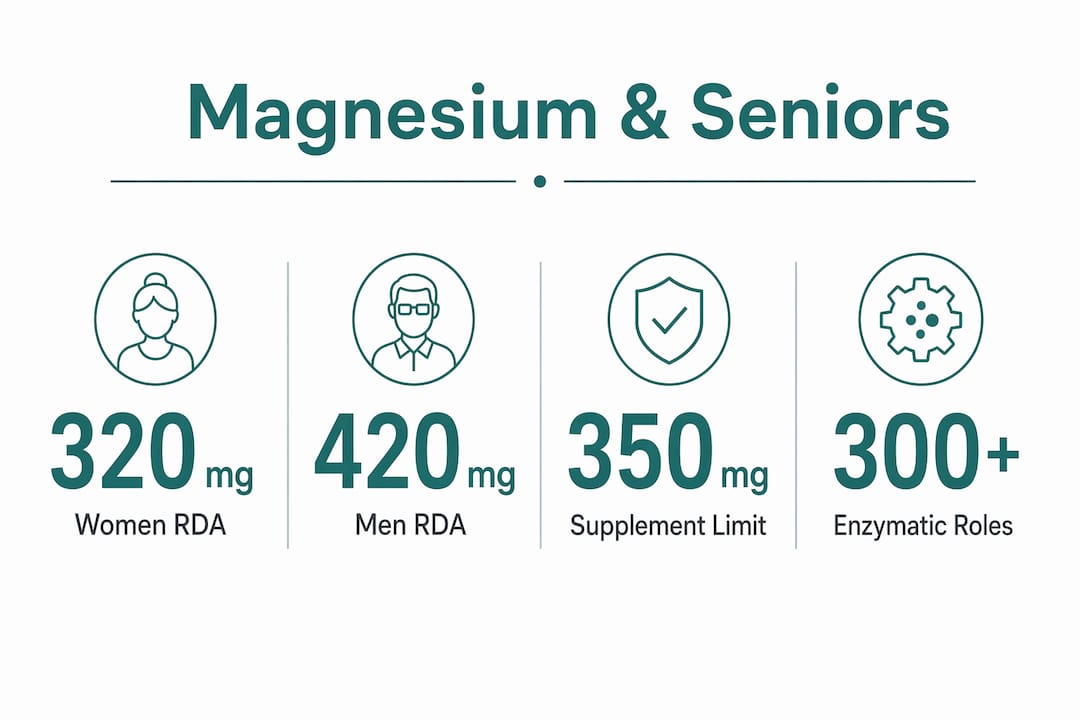
Supplementation is a practical option for seniors who cannot meet their needs through diet alone, but it requires careful management. The recommended dietary allowance for adults aged 31 and over is approximately 320 mg per day for women and 420 mg per day for men. Most older adults fall short of these targets through food alone.
The table below summarises the key figures for senior magnesium supplementation:
| Parameter | Detail |
|---|---|
| RDA for women (31+) | 320 mg per day from all sources |
| RDA for men (31+) | 420 mg per day from all sources |
| Supplemental upper limit | 350 mg per day from supplements only |
| Risk group | Seniors with impaired kidney function |
| Primary side effect of excess | Diarrhoea and gastrointestinal discomfort |
The supplemental upper limit of 350 mg per day applies specifically to magnesium from supplements, not from food. Dietary magnesium does not carry the same risk of excess because the body regulates absorption from food more efficiently. This distinction matters when calculating total intake.
Seniors with impaired kidney function face a higher risk from supplemental magnesium. The Linus Pauling Institute confirms that safety limits assume normal renal function, and those with reduced kidney capacity should only supplement under medical supervision. For everyone else, the guidance is to stay within the supplemental upper limit and account for all sources.
Common supplemental forms include magnesium glycinate, magnesium citrate, and magnesium oxide. Glycinate and citrate are generally better absorbed and less likely to cause gastrointestinal side effects than oxide. Many multivitamins also contain magnesium, so seniors taking a daily multivitamin should check the label before adding a separate magnesium supplement.
Pro Tip: Check the magnesium content of any multivitamin before adding a standalone supplement. Adding 200 mg on top of a multivitamin that already contains 150 mg puts you close to or over the supplemental upper limit without realising it.
For further guidance on supplement safety for older adults, the Vivetus article on supplement safety for healthy ageing covers upper limits and monitoring in practical detail.
Which foods provide the best magnesium sources for seniors?
Food remains the safest and most sustainable way to maintain adequate magnesium levels. The NIH confirms that magnesium is present in many foods, and dietary sources carry no risk of the excess intake that supplements can cause. For seniors, building meals around magnesium-rich ingredients is both practical and beneficial for overall nutrition.
The best dietary sources for older adults include:
- Nuts and seeds. Pumpkin seeds, almonds, and cashews are among the most concentrated sources. A 30 g serving of pumpkin seeds provides roughly 150 mg of magnesium.
- Legumes. Black beans, edamame, and lentils are affordable, easy to prepare, and rich in both magnesium and protein.
- Leafy greens. Spinach and Swiss chard are particularly high in magnesium and integrate easily into soups, omelettes, and smoothies.
- Whole grains. Brown rice, oats, and wholemeal bread contribute meaningfully to daily magnesium intake and support digestive health.
- Broccoli and other vegetables. Broccoli, avocado, and potatoes with skin all provide moderate amounts of magnesium alongside other key nutrients.
- Dairy. Low-fat yoghurt and milk contribute to magnesium intake while also providing calcium and vitamin D, which work alongside magnesium for bone health.
Dietary patterns such as the DASH diet, which is widely recommended for blood pressure management, naturally emphasise many of these foods. Seniors following DASH are likely to achieve better magnesium intake as a secondary benefit, alongside the cardiovascular advantages the diet is designed to produce.
The Linus Pauling Institute recommends increasing magnesium-rich foods first before turning to supplements. This approach reduces the risk of overshooting the supplemental upper limit and provides a broader range of nutrients in one step. For practical meal ideas and food choices suited to older adults, the Vivetus guide on superfoods for seniors offers ten evidence-backed picks worth exploring.
What practical steps help seniors manage magnesium intake safely?
Managing magnesium intake well requires attention to all sources, not just the supplement bottle. Many seniors unknowingly consume additional magnesium through over-the-counter medicines. The NIH notes that antacids and laxatives containing magnesium can contribute significantly to total daily intake, sometimes pushing it above safe levels without any obvious warning sign.
Follow these steps to manage magnesium intake safely:
- List all sources. Before starting a supplement, write down every source of magnesium: food, multivitamins, standalone supplements, and any OTC medicines such as antacids or laxatives.
- Start low and increase gradually. Beginning supplementation at a low dose, such as 100 to 150 mg per day, and increasing slowly over several weeks reduces the risk of diarrhoea and gastrointestinal discomfort.
- Consult a GP or pharmacist. This is particularly important for seniors with kidney disease, diabetes, or those taking diuretics or PPIs.
- Monitor for signs of excess. Loose stools or diarrhoea are the earliest signs that the total magnesium load is too high. Reducing the dose usually resolves this quickly.
- Review regularly. As medications change or health conditions evolve, total magnesium intake should be reassessed. Caregivers can play a key role in tracking this over time.
Pro Tip: Keep a simple written log of all supplements and OTC medicines, including magnesium content. Bring this to every GP or pharmacy appointment. It takes five minutes to prepare and can prevent avoidable side effects.
Caregivers supporting seniors at home are in a strong position to notice early deficiency symptoms such as increased fatigue, muscle cramps, or changes in mood and sleep. Raising these observations with a healthcare professional early leads to faster and more targeted responses.
Key takeaways
Magnesium supports muscle, bone, cardiovascular, and metabolic health in seniors, and deficiency is common due to age-related changes in absorption and excretion that diet and careful supplementation can address.
| Point | Details |
|---|---|
| Deficiency risk is structural | Ageing reduces gut absorption and increases renal excretion, making shortfalls common even with reasonable diets. |
| RDA targets are specific | Women aged 31+ need 320 mg per day; men need 420 mg per day from all sources combined. |
| Supplemental limit is 350 mg | This cap applies only to supplements, not food, and assumes normal kidney function. |
| Food first is the safer strategy | Nuts, legumes, leafy greens, and whole grains provide magnesium without the risk of overshooting safe limits. |
| Hidden sources matter | Antacids and laxatives containing magnesium must be counted in total daily intake to avoid excess. |
Magnesium and seniors: what I have observed over time
Most people assume that if a supplement is available without a prescription, taking more of it is simply better. With magnesium, that logic breaks down quickly, especially for older adults. The seniors who benefit most from supplementation are those with a genuine shortfall, whether from poor dietary intake, medication-related depletion, or age-related absorption changes. Treating it as a universal anti-ageing pill sets unrealistic expectations and increases the risk of side effects.
What I find consistently underappreciated is the hidden magnesium problem. A senior taking a daily antacid, a multivitamin, and a standalone magnesium supplement may already be at or above the supplemental upper limit before they have eaten a single meal. Caregivers who take the time to audit all sources, not just the supplement shelf, are doing genuinely useful work.
The blood pressure angle is also worth tempering. The evidence for magnesium lowering blood pressure is real but modest, and it is strongest in people who already have hypertension and low magnesium levels. If someone’s magnesium status is already adequate, adding more will not produce a meaningful cardiovascular benefit. Targeted use, based on actual need, is the rational approach.
My overall view is that the dietary route should always come first. Increasing spinach, almonds, and whole grains is lower risk, broader in nutritional benefit, and more sustainable than relying on supplements. When diet is genuinely insufficient, a low-dose supplement introduced gradually and reviewed regularly is a sound second step.
— Jord
Support healthy ageing with Vivetus
Vivetus offers a curated range of nutritional supplements and dietary products designed specifically to support healthy ageing and sustained vitality. Whether you are a senior looking to address a specific nutritional gap or a caregiver seeking reliable, evidence-backed products for someone in your care, Vivetus provides clear product information and practical guidance to help you make informed choices.

From magnesium-containing supplements to broader healthy ageing resources, the Vivetus catalogue is built around the nutritional needs of older adults. Free shipping on orders over €50 makes it straightforward to stock up on the products that matter most. Visit Vivetus to explore the full range and find the right nutritional support for your situation.
FAQ
What is the recommended magnesium intake for seniors?
The recommended dietary allowance for adults aged 31 and over is 320 mg per day for women and 420 mg per day for men, covering all sources including food and supplements. Supplemental magnesium alone should not exceed 350 mg per day.
What are the main magnesium deficiency symptoms in seniors?
Early symptoms include muscle cramps, fatigue, poor sleep, and low mood. More advanced deficiency can cause irregular heartbeat, numbness, and cognitive changes, though these symptoms often overlap with other age-related conditions.
Can seniors take magnesium supplements safely?
Most seniors can take magnesium supplements safely within the 350 mg per day supplemental upper limit, provided kidney function is normal. Those with impaired renal function should consult a GP before supplementing, as the risk of adverse effects is higher.
Which foods are the best magnesium sources for older adults?
Pumpkin seeds, almonds, black beans, spinach, oats, and broccoli are among the richest dietary sources. The DASH diet, which emphasises these foods, supports both magnesium intake and cardiovascular health simultaneously.
Does magnesium help with blood pressure in older adults?
Magnesium supplementation produces a modest reduction in blood pressure, particularly in individuals with hypertension and low magnesium levels. The effect is not universal and is most relevant for seniors who are genuinely deficient.