

How minerals support healthy ageing and vitality after 40
TL;DR:
- As people age beyond 40, their body’s ability to absorb key minerals declines subtly, increasing health risks. Deficiencies in minerals like calcium, magnesium, zinc, and selenium are widespread among older adults and can impair bone health, immunity, and cognitive function if uncorrected. Personalized assessment and targeted supplementation, supported by regular testing, are essential to maintain vitality and prevent age-related health issues.
Even when you eat reasonably well, your body’s ability to absorb and retain key minerals quietly declines after 40. This gap rarely announces itself with dramatic symptoms, yet minerals support ageing-relevant systems including skeletal integrity, immune regulation, and red blood cell production, meaning that subtle shortfalls can accumulate into measurable health consequences over years. The good news is that once you understand which minerals matter, what depletes them, and how to correct gaps intelligently, maintaining vitality through your later decades becomes a far more manageable, evidence-guided process.
Table of Contents
- Why minerals matter more as we age
- The most important minerals for healthy ageing
- How deficiencies impact health in older adults
- Zinc, selenium, and immune ageing: The oxidative stress connection
- Should you supplement? Population evidence and targeted strategies
- A fresh look at minerals and ageing: What most guides miss
- Next steps to optimise mineral status for longevity
- Frequently asked questions
Key Takeaways
| Point | Details |
|---|---|
| Minerals remain essential | Mineral needs do not decline with age and are crucial for bone, immune, and energy systems. |
| Deficiency risk increases | Ageing, absorption changes, and common diets often lead to low intakes of calcium, magnesium, selenium, and zinc. |
| Targeted approach works best | Personalised supplementation based on dietary gaps or test results is safer and more effective than generic multivitamin use. |
| Zinc and selenium matter for immunity | These trace minerals are especially important for reducing oxidative stress and supporting immune function in older adults. |
| Monitor and adjust safely | Work with your healthcare provider to identify deficiencies and avoid excessive supplementation. |
Why minerals matter more as we age
Most people assume that a healthy diet covers all nutritional bases at every age. In practice, the physiology of ageing disrupts this assumption in several important ways. Stomach acid production typically decreases after 60, impairing the solubilisation of minerals like calcium, iron, and zinc before they even reach the small intestine. Reduced kidney function further affects the regulation of phosphorus and potassium. The gut microbiome, which plays a supporting role in mineral metabolism, also shifts in composition and diversity as we get older.
Beyond absorption, older adults often live with one or more chronic conditions requiring long-term medication. Proton pump inhibitors lower magnesium and calcium uptake. Diuretics deplete potassium, magnesium, and zinc. Metformin, widely used for type 2 diabetes, reduces vitamin B12 and can indirectly affect iron metabolism. These interactions create a hidden layer of mineral risk that sits beneath even a balanced diet for elderly individuals who believe they are meeting their nutritional needs.
The systems most affected by mineral insufficiency in later life include:
- Skeletal health: Calcium, magnesium, and phosphorus maintain bone mineral density, and insufficiency accelerates bone loss.
- Immune function: Zinc and selenium are essential cofactors for immune cell production and antioxidant defence.
- Oxygen delivery: Iron and copper support haemoglobin synthesis; low levels contribute to fatigue and cognitive fog.
- Hormonal balance: Iodine supports thyroid function, while selenium activates thyroid hormones at the cellular level.
“Deficiency risk is not purely about age; it is also driven by diet quality, absorption changes, and health status. Data from aged-care residents show many fall below recommended intakes for multiple minerals simultaneously, creating a plausible pathway from inadequate status to weaker healthspan outcomes.”
These compounding factors explain why mineral inadequacy is not a niche concern. It is a routine feature of ageing biology that demands active attention.
The most important minerals for healthy ageing
With the physiological backdrop established, the practical question becomes: which minerals actually require your attention after 40? The answer spans both major minerals and trace elements, each with distinct roles and distinct risks if neglected.
Major minerals and their roles
Calcium remains the cornerstone of bone health, but its importance extends to muscle contraction, nerve signalling, and blood pressure regulation. Most adults over 50 need between 1,000 and 1,200 mg daily, yet dairy avoidance, low sun exposure, and reduced absorption often mean intake falls short.
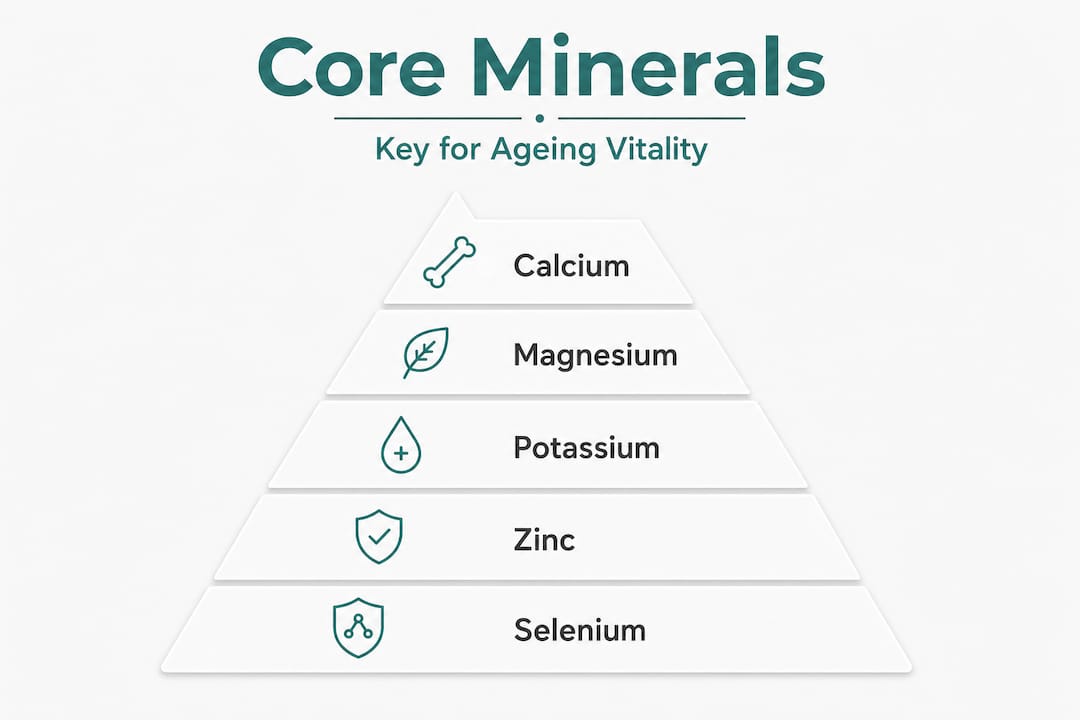
Magnesium is involved in over 300 enzymatic reactions, including ATP energy production, protein synthesis, and blood glucose control. Suboptimal magnesium is one of the most widespread nutrient shortfalls among adults over 50, yet it rarely appears on a standard blood panel unless severely depleted.
Potassium helps maintain healthy blood pressure, supports muscle function, and counterbalances the effects of sodium. A diet lower in fruits and vegetables, common in older adults with reduced appetite, frequently provides inadequate potassium.
Phosphorus, though less discussed, works alongside calcium to sustain bone matrix and supports cellular energy through ATP. Paradoxically, excessive phosphorus from processed food additives can actually harm bone when calcium intake is low.
Critical trace minerals
Zinc supports wound healing, immune cell maturation, and the production of hundreds of proteins. After 60, zinc absorption falls while urinary losses increase, creating a gap that is rarely obvious from dietary records alone.
Selenium acts as a cofactor for glutathione peroxidase, the body’s primary antioxidant enzyme, and is essential for activating thyroid hormone. Soil selenium depletion across parts of Europe means dietary sources are increasingly unreliable.
Iron remains relevant well beyond the reproductive years. Iron deficiency anaemia in older adults is frequently under-recognised and contributes to fatigue, reduced cognitive sharpness, and weakened immunity.
Iodine, largely obtained through iodised salt and dairy, supports thyroid function. Reductions in dairy consumption and salt restriction in older adults can inadvertently lower iodine intake.
As noted in research on key ageing systems, inadequate mineral intakes contribute to age-related decline across multiple body systems, making it essential to look beyond single nutrients when reviewing your status. For further context, reviewing vitamins to prioritise after 50 alongside minerals gives a fuller picture of micronutrient needs.
| Mineral | Primary role in ageing | Consequence of deficiency |
|---|---|---|
| Calcium | Bone density, muscle function | Osteoporosis, muscle cramps |
| Magnesium | Energy production, nerve function | Fatigue, poor glucose control |
| Potassium | Blood pressure, heart rhythm | Hypertension, weakness |
| Zinc | Immunity, wound healing | Recurrent infections, slow healing |
| Selenium | Antioxidant defence, thyroid activation | Immune decline, thyroid dysfunction |
| Iron | Haemoglobin production | Anaemia, cognitive fog |
| Iodine | Thyroid hormone synthesis | Fatigue, weight changes |
Pro Tip: Focus on food sources first. Pumpkin seeds for zinc, Brazil nuts for selenium, and leafy greens for magnesium often close gaps more effectively than single-nutrient supplements, and with far less risk of imbalance. For a curated review of what works, see evidence-backed nutrition for ageing.
How deficiencies impact health in older adults
Knowing which minerals matter is one thing. Understanding how widespread the shortfalls actually are changes the conversation entirely. Research on aged-care populations reveals that substantial fractions fall below recommended thresholds for calcium, selenium, magnesium, and zinc simultaneously. In some cohorts, more than 80% of older residents do not meet recommended calcium intake. Selenium inadequacy affects the majority of those not supplementing in low-soil-selenium regions.
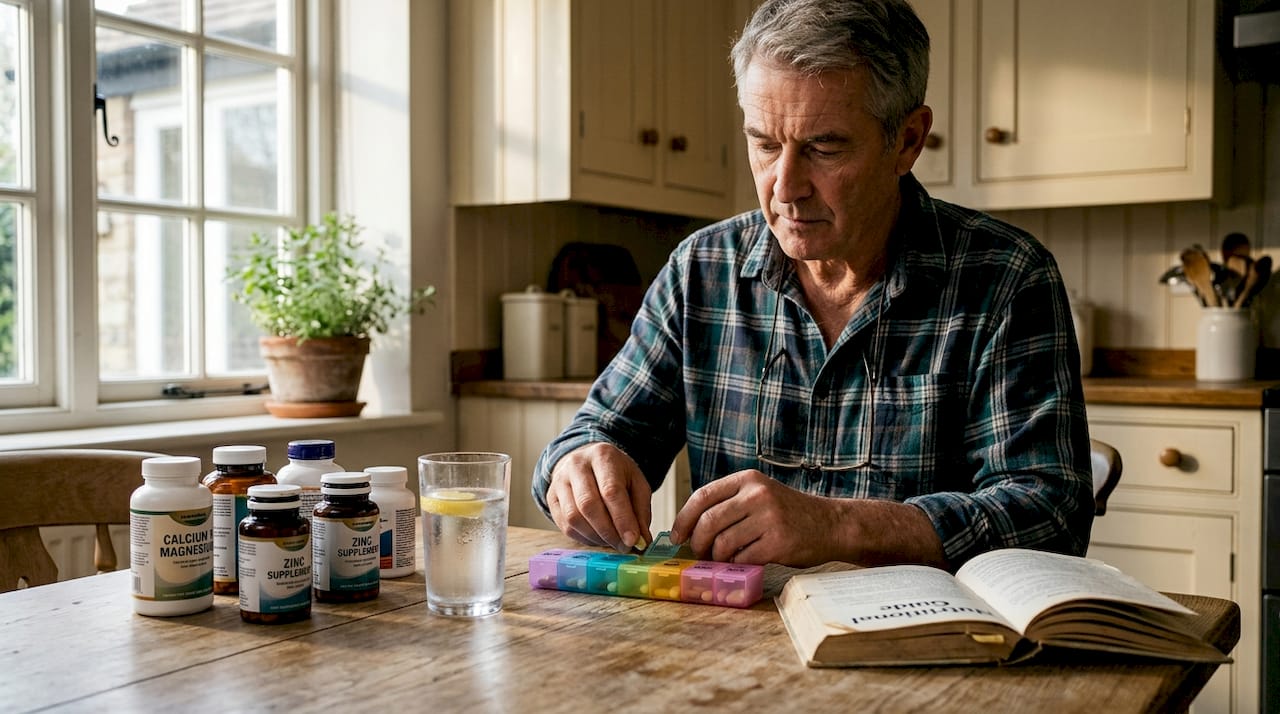
These are not marginal figures. They represent a majority pattern, not an exception. The health consequences of persistent mineral inadequacy compound over years and often manifest in ways that are attributed to “normal ageing” rather than a correctable nutritional gap.
The four most clinically significant health risks from chronic mineral insufficiency in older adults include:
- Frailty and muscle loss (sarcopenia): Magnesium and calcium deficiencies both impair muscle contraction and recovery. Magnesium also plays a direct role in protein synthesis, the process that maintains muscle mass.
- Osteoporosis and fracture risk: Long-term calcium and magnesium inadequacy accelerates bone resorption. For women post-menopause and men over 70, this risk compounds with hormonal changes to produce measurable bone density loss.
- Immune decline: Zinc and selenium deficiencies impair the production and function of T-cells and natural killer cells, the immune system’s primary defence against infection and potentially abnormal cells.
- Cognitive decline: Iron, zinc, and iodine all support neurological function. Suboptimal status in all three has been associated with reduced processing speed, memory performance, and mood stability in older adults.
| Mineral | % of older adults below threshold | Key health consequence |
|---|---|---|
| Calcium | Up to 80% | Bone loss, fracture risk |
| Magnesium | 50–70% | Muscle weakness, fatigue |
| Selenium | 60–75% | Immune decline, oxidative stress |
| Zinc | 40–60% | Wound healing, immunity |
Understanding these figures makes it clear that mineral insufficiency is a significant public health issue for ageing populations, not an individual quirk. For practical guidance on using supplements safely in response to these risks, the supplement safety for older adults resource provides a reliable starting point.
Zinc, selenium, and immune ageing: The oxidative stress connection
Of all the minerals relevant to ageing, zinc and selenium occupy a particularly important position because they sit at the intersection of immunity and oxidative stress control. As we age, the immune system undergoes a gradual deterioration known as immunosenescence. This describes the slow, progressive erosion of immune function that leaves older adults more vulnerable to infection, slower to mount vaccine responses, and at greater risk from prolonged inflammatory states.
Zinc and selenium both function as essential cofactors for antioxidant enzymes and immune cell maintenance, providing a direct mechanistic explanation for why deficiencies worsen age-related health outcomes. Zinc is required for the maturation of T-lymphocytes and supports the integrity of the thymic tissue where immune cells are trained. Without adequate zinc, the immune repertoire narrows, and the body’s ability to respond to novel threats declines.
Selenium powers the glutathione peroxidase enzyme system, which neutralises hydrogen peroxide and lipid peroxides inside cells. This process, sometimes called cellular defence against oxidative damage, prevents the kind of cumulative cellular injury that drives ageing at the molecular level.
Key points on zinc and selenium for immune ageing:
- Both minerals reduce markers of systemic inflammation when corrected from deficient levels.
- Selenium adequacy is associated with better response to influenza vaccination in older adults.
- Zinc supplementation can partially restore thymic function in deficient individuals.
- Excess supplementation, particularly with selenium above 200 mcg daily or zinc above 40 mg daily, can paradoxically suppress immunity and increase other health risks.
Pro Tip: Request a serum zinc and plasma selenium test from your GP before supplementing. These tests are inexpensive, widely available, and entirely change whether you need 5 mg or 25 mg of zinc daily. More is rarely better, and in the case of selenium, higher doses carry a documented risk of harm. For further product guidance, browse nutritional picks for healthy ageing to find options aligned with safe intake levels.
Should you supplement? Population evidence and targeted strategies
The supplement industry encourages broad use of multivitamins and minerals for all adults. The population-level evidence, however, tells a more measured story. Routine multivitamin use has inconsistent evidence for extending healthspan or reducing mortality in adults who are not clinically deficient. This does not mean supplementation is ineffective. It means that untargeted supplementation in non-deficient individuals delivers limited benefit while carrying real risk of exceeding safe upper intake limits.
The practical implication is clear: personalise before you purchase. Follow these steps to assess your own need:
- Review your dietary pattern honestly. List your main food sources of calcium, zinc, magnesium, and selenium. If dairy is limited, Brazil nuts absent, and green vegetables infrequent, dietary gaps are likely.
- Identify medications that deplete minerals. Check whether your current prescriptions include proton pump inhibitors, diuretics, or metformin, all of which are known to reduce specific mineral levels.
- Request relevant lab tests. Ask your GP for serum ferritin (iron stores), serum zinc, plasma selenium, and a full blood count to screen for anaemia. These are standard, low-cost tests.
- Match supplementation to identified gaps. If selenium is low, a targeted selenium supplement makes sense. If zinc is adequate, adding it adds little and risks imbalance with copper.
- Avoid stacking overlapping products. Taking a multivitamin alongside individual mineral supplements dramatically increases the risk of exceeding safe upper limits for minerals like iron, zinc, and selenium.
For detailed safety guidance, the safe supplement use guide covers upper intake levels and common stacking errors. For a broader review of what products are worth considering, the nutritional supplements guide provides structured, evidence-informed recommendations.
A fresh look at minerals and ageing: What most guides miss
After reviewing the evidence carefully, one pattern stands out: the most common advice for older adults is still “take a multivitamin and eat more vegetables.” That framing, while not wrong, dramatically understates the complexity of the problem.
The real challenge is not identifying that minerals matter. It is recognising that individual mineral status varies enormously between people of the same age, eating similar diets, with superficially similar health profiles. Two people both taking the same multivitamin may have completely different zinc status because one uses a proton pump inhibitor and the other does not. One may have selenium levels that are twice the other’s due to differences in where their food was grown.
The conventional “more is better” impulse that drives many supplement decisions is also directly contradicted by the evidence. Excess iron in non-anaemic adults promotes oxidative stress. Too much zinc displaces copper and impairs immune function. High-dose calcium supplementation without adequate vitamin D and magnesium co-factors may not benefit bone at all and has been investigated for cardiovascular risk in certain populations.
What genuinely works is periodic, informed reassessment. This means organising a dietary review with a qualified nutrition professional every two to three years after 50, updating lab tests when health status changes, and adjusting supplementation accordingly rather than continuing the same routine indefinitely. The evidence-backed picks for healthy ageing section at Vivetus supports this principle by focusing on products with documented efficacy at appropriate dosages.
Minerals are not a one-time solution. They are an ongoing calibration.
Next steps to optimise mineral status for longevity
The evidence is clear: targeted mineral support, based on individual assessment rather than broad assumptions, represents the most effective strategy for maintaining vitality after 40. If you are ready to move from understanding to action, the resources at Vivetus are structured precisely to help you do that.
Vivetus provides access to scientifically-backed supplements designed for healthy ageing, curated for quality, dosage accuracy, and safety. Whether you are addressing a confirmed deficiency or looking to build a more complete nutritional foundation, the supplements for healthy ageing guide at Vivetus identifies the products most supported by current evidence. Free shipping on orders over €50 makes it practical to invest in your long-term health without unnecessary cost. Start with an assessment, identify your gaps, and choose products that match your actual needs.
Frequently asked questions
Which minerals are most often deficient in people over 60?
Calcium, magnesium, selenium, and zinc are most frequently suboptimal in older adults, with some studies showing over 80% fall below recommended intake thresholds for at least one of these minerals.
Can taking a multivitamin mineral supplement prevent ageing?
Routine multivitamin use does not consistently prevent ageing or extend life; population-level evidence supports targeted, needs-based strategies over broad supplementation in adults who are not deficient.
What is the role of zinc and selenium in immunity for older adults?
Both minerals control oxidative stress and support immune cell function; correcting deficiencies through supplementation can improve immune parameters, as supported by research on immunosenescence.
Are there risks to taking too many mineral supplements?
Yes, exceeding upper intake limits, particularly when stacking multiple products, can cause harm; the evidence base highlights risks from exceeding upper limits and insufficient support for high-dose supplementation without confirmed deficiency.
How can I find out if I need more minerals as I get older?
Ask your GP for targeted blood tests including serum ferritin, serum zinc, and plasma selenium, and pair these with a dietary assessment from a qualified nutrition professional before starting any mineral supplementation programme.