

Why supplement with zinc: benefits for health and vitality
TL;DR:
- Zinc is essential for maintaining immune function, skin health, and hormone balance at the cellular level. It must be replenished daily because the body cannot store it, especially in vulnerable groups like vegetarians, older adults, and athletes. Consistent supplementation with highly absorbable forms such as glycinate or picolinate supports these biological processes over time without immediate energy effects.
Zinc is not a stimulant. It will not give you an energy surge an hour after taking it. Yet it is one of the most widely misunderstood supplements on the market, and one of the most genuinely useful. If you have been wondering why supplement with zinc at all, the answer lies in what zinc actually does at a cellular level: it keeps your immune system functional, your skin resilient, and your hormones balanced. This article covers the science, the practical guidance, and the honest caveats so you can make an informed decision.
Table of Contents
- Key takeaways
- Why supplement with zinc: the biological case
- Who actually needs zinc supplementation
- Benefits of zinc supplements: immune health, skin, and vitality
- Choosing the right zinc supplement
- Integrating zinc into your wellness routine
- My honest take on zinc supplementation
- Support your vitality with Vivetus zinc formulations
- FAQ
Key takeaways
| Point | Details |
|---|---|
| No body storage of zinc | Your body cannot store zinc, so consistent daily intake from food or supplements is necessary. |
| Deficiency is more common than expected | Vegetarians, older adults, athletes, and those with digestive conditions are at elevated risk. |
| Form determines absorption | Zinc glycinate absorbs significantly better than zinc oxide; the form you choose matters. |
| Dose within safe limits | Maintain a daily intake of 15 to 30 mg and stay below 40 mg to avoid adverse effects. |
| Benefits build over time | Immune support and skin repair improve gradually with consistent supplementation, not overnight. |
Why supplement with zinc: the biological case
Zinc is a catalyst in the activity of over 300 enzymes in the human body, influencing everything from immune cell production to DNA synthesis and wound healing. That number alone signals how broadly this mineral operates. It is not confined to one system. It is woven into the basic machinery of cellular function.
What makes zinc particularly important is that your body has no specialised storage mechanism for it. Unlike fat-soluble vitamins that accumulate in tissue over months, zinc must be replenished regularly through diet or supplementation. Consistent daily intake is necessary because absorption is also influenced by what you eat alongside it, making timing and meal composition genuinely relevant.
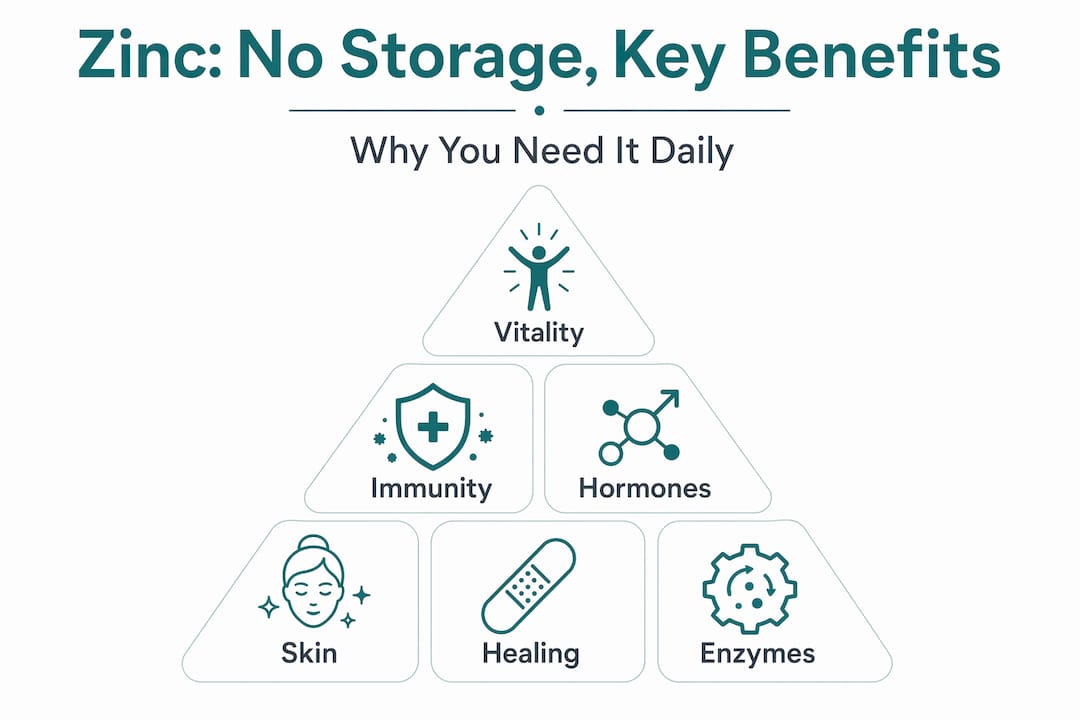
Zinc contributes directly to the development and activation of immune cells, including T-lymphocytes, which are central to your body’s defence response. It also plays a role in protein synthesis, which underpins tissue repair and muscle maintenance. For skin health specifically, zinc supports keratinocyte function and helps regulate sebum production, which is why it appears in both oral supplements and topical treatments for acne and wound care.
Hormone regulation is another area where zinc earns its place. It is involved in testosterone synthesis and thyroid hormone metabolism. For men especially, adequate zinc status is linked to maintaining healthy testosterone levels, which affects energy, muscle mass, and mood. The importance of zinc in diet becomes particularly clear when you consider how many of these functions begin to decline with age.
Who actually needs zinc supplementation
Most people get some zinc through food. Oysters, red meat, poultry, and legumes are good sources. The problem is that many adults do not consume enough of these foods consistently, and certain groups absorb zinc poorly regardless of intake.
Groups with elevated zinc needs or absorption challenges include:
- Vegetarians and vegans: Plant-based diets high in phytates reduce zinc absorption because phytates bind to zinc in the gut and prevent uptake. Those following plant-forward diets may need up to 50% more zinc than omnivores.
- Older adults: Absorption efficiency declines with age, and appetite often decreases too. This combination makes older adults one of the highest-risk groups for zinc insufficiency. The nutritional needs after 50 shift in ways that make supplementation more relevant.
- Athletes: Zinc is lost through sweat, and intense training increases metabolic demands. Endurance and strength athletes are particularly prone to suboptimal zinc levels.
- People with digestive conditions: Crohn’s disease, ulcerative colitis, and irritable bowel syndrome impair nutrient absorption broadly, and zinc is one of the first minerals affected.
- Heavy alcohol consumers: Alcohol increases urinary zinc excretion and impairs intestinal absorption simultaneously.
Zinc deficiency symptoms include frequent colds, slow wound healing, hair thinning, skin rashes, loss of appetite, and fatigue. These signs are non-specific, which is why zinc deficiency often goes unrecognised for months. If several of these apply to you, zinc status is worth investigating.
Pro Tip: If you follow a plant-based diet, pair zinc-rich foods like pumpkin seeds or lentils with fermented or sprouted preparations. These processes reduce phytate content and improve zinc bioavailability from food before you even consider supplementation.
Benefits of zinc supplements: immune health, skin, and vitality
The health advantages of adequate zinc intake are well-documented across multiple areas. Here is where the evidence is strongest.
Immune function
Zinc lozenges reduce the duration of the common cold when used immediately at symptom onset, according to a meta-analysis of seven clinical trials involving 575 participants. The mechanism is direct: zinc ions interfere with rhinovirus replication and support the activity of natural killer cells. Zinc supplementation can improve immune cell function, decrease respiratory infection severity, and accelerate wound repair. For anyone who gets ill frequently or recovers slowly, this is one of the clearest zinc supplementation reasons to act on.
Skin repair and integrity
Zinc is involved in collagen synthesis and the regulation of inflammatory pathways in the skin. Supplementation has shown benefit in reducing acne severity, supporting healing after minor wounds or surgery, and maintaining skin barrier function. This is particularly relevant for adults over 40, when skin cell turnover slows and repair processes become less efficient.

Hormonal and metabolic support
Adequate zinc levels support testosterone production in men and are associated with healthy thyroid function in both sexes. For women, zinc plays a role in regulating menstrual cycle hormones. Beyond hormones, zinc contributes to taste and smell perception, which directly affects appetite and nutritional intake. When zinc is low, appetite often drops, creating a cycle where poor intake worsens deficiency.
“Zinc’s benefits manifest as a healthier immune response and skin repair over time rather than an immediate energy or vitality boost.” — IngredientMD: Zinc
This framing matters. The zinc health advantages you are looking for will not appear in 48 hours. They build over weeks of consistent supplementation, which is why the quality and regularity of your intake both count.
Choosing the right zinc supplement
Not all zinc supplements are equal. The form of zinc determines how much your body actually absorbs, and the differences are significant.
| Form | Bioavailability | Digestive tolerance | Notes |
|---|---|---|---|
| Zinc glycinate (bisglycinate) | High | Excellent | Preferred form; gentle on stomach |
| Zinc picolinate | High | Good | Well-absorbed; widely available |
| Zinc gluconate | Moderate | Good | Common in lozenges and lower-cost supplements |
| Zinc oxide | Low | Variable | Often used in topical products; poor oral absorption |
Zinc glycinate offers approximately 43% greater bioavailability than zinc gluconate and is gentler on the digestive system. Chelated forms like picolinate and bisglycinate are increasingly preferred in high-quality formulations for exactly this reason. If you are comparing products and one costs more because it uses glycinate rather than oxide, that price difference reflects a real functional distinction.
For dosage, a maintenance dose of 15 to 30 mg of elemental zinc daily is appropriate for most adults. The tolerable upper intake level is 40 mg per day for adults. Doses at or above 50 mg per day over several weeks are linked to adverse effects, most critically the inhibition of copper absorption. Excess zinc over time can induce copper deficiency by trapping copper in intestinal cells, which can impair neurological function and red blood cell production.
Timing also matters. Taking zinc on an empty stomach frequently causes nausea, dizziness, or vomiting. Taking it with a small meal reduces these effects without significantly reducing absorption, provided the meal does not contain high amounts of phytates or calcium.
Pro Tip: Avoid taking zinc at the same time as iron supplements. Both minerals compete for the same intestinal transporters, and simultaneous intake reduces absorption of both. Space them by at least two hours.
Integrating zinc into your wellness routine
Zinc works best as part of a broader, consistent approach to health rather than as a standalone fix. Here is a practical framework for incorporating it effectively:
- Assess your diet first. Before adding a supplement, consider whether your food intake includes zinc-rich sources such as meat, shellfish, seeds, or legumes. Supplementation is most valuable where dietary gaps exist.
- Choose the right form and dose. Based on the comparison above, opt for glycinate or picolinate at 15 to 25 mg of elemental zinc daily. Check the label for elemental zinc content, not total compound weight.
- Take it consistently with food. Daily intake matters more than occasional high doses. Take your supplement with a meal that is not heavily phytate-rich (so not alongside a large bowl of oats or bran cereal).
- Pair with complementary nutrients. Vitamin C supports immune function alongside zinc. Vitamin D works synergistically with zinc on immune pathways. These combinations are worth considering as part of a healthy ageing supplement plan.
- Support with lifestyle basics. Zinc cannot compensate for chronic sleep deprivation, high stress, or poor hydration. These factors all impair immune function independently. Supplementation performs best when the foundations are in place.
- Seek professional guidance when needed. If you suspect significant deficiency or have an underlying health condition affecting absorption, a blood test and professional input will give you clearer direction than self-assessment alone.
My honest take on zinc supplementation
I have observed a consistent pattern in how people approach zinc. They read about its immune benefits, buy a bottle, take it for two weeks, notice nothing dramatic, and conclude it is not working. Then they stop.
What I have found is that zinc is not a supplement you feel. It is a supplement that quietly keeps systems functioning at a level you only notice when they start to fail. The person who gets fewer colds over winter, whose skin heals faster after a cut, or who maintains steady energy through a demanding period: these outcomes are hard to attribute directly to zinc because they are the absence of problems rather than a visible improvement.
In my experience, the biggest mistakes people make are choosing cheap oxide-based supplements because of price, taking doses far above the recommended range thinking more is better, and ignoring the copper interaction risk entirely. High doses do not accelerate the benefits. They introduce risks that offset them.
My honest recommendation: use a glycinate or picolinate form at 15 to 25 mg per day, take it with food, and give it at least eight weeks before drawing conclusions. The benefits of zinc supplements are real and well-supported. They just require patience and consistency, not megadosing.
— Jord
Support your vitality with Vivetus zinc formulations
At Vivetus, the focus is on supplements that are formulated with absorption and safety in mind. The Energy and Vitality bundle includes zinc in a form that reflects the bioavailability evidence covered in this article, designed for adults who want consistent immune support and long-term vitality rather than short-term fixes. The formulations are selected to complement each other, which means you are not left to piece together a stack from separate products. If you are ready to take a considered approach to zinc supplementation, Vivetus provides the quality and transparency to do it with confidence. Free shipping applies on orders over €50.
FAQ
Why supplement with zinc if you eat a balanced diet?
Even with a varied diet, many adults fall short of optimal zinc intake due to food choices, cooking methods, and absorption barriers such as phytates. Supplementation fills gaps that diet alone does not reliably cover.
What are the main signs of zinc deficiency?
Zinc deficiency symptoms include frequent infections, slow wound healing, hair thinning, skin rashes, reduced appetite, and persistent fatigue. These signs often overlap with other conditions, so professional assessment is advisable.
Which form of zinc supplement absorbs best?
Zinc glycinate (bisglycinate) and zinc picolinate offer the highest bioavailability and the best digestive tolerance. Zinc oxide, the cheapest form, absorbs poorly and is better suited to topical use.
How long does it take to see results from zinc supplementation?
Zinc benefits accumulate over time rather than appearing immediately. Most people notice meaningful changes in immune resilience and skin health after six to eight weeks of consistent daily supplementation.
Is it safe to take zinc every day?
Yes, at doses of 15 to 30 mg of elemental zinc daily, long-term supplementation is considered safe for most adults. Staying below the 40 mg upper limit and avoiding prolonged high-dose use protects against copper depletion and other adverse effects.