

Lifestyle tips for healthy aging: your 2026 guide
TL;DR:
- Healthy ageing involves consistent exercise, adequate protein and fiber intake, and active cognitive engagement to preserve physical and mental function into later life. Building these habits in your 50s provides the greatest long-term health benefits, but incremental changes can be beneficial at any age. Emphasizing function over aesthetics encourages sustainable motivation and lasting well-being.
Healthy ageing is defined as the sustained maintenance of physical function, mental sharpness, and independence well into later life. These lifestyle tips for healthy aging are not general wellness advice. They are evidence-based practices drawn from 2026 clinical research, including trials from Stanford Medicine and the U.S. POINTER study, that directly slow biological decline and extend your healthspan. If you are over 50, the habits you build now determine the quality of the decades ahead.
1. What types of exercise best support healthy aging?
Exercise is the single most effective intervention for preserving muscle mass, bone density, and cardiovascular function after 50. The standard clinical recommendation is 150 minutes of moderate aerobic activity per week, combined with muscle-strengthening sessions twice weekly. In your 60s and 70s, adding approximately 100 minutes of resistance training per week specifically addresses the accelerating rate of muscle and bone loss that occurs in those decades.

Aerobic exercise does not require a gym. Brisk walking, cycling, and swimming all count. The key is consistency over intensity, particularly in the early stages of building a routine.
Strength and balance training deserve equal attention:
- Sit-to-stand exercises: Perform 10 to 15 repetitions from a standard chair without using your arms. This directly trains the muscle groups most critical for fall prevention.
- Single-leg balance: Stand on one leg for 30 seconds per side daily. This improves proprioception and gait stability.
- Wall push-ups and chair squats: Both are accessible, low-impact options that build upper and lower body strength without joint stress.
- Daily step count: 7,000 steps daily is linked to measurably lower cardiovascular mortality in adults aged 60 to 79.
Prolonged inactivity is a specific risk to manage. Even a few days of reduced movement can trigger rapid muscle weakness that compounds over time. Breaking exercise into two or three shorter sessions across the day is clinically as effective as one continuous session, which removes the most common barrier of finding a large block of time.
Pro Tip: Use habit stacking to build consistency. Attach your single-leg balance exercise to an existing daily routine, such as standing on one leg while brushing your teeth each morning. This removes the need for willpower and makes the habit automatic.
2. How to optimise nutrition for aging well
Nutrition for healthy ageing centres on two measurable targets that most adults over 50 consistently miss. The first is protein. Adults over 40 require 1.0 to 1.2 grams of protein per kilogram of body weight daily to counteract sarcopenia, the progressive loss of muscle mass that accelerates after 50. For a person weighing 70 kilograms, that is 70 to 84 grams of protein per day, spread across meals rather than consumed in one sitting.
The second target is dietary fibre. Consuming 25 to 31 grams of fibre daily supports blood sugar regulation, cardiovascular health, and gut microbiome diversity. Most adults consume fewer than 20 grams. Practical sources include lentils, oats, flaxseed, and a wide variety of vegetables.
| Nutrient | Daily target | Key food sources |
|---|---|---|
| Protein | 1.0 to 1.2g per kg body weight | Eggs, fish, legumes, Greek yoghurt |
| Dietary fibre | 25 to 31g | Oats, lentils, broccoli, flaxseed |
| Omega-3 fatty acids | 2 to 3 portions oily fish per week | Salmon, mackerel, sardines |
| Vitamin D | Supplement in low-sunlight months | Fortified foods, sunlight, supplements |
Dietary patterns matter as much as individual nutrients. The Mediterranean and MIND diets both emphasise whole grains, legumes, oily fish, olive oil, and abundant vegetables. Both are associated with reduced cognitive decline and lower cardiovascular risk in older adults. For a detailed breakdown of how diet shapes vitality after 40, Vivetus provides a dedicated resource covering the nutritional science in depth.
- Prioritise protein at breakfast to support muscle protein synthesis throughout the day.
- Replace refined carbohydrates with fibre-rich alternatives such as brown rice, quinoa, and whole grain bread.
- Eat oily fish at least twice weekly for omega-3 fatty acids, which reduce systemic inflammation.
- Stay hydrated. Thirst sensation diminishes with age, making deliberate fluid intake necessary.
Pro Tip: Stop eating one to two hours before bedtime. Nighttime snacking disrupts circadian metabolic repair processes and reduces sleep quality. A strict food cut-off supports cellular recovery and improves the restorative value of sleep.
3. Cognitive health and emotional well-being as you age
Healthy ageing means maintaining function and independence, not just physical appearance. Cognitive engagement and emotional well-being are as central to that goal as exercise and nutrition. The brain responds to challenge and novelty throughout life, and deliberate mental stimulation measurably slows cognitive decline.
Effective cognitive engagement activities include:
- Reading and writing: Daily reading, particularly of non-fiction or complex narrative, maintains vocabulary, concentration, and working memory.
- Learning new skills: Taking up a musical instrument, a new language, or a craft creates new neural pathways. The novelty is the mechanism, not the activity itself.
- Puzzles and strategy games: Crosswords, Sudoku, chess, and card games all require active recall and problem-solving, both of which protect against cognitive decline.
- Social interaction: Social engagement acts as a cognitive intervention, requiring active listening, memory retrieval, and real-time processing. Regular conversation with friends, family, or community groups is not a leisure activity. It is a form of brain training.
Sleep quality and stress management directly affect cognitive function. Poor sleep accelerates the accumulation of amyloid plaques associated with Alzheimer’s disease. A consistent sleep schedule, a dark and cool bedroom, and avoiding screens for 60 minutes before bed are the three most evidence-supported sleep hygiene practices. For stress, structured techniques such as diaphragmatic breathing, progressive muscle relaxation, and mindfulness meditation each have clinical support for reducing cortisol levels in older adults.
The U.S. POINTER trial found that coached lifestyle programmes produced greater improvements in cognitive function and frailty scores than self-guided approaches. This confirms that accountability and structure amplify the benefits of any individual habit.
4. How to tailor lifestyle changes by decade: 50s, 60s, and 70s
The most effective window for building longevity habits is your 40s and 50s. Building habits in your 50s can add seven to ten extra years of good health. This is not about reversing ageing. It is about compressing the period of decline into as short a window as possible at the end of life.
| Decade | Primary focus | Key actions |
|---|---|---|
| 50s | Foundation building | Establish protein targets, begin resistance training, prioritise sleep |
| 60s | Muscle and bone preservation | Add balance training, increase resistance volume, review micronutrient intake |
| 70s | Functional independence | Focus on sit-to-stand, gait stability, social engagement, and fall prevention |
In your 60s, the rate of muscle loss accelerates and bone density reduction becomes a clinical concern. Resistance training at this stage is not optional. It is the primary tool for maintaining the functional strength needed for independent living. Cardiovascular exercise remains important but should be adapted to individual capacity. Swimming and cycling are lower-impact alternatives to running for those with joint considerations.
In your 70s, the priority shifts towards preserving what you have built. Balance and gait exercises become the most critical daily practices. Functional independence and fall prevention through muscle-strengthening and balance training are directly linked to mortality outcomes after 60. Nutrition adjustments should account for reduced appetite and potentially lower absorption of key micronutrients including vitamin D, B12, and calcium.
Pro Tip: Small incremental changes remain effective at any age. Adding one additional protein-rich meal per day or ten minutes of walking is a measurable improvement. Perfectionism is the most common reason people abandon healthy ageing habits entirely.
Key takeaways
Healthy ageing requires consistent action across exercise, nutrition, cognitive engagement, and social connection, with the habits built in your 50s delivering the greatest long-term return.
| Point | Details |
|---|---|
| Exercise frequency | Aim for 150 minutes of aerobic activity and two strength sessions weekly, adding balance training from your 60s onwards. |
| Protein and fibre targets | Consume 1.0 to 1.2g of protein per kg of body weight and 25 to 31g of fibre daily to protect muscle and metabolic health. |
| Cognitive engagement | Treat social interaction and learning new skills as non-negotiable parts of your weekly routine, not optional extras. |
| Decade-specific priorities | Adjust your focus from foundation building in your 50s to functional independence and fall prevention in your 70s. |
| Start timing | Building habits in your 50s yields the greatest healthspan gains, but incremental changes remain effective at any age. |
Why I think most people approach healthy ageing the wrong way
Most people frame healthy ageing as damage limitation. They wait until a diagnosis, a fall, or a doctor’s warning before making changes. That framing is the problem. The evidence from Stanford Medicine and the POINTER trial is unambiguous: the habits you build before chronic disease onset are the ones that determine your healthspan. Waiting until your 70s to start resistance training is not pointless, but it is significantly less effective than starting in your 50s.
What I have observed consistently is that people underestimate the compound effect of small, consistent actions. Walking 7,000 steps a day sounds modest. Done daily for a decade, it produces measurable reductions in cardiovascular mortality. Eating 80 grams of protein a day sounds like a lot. Spread across three meals, it is entirely manageable and directly prevents the muscle loss that leads to falls and loss of independence.
The other shift worth making is from aesthetics to function. Most wellness content targets how you look. Healthy ageing is about what you can do. Can you carry your shopping? Can you get up from the floor? Can you walk a kilometre without stopping? Those are the metrics that matter. When you orient your habits around function rather than appearance, the motivation becomes more durable because the stakes are clearer.
Start with one change. Add protein to breakfast. Walk after dinner. Stand on one leg while you wait for the kettle. The compounding starts immediately.
— Jord
How Vivetus supports your healthy ageing goals
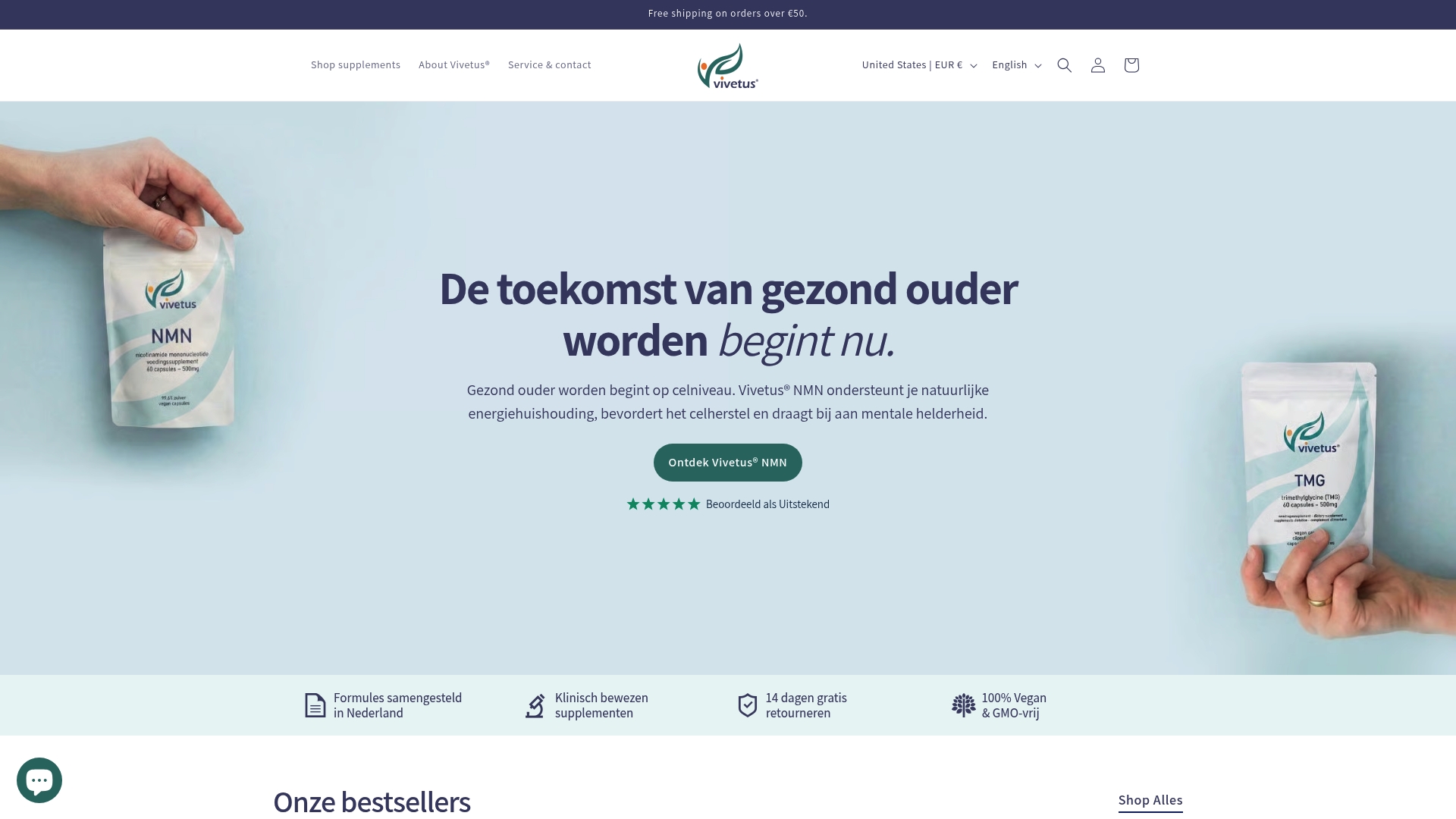
Vivetus specialises in scientifically supported nutritional supplements designed for adults over 50 who want to maintain vitality and independence. Whether you are looking to meet your daily protein targets, address micronutrient gaps, or support bone and joint health, Vivetus provides products formulated specifically for the demands of healthy ageing. Explore the nutritional supplements guide for a current, evidence-based overview of which supplements are most relevant for your decade. For guidance on choosing the right products for your specific needs, the five-step selection guide on the Vivetus website is a practical starting point.
FAQ
What are the most important lifestyle tips for healthy aging?
The most impactful habits are resistance training twice weekly, meeting daily protein targets of 1.0 to 1.2 grams per kilogram of body weight, and maintaining regular social engagement. These three practices directly address muscle loss, metabolic health, and cognitive decline.
How much exercise do adults over 60 need?
Adults over 60 should aim for 150 minutes of moderate aerobic activity per week, two muscle-strengthening sessions, and daily balance exercises such as single-leg standing. Research from Stanford Medicine confirms this combination supports functional independence and reduces fall risk.
When is the best time to start building healthy ageing habits?
Building habits in your 50s yields the greatest healthspan gains, with evidence suggesting seven to ten additional years of good health. That said, incremental changes remain clinically beneficial at any age.
Does social interaction genuinely affect brain health?
Social engagement is a direct cognitive intervention. It requires active listening, memory retrieval, and real-time processing, all of which protect against cognitive decline. The U.S. POINTER trial confirmed that structured social and lifestyle programmes improved cognitive function more than self-guided approaches.
What dietary pattern best supports aging well?
The Mediterranean and MIND diets are the most evidence-supported patterns for adults over 50. Both emphasise oily fish, legumes, whole grains, olive oil, and vegetables, and both are associated with reduced cognitive decline and lower cardiovascular risk.