

Lista di controllo anti-età: passaggi scientificamente comprovati per la vitalità
In sintesi:
- Una routine anti-età costante enfatizza la protezione solare quotidiana, i retinoidi, l'esercizio fisico e il sonno per rallentare l'invecchiamento visibile. Abitudini di vita come il sonno e l'attività fisica hanno un impatto misurabile sull'invecchiamento cellulare e sulla vitalità a lungo termine. Pazienza e semplicità sono essenziali per risultati duraturi, con le basi dello stile di vita più efficaci di integratori non comprovati.
Una checklist anti-età è un insieme strutturato di abitudini quotidiane e settimanali, passaggi per la cura della pelle e pratiche di stile di vita scientificamente provate per rallentare i segni visibili dell'invecchiamento e supportare la vitalità a lungo termine. Il termine “protocollo per un invecchiamento sano” è usato in ambito clinico, ma per scopi pratici un formato checklist funziona meglio perché aiuta a mantenere la costanza. La protezione solare ad ampio spettro SPF 30+, i retinoidi topici e i 150+ minuti di esercizio settimanale raccomandati sono i tre pilastri presenti in ogni regime anti-età credibile. Questa guida spiega ogni passaggio in termini semplici, con le motivazioni dietro, così puoi costruire una routine che funzioni davvero.
1. Quali sono i passaggi più importanti in una checklist anti-età?
Il passaggio più efficace nella cura della pelle è l'uso quotidiano della protezione solare. Un SPF 30+ previene fino all'80% dell'invecchiamento cutaneo visibile bloccando le radiazioni UV che degradano il collagene e causano pigmentazione. I dermatologi lo considerano costantemente superiore a qualsiasi altro prodotto topico. Applicalo ogni mattina, anche nelle giornate nuvolose e quando stai in casa vicino alle finestre.
Routine mattutina: protezione
Inizia con un detergente delicato che non aggredisca la pelle. L'estetista Maedeh Samimi sottolinea che preservare la barriera cutanea è più importante che ottenere una sensazione di pelle perfettamente pulita. Dopo la detersione, applica un siero alla vitamina C con una concentrazione del 10–20%. I sieri alla vitamina C proteggono dai radicali liberi, illuminano il tono della pelle e supportano la sintesi del collagene. Applicalo prima della protezione solare in modo che venga assorbito completamente dalla pelle.
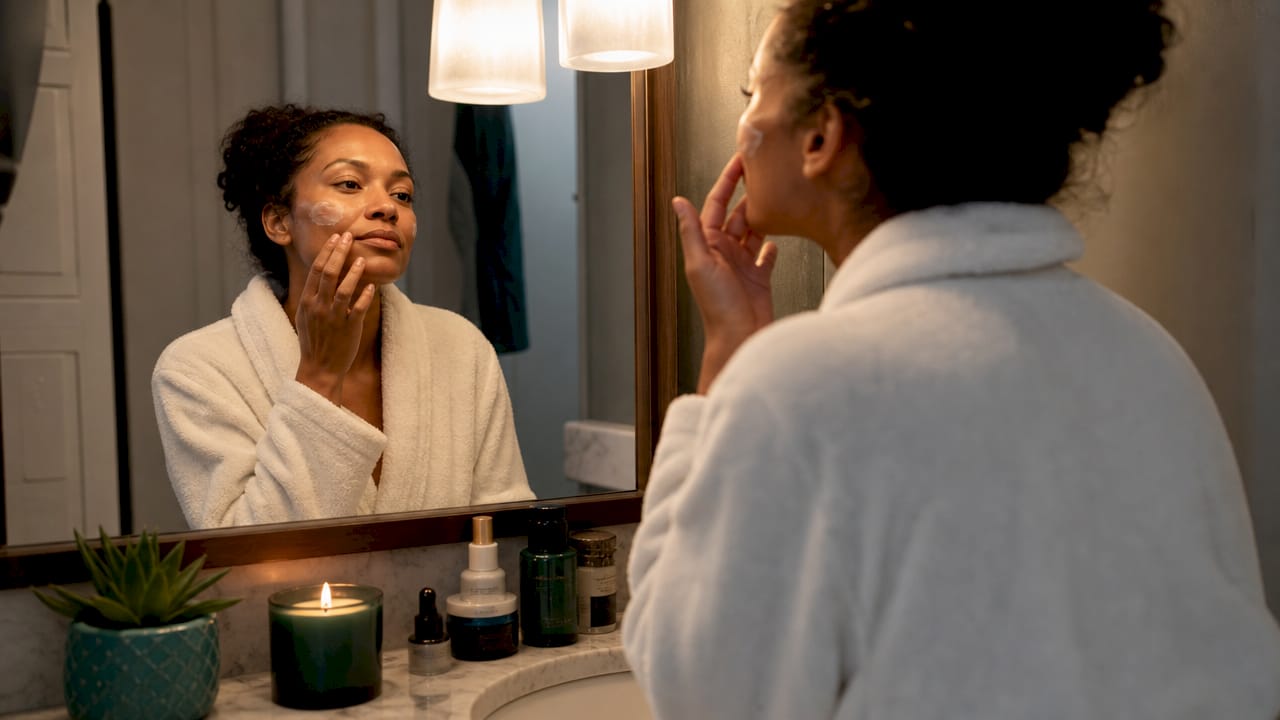
Routine serale: riparazione
La sera è dedicata alla riparazione. I retinoidi sono lo standard d'oro in questo ambito. L'uso costante di retinoidi riduce le rughe fino al 44% stimolando la produzione di collagene. Inizia con una bassa concentrazione due o tre sere a settimana, poi aumenta la frequenza man mano che la tua pelle si adatta. Segui con una crema idratante contenente ceramidi o niacinamide per supportare la funzione barriera e ridurre le irritazioni.
Consiglio professionale: Applica il retinoide sulla pelle asciutta, aspetta 20 minuti, poi applica la crema idratante. Questo riduce l’irritazione senza diminuire l’efficacia.
2. Come le abitudini di vita supportano un aspetto giovanile e la longevità?
La sola cura della pelle non può superare gli effetti di cattive abitudini di vita. Il corpo invecchia a livello cellulare, e gli interventi più potenti agiscono direttamente su questo processo. I cambiamenti nello stile di vita dopo i 40 anni hanno un effetto misurabile sia sull’aspetto che sulla durata della salute.
Le abitudini di vita fondamentali per qualsiasi regime anti-età sono:
- Fai esercizio regolarmente. Le autorità sanitarie raccomandano 150+ minuti di attività moderata o 75+ minuti di attività vigorosa a settimana, più due sessioni di allenamento di forza. L’esercizio preserva la massa muscolare, supporta la salute cardiovascolare e riduce l’infiammazione.
- Dai priorità al sonno. Sette-nove ore di sonno di qualità per notte sono un intervento diretto anti-età. Il sonno scarso accorcia i telomeri e compromette la riparazione cellulare, accelerando l’invecchiamento biologico. La regolarità degli orari di sonno è importante quanto la durata.
- Segui una dieta ricca di alimenti integrali e vegetali. Verdure, legumi, pesce grasso e cereali integrali forniscono antiossidanti e micronutrienti che supportano la salute della pelle e degli organi. Cibi processati e zuccheri in eccesso accelerano la glicazione, che irrigidisce le fibre di collagene.
- Evita il fumo e modera l’alcol. Il fumo danneggia le fibre della pelle, causando rughe premature e un tono spento. L’alcol disidrata la pelle e compromette la qualità del sonno. Entrambi accelerano il rischio di malattie croniche legate all’invecchiamento.
- Gestisci attivamente lo stress. Lo stress cronico aumenta il cortisolo, che distrugge il collagene e accorcia i telomeri. Pratiche come la meditazione, lo yoga o anche una passeggiata quotidiana di 20 minuti riducono l’impatto biologico dello stress.
Consiglio professionale: L’allenamento di forza due volte a settimana preserva la densità ossea e la massa muscolare, due fattori che influenzano direttamente il tuo aspetto e i tuoi movimenti con l’età.
3. Quali ingredienti anti-età hanno il supporto scientifico più solido?
Non tutti gli ingredienti per la cura della pelle sono uguali. I più efficaci hanno decenni di ricerche cliniche alle spalle. Serve pazienza: la maggior parte degli ingredienti attivi richiede 8–12 settimane per mostrare risultati visibili. Aspettarsi risultati più rapidi porta a cambiare prodotto prima che l’ingrediente abbia avuto il tempo di agire.
| Ingrediente | Beneficio principale | Momento migliore per applicare |
|---|---|---|
| Retinoidi | Stimolazione del collagene, riduzione delle rughe | Sera |
| Vitamina C (acido L-ascorbico) | Protezione antiossidante, illuminante | Mattina |
| Niacinamide | Supporto della barriera, aspetto dei pori | Mattina o sera |
| Acido ialuronico | Idratazione, rimpolpante | Mattina o sera |
| Peptidi | Segnalazione del collagene, tonicità | Sera |
Le creme e i sieri da banco variano molto in concentrazione degli ingredienti ed efficacia. I retinoidi da prescrizione, per esempio, offrono risultati più forti e affidabili rispetto agli equivalenti da banco. Se hai preoccupazioni specifiche come rughe profonde o pigmentazione significativa, una consulenza con un dermatologo ti darà accesso a trattamenti che i cosmeceutici non possono eguagliare.
L’ordine di applicazione è importante. Applica prima i sieri a base d’acqua, poi la crema idratante e infine la protezione solare al mattino. La sera, usa i retinoidi dopo la detersione e prima di una crema idratante che supporta la barriera. Mescolare ingredienti attivi senza comprendere le loro interazioni, come retinoidi con acidi, può causare irritazioni e rallentare i progressi.
4. Quali errori comuni compromettono i tuoi sforzi anti-età?
La maggior parte delle persone non fallisce perché sceglie i prodotti sbagliati. Fallisce a causa di abitudini evitabili che annullano i benefici della loro routine. Riconoscere questi errori precocemente fa risparmiare tempo e denaro.
- Saltare la protezione solare nei giorni nuvolosi o al chiuso. Le radiazioni UV penetrano attraverso le nuvole e il vetro. L’uso incoerente della protezione solare annulla la protezione che la rende efficace.
- Introdurre più ingredienti attivi contemporaneamente. Aggiungere retinoidi, acidi e vitamina C simultaneamente sovraccarica la barriera cutanea. Introduci un nuovo attivo alla volta, con almeno quattro settimane di intervallo tra le aggiunte.
- Usare detergenti aggressivi. I detergenti schiumogeni con solfati eliminano gli oli naturali della pelle e danneggiano la barriera cutanea. Questo accelera la perdita di umidità e rende la pelle più reattiva agli ingredienti attivi.
- Dare priorità agli integratori prima di padroneggiare le basi. Gli esperti di longevità sottolineano l’importanza di padroneggiare movimento, nutrizione e sonno prima di sperimentare integratori non comprovati o biohack complicati. Le basi offrono il maggior ritorno.
- Aspettarsi risultati immediati. Il rimodellamento del collagene e la riparazione cellulare richiedono mesi, non giorni. Abbandonare una routine dopo due settimane significa non raggiungere mai il punto in cui i risultati diventano visibili.
5. Come personalizzare e mantenere il tuo regime anti-età per risultati duraturi
Una routine semplice e costante supera una complicata che abbandoni dopo tre settimane. L’obiettivo è costruire abitudini che si adattino alla tua vita, non replicare un protocollo di sperimentazione clinica.
- Inizia da dove sei. La prevenzione è più efficace se iniziata presto, ma non è mai troppo tardi per cominciare. Gli adulti tra i 50 e i 60 anni vedono miglioramenti misurabili introducendo per la prima volta la protezione solare, i retinoidi e cambiamenti nello stile di vita.
- Adatta la forza del prodotto nel tempo. Un retinolo allo 0,025% è adatto ai principianti. Nel corso di mesi e anni, puoi passare a concentrazioni più elevate o al tretinoina da prescrizione man mano che la tua pelle si adatta.
- Monitora i tuoi progressi realisticamente. Fotografa la tua pelle con luce costante una volta al mese. Questo elimina la distorsione dell’autovalutazione quotidiana e ti dà un registro oggettivo dei cambiamenti in 8–12 settimane.
- Consulta i professionisti quando necessario. Un dermatologo può valutare il tuo tipo di pelle, identificare condizioni che influenzano la scelta dei prodotti e prescrivere trattamenti non disponibili senza ricetta. Controlli annuali sono consigliati dai 40 anni in poi.
- Mantieni la semplicità. Una routine di quattro passaggi usata ogni giorno batte una routine di dieci passaggi usata due volte a settimana. La costanza è la variabile che separa i risultati dal desiderio. Per una visione più ampia delle strategie per un invecchiamento sano, combinare cura della pelle con nutrizione e movimento offre il quadro più completo.
Punti chiave
Una checklist anti-età costante basata su protezione solare, retinoidi, esercizio e sonno di qualità offre risultati misurabilmente migliori di qualsiasi singolo prodotto o integratore da solo.
| Punto | Dettagli |
|---|---|
| La protezione solare è imprescindibile | SPF 30+ quotidiano previene fino all’80% dell’invecchiamento cutaneo visibile causato dai danni UV. |
| I retinoidi riducono le rughe | L’uso costante riduce la profondità delle rughe fino al 44% stimolando il collagene. |
| Lo stile di vita guida l’invecchiamento cellulare | Sette-nove ore di sonno e oltre 150 minuti di esercizio settimanale rallentano l’invecchiamento biologico. |
| Serve pazienza con gli ingredienti | Concedi 8–12 settimane prima di giudicare se un ingrediente attivo funziona. |
| Le basi prima dei biohack | Padroneggiare sonno, movimento e nutrizione offre più di integratori non comprovati. |
Cosa ho imparato costruendo una routine anti-età che funziona davvero
L’errore più comune che vedo è la complessità. Le persone arrivano con uno scaffale pieno di prodotti e una routine che dura 45 minuti. Nel giro di un mese, l’hanno abbandonata completamente. Le routine che producono risultati sono quelle che richiedono meno di dieci minuti e contengono non più di cinque passaggi.
La seconda cosa che ho notato è che i cambiamenti nello stile di vita sono costantemente sottovalutati. I lettori si concentrano intensamente sugli ingredienti e sui prodotti, poi dormono cinque ore a notte e si chiedono perché la loro pelle appare stanca. Il sonno e l’esercizio non sono atti di supporto. Sono l’evento principale. La cura della pelle funziona sopra una base costruita dallo stile di vita.
La terza osservazione riguarda la pazienza. Otto-dodici settimane sembrano un tempo lungo quando si applica un prodotto ogni sera e non si vede nulla. Ma è esattamente così che funziona il rimodellamento del collagene. I lettori che rimangono costanti oltre la decima settimana sono quelli che tornano a dire che ha funzionato. Chi cambia prodotto alla terza settimana non lo scopre mai.
Il mio consiglio pratico è questo: scegli tre abitudini da questa checklist e seguili ogni giorno per 90 giorni prima di aggiungere altro. Protezione solare, retinoide e sette ore di sonno. Questa combinazione, applicata con costanza, supererà qualsiasi protocollo complicato che leggi online.
— Jord
Vivetus e la tua routine anti-età
Vivetus è specializzata in integratori e prodotti nutrizionali supportati scientificamente, progettati per integrare le abitudini di vita che sostengono un invecchiamento sano.

I passaggi della checklist trattati qui, dalla qualità del sonno alla nutrizione e alla riparazione cellulare, hanno tutti componenti nutrizionali che un’integrazione mirata può supportare. Vivetus offre una gamma di integratori focalizzati sulla longevità selezionati per la loro base di evidenze, non per le loro affermazioni di marketing. La spedizione è gratuita per ordini superiori a 50 €, e la gamma di prodotti è accessibile a una clientela internazionale. Per gli adulti che hanno già le basi dello stile di vita e vogliono fare un passo avanti, il catalogo Vivetus è un passo pratico successivo.
Domande frequenti
Qual è il passo più importante in una checklist anti-età?
La protezione solare quotidiana ad ampio spettro SPF 30+ è il passo più efficace. Previene fino all’80% dell’invecchiamento cutaneo visibile bloccando la perdita di collagene e la pigmentazione indotte dai raggi UV.
Quanto tempo ci vuole prima di vedere risultati da una routine di cura della pelle anti-età?
La maggior parte degli ingredienti attivi, inclusi retinoidi e vitamina C, richiede 8–12 settimane di uso costante prima che appaiano risultati visibili. Il rimodellamento del collagene è un processo biologico lento.
I cambiamenti nello stile di vita possono davvero rallentare l’invecchiamento?
No. Le autorità sanitarie collegano direttamente oltre 150 minuti di esercizio settimanale e 7–9 ore di sonno di qualità alla riparazione cellulare e alla riduzione dell’invecchiamento biologico. Smettere di fumare e moderare l’alcol producono anch’essi miglioramenti misurabili nella pelle e nella salute generale.
È troppo tardi per iniziare una routine anti-età a 50 o 60 anni?
No. Gli adulti che introducono protezione solare, retinoidi e cambiamenti nello stile di vita a qualsiasi età vedono miglioramenti misurabili. La prevenzione è più efficace se iniziata presto, ma pelle e corpo rispondono positivamente a ogni cambiamento in ogni fase della vita.
Ho bisogno di integratori come parte della mia routine anti-età?
Gli integratori sono più utili una volta che le basi dello stile di vita, il sonno, l’esercizio fisico e la nutrizione, sono ben stabilite. Le opzioni supportate da evidenze possono colmare specifiche lacune, ma non sostituiscono le abitudini fondamentali che producono i risultati migliori.
Consigliati
- Nutrizione anti-età: le principali tendenze di longevità del 2026 – Vivetus®
- Flusso di lavoro della dieta anti-età: la tua guida passo dopo passo – Vivetus®
- Integratori supportati da evidenze per un invecchiamento armonioso: guida 2026 – Vivetus®
- Guida alla nutrizione anti-età per la vitalità dopo i 40 anni – Vivetus®