

Come confrontare i tipi di integratori per un invecchiamento sano
In sintesi:
- Scegliere integratori basandosi sui tuoi specifici bisogni di salute e sulle evidenze scientifiche aiuta a prevenire sprechi e problemi di sicurezza.
- Valutare la forma del prodotto, la qualità e le potenziali interazioni garantisce un supporto sicuro ed efficace per un invecchiamento sano oltre i 50 anni.
Affrontare una miriade di scelte di integratori è davvero travolgente, soprattutto quando ogni etichetta promette risultati eccezionali e consigli contrastanti riempiono ogni forum di salute che visiti. Per gli adulti oltre i 50 anni, la posta in gioco è più alta: la combinazione sbagliata può far sprecare denaro, interagire con farmaci o superare i limiti sicuri di assunzione di nutrienti. La guida per i consumatori del NIH ODS è chiara: confrontare gli integratori significa confrontare la lacuna di salute che intendono colmare e il supporto scientifico dietro di essi, non il packaging. Questa guida offre un metodo strutturato e basato su evidenze per aiutarti a confrontare i tipi di integratori con sicurezza.
Indice
- Definisci le tue esigenze di integrazione: prima lo scopo
- Confronta le forme di integratori: compresse, capsule, polveri o liquidi?
- Valuta le affermazioni di qualità ed efficacia
- Verifica la sicurezza e le interazioni per la tua fascia d'età
- Verifica con il tuo medico: la tua combinazione di integratori
- Perché confrontare i tipi di integratori richiede il tuo contesto completo, non solo le etichette
- Sostieni il tuo percorso di invecchiamento sano con una guida esperta
- Domande frequenti
Punti chiave
| Punto | Dettagli |
|---|---|
| Inizia con il tuo scopo | Chiarisci quale lacuna o obiettivo di salute vuoi affrontare prima di esaminare le opzioni di integratori. |
| Confronta forme e qualità | Valuta diversi tipi di integratori per assorbimento, tollerabilità e standard di qualità verificati. |
| Metti in discussione le affermazioni sulle etichette | Non affidarti al marketing—cerca evidenze scientifiche e recensioni imparziali sull’efficacia. |
| Dai priorità ai controlli di sicurezza | Considera sempre le interazioni farmacologiche, i nutrienti duplicati e il superamento dei limiti giornalieri sicuri. |
| Rivedi con il tuo medico | Porta una lista completa e aggiornata degli integratori al tuo team sanitario per un’integrazione sicura con le tue cure. |
Definisci le tue esigenze di integrazione: prima lo scopo
Con la sfida delineata, il miglior punto di partenza sono i tuoi obiettivi e bisogni di salute. La maggior parte delle persone affronta gli integratori nel modo sbagliato: vede un prodotto di tendenza online, legge le affermazioni e lo acquista. Questo approccio porta a nutrienti duplicati, spese inutili e integratori che semplicemente non corrispondono alle tue reali lacune di salute.
La guida per i consumatori del NIH ODS conferma che per confrontare i tipi di integratori per un invecchiamento sano, devi prima identificare la specifica lacuna che l’integratore intende colmare e se le evidenze scientifiche supportano tale obiettivo, invece di confrontare solo le etichette o le affermazioni di marketing. Questo sposta il processo da reattivo a deliberato.
Prima di consultare qualsiasi prodotto, segui questa lista di controllo:
- Beneficio previsto: Quale risultato specifico desideri, come la densità ossea, il comfort articolare o un sonno migliorato?
- Supporto scientifico: Esistono evidenze cliniche che collegano questo integratore al tuo obiettivo specifico?
- Conseguenze del non integrare: Puoi colmare questa lacuna solo con la dieta?
- Soluzioni alternative: Ci sono cambiamenti nello stile di vita che potrebbero ottenere lo stesso risultato?
- Uso attuale di integratori: Stai già coprendo questo nutriente con un multivitaminico o un alimento fortificato?
L’ultimo punto è molto importante. Molti adulti oltre i 50 anni assumono già cereali fortificati, alternative lattiero-casearie arricchite e un multivitaminico generale. Aggiungere un integratore mirato senza verificare sovrapposizioni può portare silenziosamente a superare i livelli sicuri. Le indicazioni su come scegliere gli integratori per un invecchiamento sano rafforzano questo approccio di controllo come base di una buona strategia di integrazione.
Consiglio professionale: prima di acquistare qualcosa di nuovo, annota tutti gli integratori e gli alimenti fortificati che assumi attualmente. Indica il nutriente rilevante, la dose e la frequenza. Questo semplice controllo evita duplicazioni involontarie e ti dà un quadro più chiaro di ciò di cui hai veramente bisogno.
Questo metodo basato sull’obiettivo ti evita anche di inseguire le mode. Peptidi di collagene, fungo criniera di leone e varie miscele di adattogeni attirano molta attenzione, ma le prove a supporto variano enormemente. Abbinare un integratore a un bisogno reale e documentato è sempre più affidabile che seguire il marketing. Una solida guida agli integratori nutrizionali ti guiderà su quali nutrienti hanno un reale supporto per gli over 50.
Confronta le forme di integratori: compresse, capsule, polveri o liquidi?
Una volta definito il tuo obiettivo di salute, è il momento di valutare i pro e i contro dei tipi di prodotto. La forma di un integratore influisce su quanto bene il corpo lo assorbe, sulla facilità di assunzione e sui rischi legati ad additivi o contaminanti.
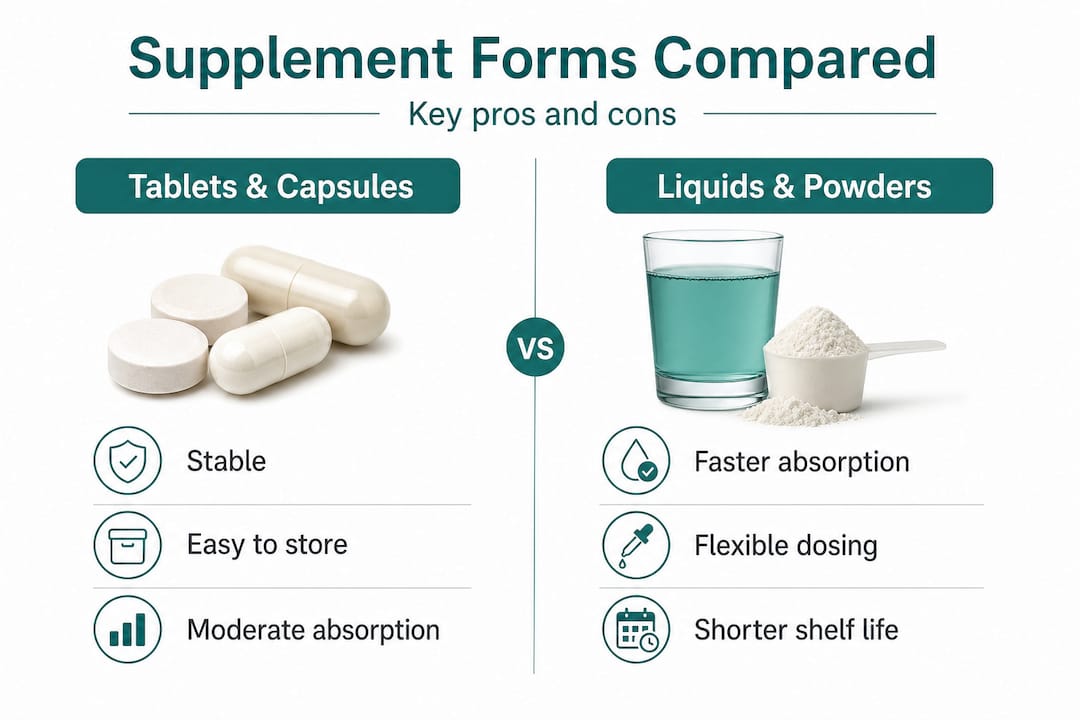
La linea guida NIH ODS sull'integrità del prodotto specifica che, valutando la qualità degli integratori tra compresse, capsule, caramelle gommose, polveri e liquidi, si devono considerare identità, purezza e rischio di contaminazione, potenza e forza, e controlli di produzione. Questi quattro criteri offrono un quadro coerente indipendentemente dalla forma confrontata.

| Forma | Uso tipico | Assorbimento | Rischi principali |
|---|---|---|---|
| Compresse | Vitamine, minerali | Moderato; dipende dal rivestimento | Riempitivi, leganti, difficili da deglutire |
| Capsule | Oli, erbe, nutrienti mirati | Generalmente buona | La gelatina rispetto alla capsula vegetale è importante |
| Polveri | Proteine, collagene, magnesio | Alto; si dissolve per un rapido assorbimento | Miscelabilità, aromi, contenuto di zucchero |
| Liquidi | Vitamine, estratti di erbe | Veloce; non è necessario un passaggio digestivo | Stabilità, conservanti, gusto |
| Caramelle gommose | Vitamine C, D, B12 | Variabile; spesso con potenza inferiore | Zucchero, additivi, incoerenza del dosaggio |
Per gli anziani in particolare, deglutire grandi compresse può essere difficile e i cambiamenti digestivi influenzano l’assorbimento di alcune forme. Liquidi e polveri possono essere più facili da tollerare, ma possono contenere più additivi per migliorare il gusto e la conservazione. Le capsule offrono un compromesso affidabile per molti nutrienti.
Punti chiave da valutare tra le diverse forme:
- Identità: L’etichetta riflette accuratamente ciò che è contenuto nel prodotto?
- Purezza: Il prodotto è stato testato per metalli pesanti, pesticidi o contaminazione microbica?
- Potenza: La dose dichiarata è effettivamente presente per tutta la durata di conservazione del prodotto?
- Controlli di produzione: È stato prodotto secondo le condizioni di Good Manufacturing Practice (GMP)?
Consiglio professionale: non fidarti automaticamente della dicitura “testato da terze parti” sull’etichetta. Cerca il nome dell’organizzazione che ha effettuato i test, i test specifici condotti e se i risultati sono pubblicamente disponibili. Affermazioni vaghe significano poco nella pratica.
Per integratori botanici e di origine animale, identità e purezza sono ancora più importanti. I prodotti a base di erbe possono contenere materiale vegetale sostituito o adulterato. I prodotti di olio di pesce possono variare significativamente nel contenuto di omega-3 e nei livelli di ossidazione. Consultare la guida agli integratori basata su evidenze può aiutarti a capire quali forme hanno i migliori record di qualità per nutrienti specifici.
Valuta le affermazioni di qualità ed efficacia
Ora che le forme fisiche sono state confrontate, è fondamentale valutare se il prodotto è sia di alta qualità sia probabilmente efficace. Queste sono due domande separate, e la maggior parte degli acquirenti le confonde.
Marchi di qualità come il USP Verified Mark o la certificazione GMP confermano che sono stati rispettati gli standard di produzione. Il programma USP Verified Mark conferma che questi marchi riducono il rischio di prodotti etichettati in modo errato o sub-potenti, ma verificano attributi di qualità piuttosto che l'efficacia clinica. Un prodotto può superare tutti i test di qualità e comunque non avere un effetto significativo sul tuo obiettivo di salute.
Per valutare l'efficacia separatamente, segui questo processo:
- Cerca il nome dell'ingrediente insieme al tuo obiettivo di salute in un database di revisioni basate su evidenze affidabili.
- Cerca revisioni sistematiche o meta-analisi, non singoli studi finanziati da aziende di integratori.
- Nota le dimensioni dell'effetto riportate. Molti integratori mostrano risultati statisticamente significativi ma clinicamente modesti.
- Verifica se i partecipanti allo studio erano simili a te per età, stato di salute e dosaggio utilizzato.
- Confronta la dose nel prodotto che stai considerando con le dosi utilizzate negli studi clinici.
Il rapporto del Charlotte Observer sugli integratori per il cervello evidenzia che le affermazioni audaci sulle prestazioni sono comuni in alcune categorie di integratori, e le dimensioni degli effetti sono spesso modeste per molti prodotti popolari. Questo è particolarmente rilevante per gli integratori di supporto cognitivo, che spesso portano promesse drammatiche.
Sii cauto riguardo alle affermazioni di effetti drammatici. Frasi come “aumenta l'energia”, “supporta le prestazioni cerebrali” o “promuove il ringiovanimento cellulare” sono linguaggio di marketing, non risultati clinici. I benefici genuini degli integratori negli adulti sani sopra i 50 anni tendono a essere incrementali e misurabili solo nel corso di mesi, non di giorni.
Gli integratori con la base di evidenze più solida per gli adulti in buona salute che invecchiano includono vitamina D e calcio per la salute delle ossa, acidi grassi omega-3 per il supporto cardiovascolare e B12 per la funzione neurologica. Gli integratori meno supportati non sono necessariamente inutili, ma le tue aspettative dovrebbero corrispondere alle evidenze. La sezione integratori supportati da evidenze per l'invecchiamento su Vivetus® fornisce analisi chiare dei livelli di evidenza per gli ingredienti chiave.
Verifica la sicurezza e le interazioni per la tua fascia d'età
Confrontare qualità e promesse non è sufficiente. Gli adulti più anziani affrontano rischi di sicurezza unici che devono essere affrontati prima di iniziare o modificare qualsiasi integratore.
Le interazioni tra farmaci e integratori sono la preoccupazione più seria. Molti adulti sopra i 50 anni assumono almeno un farmaco con prescrizione, e una serie di integratori comuni può interferire con il metabolismo dei farmaci. L'olio di pesce ad alte dosi influisce sulla coagulazione del sangue. L'iperico accelera la degradazione di numerosi farmaci. La vitamina K si oppone direttamente all'effetto anticoagulante del warfarin.
Superare i valori giornalieri raccomandati è sorprendentemente facile se si considerano tutte le fonti. La vitamina D proveniente da integratori, latte fortificato e cereali arricchiti può sommarsi rapidamente. Il calcio da integratori combinato con l'assunzione di latticini può far superare i limiti massimi tollerabili. Le conseguenze di un eccesso cronico includono calcoli renali, effetti cardiovascolari e squilibri nutrizionali.
Le linee guida di WebMD e Scripps Health sono chiare: il confronto sulla sicurezza legata all'età deve includere le interazioni tra farmaci e integratori e l'effetto dei limiti massimi tollerabili sia degli integratori che degli alimenti fortificati, poiché multivitaminici o integratori mirati possono far superare i livelli sicuri senza che nessuno se ne accorga.
Segui questi passaggi prima di aggiungere o modificare qualsiasi integratore:
- Elenca ogni integratore, vitamina e minerale che assumi attualmente, includendo dosi e frequenza.
- Aggiungi tutti gli alimenti fortificati che consumi regolarmente, come cereali, latte vegetale e creme arricchite.
- Elenca tutti i farmaci da prescrizione e da banco.
- Controlla le interazioni note utilizzando un affidabile strumento di verifica delle interazioni tra farmaci e integratori.
- Individua eventuali nutrienti per cui il totale combinato si avvicina o supera il limite massimo tollerabile stabilito.
- Porta questa panoramica completa al tuo farmacista o medico di base prima di apportare qualsiasi modifica.
La risorsa consigli per la sicurezza degli integratori nell'invecchiamento di Vivetus® offre checklist pratiche specifiche per gli adulti oltre i 50 anni, coprendo i nutrienti più propensi ad accumularsi a livelli problematici in questa fascia d'età.
Verifica con il tuo medico: la tua combinazione di integratori
L'ultimo passaggio fondamentale è integrare tutte le tue decisioni sugli integratori nel tuo piano sanitario complessivo. Qui molti falliscono. Fanno ricerche accurate, acquistano con attenzione e poi non discutono mai le loro scelte con qualcuno qualificato a individuare problemi.
Il consiglio sugli integratori della Cleveland Clinic raccomanda agli anziani di portare un elenco completo degli integratori agli appuntamenti con il medico, includendo nomi, scopo previsto, dose e frequenza, così da poterli confrontare con i farmaci e le condizioni di salute attuali prima di iniziare o modificare il tipo di integratore. Questo semplice passaggio previene molti dei problemi più comuni legati agli integratori.
Ecco come creare e mantenere un registro degli integratori che sia davvero utile al tuo medico:
- Crea un elenco con quattro colonne: nome del prodotto, scopo previsto, dose per porzione e frequenza di assunzione.
- Includi la marca e la forma (compressa, capsula, polvere) per ogni prodotto.
- Annota la data in cui hai iniziato ogni integratore in modo che il medico possa collegare eventuali nuovi sintomi al momento di assunzione.
- Aggiorna l'elenco ogni volta che aggiungi, interrompi o cambi qualcosa.
- Rivedi l'elenco completo con il tuo medico almeno una volta all'anno, o ogni volta che ti viene prescritto un nuovo farmaco.
Consiglio professionale: Scatta una fotografia di ogni etichetta degli integratori, incluso il pannello dei Valori Nutrizionali sul retro. Salvale in una cartella dedicata sul tuo telefono. Questo fornisce al tuo medico i dettagli esatti della formulazione senza che tu debba portare ogni bottiglia all'appuntamento.
Questo processo di revisione non riguarda solo la sicurezza. Identifica anche gli integratori che potrebbero non essere più necessari, evita di pagare prodotti che si duplicano e apre una conversazione sul fatto che il tuo regime attuale corrisponda ancora alle tue priorità di salute in evoluzione. Le indicazioni su come selezionare i prodotti nutrizionali per un invecchiamento sano possono aiutarti a prepararti a questa conversazione.
Perché confrontare i tipi di integratori richiede il tuo contesto completo, non solo le etichette
La maggior parte delle indicazioni sugli integratori si ferma alla lettura dell'etichetta o al confronto dei marchi di qualità. Questo è comprensibile, ma trascura i rischi più significativi che gli adulti oltre i 50 anni affrontano realmente.
Il vero problema raramente è un singolo prodotto di scarsa qualità. È il quadro cumulativo: un multivitaminico qui, una vitamina D da sola là, latte d'avena fortificato a colazione e un integratore di omega-3 acquistato dopo aver letto un articolo. Nessun singolo elemento è necessariamente un problema. È l'insieme che può esserlo.
I consigli convenzionali si concentrano su quale forma si assorbe meglio o quale marchio ha un sigillo USP. Queste sono domande rilevanti, ma affrontano solo una parte del quadro. Ciò che la maggior parte delle guide non discute è come gli integratori commercializzati abitualmente non tengano conto di ciò che già assumi con il cibo, di quanto rapidamente i totali di nutrienti raggiungano il limite superiore tollerabile quando si combinano più fonti e di come i risultati degli studi clinici per ingredienti popolari siano spesso molto più modesti di quanto suggerisca il linguaggio pubblicitario.
Esplorare la scelta degli integratori nel contesto è un quadro più utile rispetto al confronto di due flaconi fianco a fianco. Il contesto include la tua dieta, i tuoi farmaci, l'uso attuale di integratori e i tuoi obiettivi di salute specifici. Senza questa visione completa, anche l'integratore di migliore qualità scelto dal marchio più recensito potrebbe non offrire alcun beneficio misurabile o, peggio, creare un problema che richiede mesi per essere identificato.
L'efficacia clinica raramente corrisponde all'hype pubblicitario, soprattutto quando si salta l'audit dell'assunzione. L'industria degli integratori utilizza affermazioni strutturali o funzionali ben formulate che suonano impressionanti ma non richiedono prove cliniche. Gli adulti oltre i 50 anni, spesso il pubblico principale di queste affermazioni, meritano uno standard più rigoroso. Applicare il quadro di riferimento di questa guida, prima lo scopo, poi la forma, la qualità, la sicurezza e infine la revisione del fornitore, è il modo per raggiungere costantemente tale standard.
Sostieni il tuo percorso di invecchiamento sano con una guida esperta
Scegliere gli integratori diventa molto più semplice quando si dispone di risorse affidabili e basate sulla scienza. Il quadro di riferimento in questa guida ti fornisce il metodo, ma le decisioni continue beneficiano di una fonte fidata di prodotti selezionati e basati su evidenze.

Vivetus® riunisce una gamma accuratamente selezionata di integratori nutrizionali progettati specificamente per un invecchiamento sano e la vitalità, supportati da evidenze scientifiche e non da mode di marketing. Che tu stia rivedendo la tua attuale combinazione di integratori o iniziando da zero, il catalogo Vivetus® offre informazioni trasparenti sui prodotti, opzioni con qualità verificata e spedizione gratuita per ordini superiori a 50 €. Visita vivetus.eu per esplorare risorse e prodotti che supportano un approccio strutturato e sicuro all’invecchiamento sano. Fare scelte informate è più facile quando i prodotti e le indicazioni su cui ti basi rispettano gli stessi elevati standard che ora sai di dover aspettarti.
Domande frequenti
Come faccio a sapere se un integratore è efficace per un invecchiamento sano?
Verifica se esistono evidenze scientifiche a supporto del suo uso per il tuo specifico obiettivo di salute e consulta piattaforme di revisione basate su evidenze per riassunti imparziali. Le linee guida NIH ODS raccomandano di concentrarsi sul vuoto che l’integratore colma e sulle prove a supporto, non sulle affermazioni sull’etichetta.
Cosa rende un tipo di integratore più sicuro di un altro per chi ha più di 50 anni?
La sicurezza dipende da molteplici fattori, tra cui il rischio di contaminazione, la facilità di deglutizione, le interazioni note con farmaci e la probabilità di superare i limiti giornalieri di nutrienti. Le linee guida di WebMD e Scripps Health evidenziano specificamente che per gli anziani devono essere valutate sia le interazioni tra farmaci e integratori sia i limiti massimi tollerabili.
Posso fidarmi dei sigilli di verifica di terze parti sulle confezioni degli integratori?
I sigilli di terze parti come il Marchio USP Verified confermano la qualità di produzione e l’identità degli ingredienti, ma non garantiscono l’efficacia clinica per il tuo obiettivo di salute. La documentazione del programma USP conferma che questi marchi riguardano attributi di qualità, non risultati terapeutici.
Come posso evitare nutrienti duplicati o sovradosaggi quando prendo più integratori?
Compila una lista completa di ogni integratore e alimento fortificato che consumi regolarmente, quindi verifica eventuali sovrapposizioni di nutrienti, in particolare per vitamina D, calcio, B12 e zinco. Le linee guida di Harvard Health sottolineano che chi consuma alimenti fortificati insieme a multivitaminici spesso duplica i nutrienti senza rendersene conto.
Devo consultare il mio medico prima di cambiare integratori?
Sì. Per gli adulti oltre i 50 anni, è essenziale portare al proprio medico una lista completa degli integratori, includendo nomi, scopi, dosi e frequenza. La Cleveland Clinic raccomanda questa revisione prima di iniziare o modificare qualsiasi tipo di integratore per evitare interazioni e ottimizzare il proprio regime.