

Come creare una routine di integratori efficace
Sintesi:
- La maggior parte delle persone inizia a prendere integratori in modo improprio combinando più prodotti senza una valutazione. Un esame del sangue e il monitoraggio della dieta sono essenziali per identificare i reali bisogni nutrizionali prima di costruire una routine personalizzata. Introdurre gradualmente gli integratori e monitorare i biomarcatori garantisce efficacia e previene sprechi di denaro.
La maggior parte delle persone inizia a prendere integratori nel modo sbagliato. Acquistano cinque o sei prodotti basandosi su una raccomandazione sui social media, li assumono tutti il primo giorno e si chiedono perché dopo due settimane non si sentono diversi. Imparare a creare una routine di integratori che supporti davvero la tua salute richiede più riflessione. Questa guida ti accompagna in ogni fase: valutare ciò di cui il tuo corpo ha realmente bisogno, scegliere prodotti di qualità, costruire un piano quotidiano di integratori che si adatti alla tua vita e monitorare se funziona. Niente supposizioni. Niente soldi sprecati.
Indice
- Punti chiave
- Come creare una routine di integratori: inizia con la tua base di partenza
- Scegliere integratori di qualità adatti alle tue esigenze
- Costruire il tuo programma di integrazione
- Monitorare e adattare la tua routine
- La mia opinione sincera sulle routine di integratori
- Supporta la tua routine con Vivetus
- Domande frequenti
Punti chiave
| Punto | Dettagli |
|---|---|
| Valuta prima di acquistare | Fai un esame del sangue per identificare le vere carenze nutrizionali prima di spendere soldi in integratori. |
| Scegli la qualità rispetto alla quantità | Cerca etichette trasparenti, dosi significative e certificazioni di test di terze parti. |
| Costruisci il tuo programma gradualmente | Introduci un integratore alla volta, aspettando 2-4 settimane prima di aggiungerne un altro. |
| Temporizza correttamente gli integratori | Usa finestre temporali al mattino, dopo l’allenamento e prima di dormire, e separa i minerali in competizione di almeno 2 ore. |
| Monitora con dati oggettivi | Ripeti i test dei biomarcatori ogni 12 settimane invece di affidarti solo a come ti senti. |
Come creare una routine di integratori: inizia con la tua base di partenza
Prima di acquistare qualsiasi cosa, devi sapere cosa ti manca realmente. Questo è il passaggio che la maggior parte dei principianti salta, ed è la ragione per cui molte routine di integratori falliscono.
Un esame del sangue è il punto di partenza più affidabile. I pannelli standard misurano tipicamente vitamina D, ferro, ferritina, B12, folati e magnesio. La carenza di vitamina D colpisce il 42% delle persone, rendendola una delle lacune nutrizionali più comuni e correggibili. Senza questi dati, stai solo indovinando.
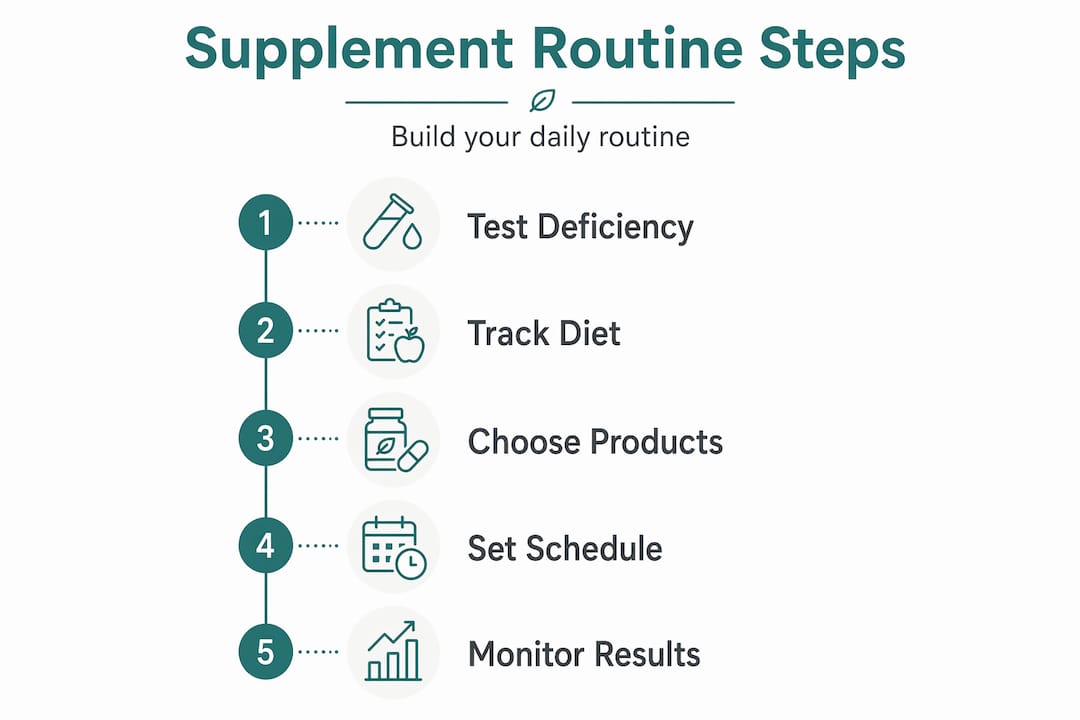
Oltre agli esami del sangue, dedica una settimana a monitorare onestamente la tua dieta. Cerca schemi costanti: mangi pesce grasso due volte a settimana? Assumi verdure a foglia verde ogni giorno? L’obiettivo è soddisfare almeno il 50% del fabbisogno di micronutrienti attraverso alimenti integrali prima di integrare, perché il cibo fornisce cofattori naturali e fibre che gli integratori isolati non possono replicare.
Una volta ottenuti i tuoi dati, definisci i tuoi obiettivi con precisione. "Voglio più energia" è troppo vago. "Voglio ridurre la stanchezza legata a bassi livelli di ferritina in 12 settimane" ti dà qualcosa di misurabile. Allineare i tuoi obiettivi con i risultati dei test elimina la tentazione di acquistare prodotti di tendenza che non si applicano alla tua situazione.
Aree chiave da valutare prima di creare una routine vitaminica:
- Test dei biomarcatori: vitamina D (25-OH), ferritina, B12 sierica, magnesio RBC e HbA1c se la salute metabolica è una preoccupazione
- Audit dietetico: frequenza di proteine animali, latticini, verdure a foglia verde, legumi ed esposizione al sole
- Monitoraggio dei sintomi: affaticamento persistente, sonno scarso, unghie fragili, nebbia mentale o malattie frequenti
- Obiettivi di salute: specifica se miri a energia, immunità, funzione cognitiva, salute articolare o longevità
Consiglio professionale: Chiedi al tuo medico un emocromo completo insieme a un pannello di vitamina D e ferritina. Molti sintomi comuni attribuiti allo “stress” sono in realtà carenze nutrizionali correggibili.
Scegliere integratori di qualità adatti alle tue esigenze
Una volta che sai cosa ti serve, la sfida successiva è trovare prodotti che lo forniscano realmente. Il mercato degli integratori è vasto e molto si basa sul marketing più che sulle evidenze.
Inizia dall'etichetta. Un integratore affidabile indica la forma esatta di ogni nutriente (per esempio, glicinato di magnesio invece di ossido di magnesio), la dose per porzione e tutti gli ingredienti inattivi. Gli integratori di qualità dovrebbero avere etichette trasparenti, dosi significative e certificazioni di test indipendenti come USP o NSF International. Queste certificazioni confermano che il prodotto contiene ciò che dichiara, alla dose indicata, senza contaminanti nocivi.
Ecco un quadro utile per valutare qualsiasi integratore:
- Controlla la forma attiva: Il glicinato di magnesio si assorbe meglio dell'ossido di magnesio. La metilcobalamina (B12) è più adatta alla maggior parte delle persone rispetto alla cianocobalamina. La forma è più importante di quanto molti pensino.
- Verifica la dose: Confronta la dose del prodotto con le quantità usate negli studi clinici. Un integratore di vitamina D che fornisce 200 UI per capsula difficilmente correggerà una carenza.
- Cerca la certificazione di terze parti: USP, NSF International e Informed Sport sono le più riconosciute. Non sono affermazioni di marketing; sono verificate in modo indipendente.
- Scegli il formato di somministrazione giusto: Capsule e softgel generalmente offrono una migliore biodisponibilità rispetto alle caramelle gommose, che spesso contengono dosi inferiori e zuccheri aggiunti. I liquidi possono essere adatti a chi ha difficoltà a deglutire capsule.
- Prioritizza prima i nutrienti fondamentali: Routine di integrazione ben strutturate danno priorità ai nutrienti fondamentali come vitamina D, magnesio e omega-3 prima di aggiungere integratori per la performance o la longevità. Inizia dalla base, non dalla cima.
| Tipo di integratore | Forma di somministrazione migliore | Cosa controllare sull'etichetta |
|---|---|---|
| Vitamina D | Softgel con forma di D3 | Dose in UI, idealmente abbinata a K2 |
| Magnesio | Capsula (glicinato o malato) | Forma di magnesio, dose elementare |
| Omega-3 | Liquido o softgel | Contenuto di EPA/DHA per porzione |
| Vitamina B12 | Sublinguale o capsula | Metilcobalamina vs cianocobalamina |
| Ferro | Capsula (bisglicinato) | Dose di ferro elementare, delicata sullo stomaco |
Consiglio professionale: Ignora i prodotti che elencano una miscela proprietaria senza rivelare le quantità individuali degli ingredienti. Questo formato protegge il produttore, non te.
Per ulteriori indicazioni sulla selezione di prodotti adatti ai tuoi specifici obiettivi di salute, la guida alla selezione degli integratori di Vivetus spiega cosa cercare nelle diverse fasi della vita.
Costruire il tuo programma di integrazione
Sapere cosa assumere è solo metà del lavoro. Quando prendi ogni integratore e in quali combinazioni ha un impatto diretto su quanto bene viene assorbito.

Gli esperti raccomandano una struttura temporale giornaliera a tre finestre: mattina con il cibo, dopo l’allenamento o a metà giornata, e prima di dormire. Questo approccio evita l’errore comune di assumere tutto insieme a colazione, che può causare competizione nell’assorbimento tra i minerali.
La regola di intervallo più importante riguarda i minerali. Calcio, ferro e zinco assunti insieme competono per gli stessi canali di assorbimento, riducendo l’efficacia di tutti e tre. Separali di almeno 2 ore per ottenere i migliori risultati.
Ecco come potrebbe apparire un piano pratico di integrazione giornaliera:
- La mattina con la colazione (che contenga grassi): Vitamina D3 con K2, omega-3, multivitaminico (se usato)
- A metà giornata o dopo l’allenamento: Vitamina C, zinco, collagene (se usato)
- La sera con la cena o prima di dormire: Magnesio glicinato, calcio (se necessario), ashwagandha o altri adattogeni
Consiglio professionale: Associa le vitamine liposolubili (A, D, E, K) a un pasto che contenga grassi alimentari. Assumere la vitamina D a stomaco vuoto o con un pasto privo di grassi riduce significativamente l’assorbimento.
L'errore più comune che fanno i principianti è iniziare tutto insieme. La maggior parte dei principianti fallisce iniziando subito con pile complete. Introduci un integratore per 2-4 settimane prima di aggiungerne un altro. In questo modo, se si verifica un effetto collaterale o una reazione imprevista, sai esattamente quale prodotto l'ha causata.
Una sequenza di integrazione sensata, basata sull'approccio della piramide degli integratori, procede come segue: inizia con la vitamina D se carente, poi aggiungi il magnesio dopo due settimane se necessario, poi gli omega-3, e solo allora considera integratori mirati o per le prestazioni. Pensalo come costruire una pila di integratori dal basso verso l'alto: prima il supporto fondamentale, composti specializzati solo quando le basi sono coperte.
Per maggiori dettagli su come il timing influisce sull'assorbimento dei nutrienti, la guida Vivetus su tempistica degli integratori e salute spiega la scienza dietro ogni finestra temporale.
Monitorare e adattare la tua routine
Creare un programma non è la fine del processo. Sapere se funziona e modificarlo quando non funziona distingue una routine di integratori che aiuta da una che semplicemente costa soldi.
Segui questi passaggi per un monitoraggio efficace:
- Fissa una data di revisione a 4 settimane. Alcuni effetti, come un miglioramento di energia o umore, possono manifestarsi in questo arco di tempo. Gli effetti di nuovi integratori possono richiedere almeno 4 settimane per essere notati; cambiamenti visibili su pelle, capelli o unghie spesso richiedono 3 mesi.
- Tieni un diario semplice quotidiano. Registra livelli di energia, qualità del sonno, digestione e umore su una scala da 1 a 10. I modelli diventano visibili nel tempo; i singoli giorni non dicono nulla di utile.
- Rifai i test dei biomarcatori a 12 settimane. Usa esami del sangue ogni 12 settimane per confermare che vitamina D, ferro o B12 si stiano avvicinando a un intervallo ottimale. Le sensazioni soggettive sono utili ma non dovrebbero essere la tua unica misura.
- Rimuovi prima di aggiungere. Se i tuoi parametri si sono normalizzati, considera di ridurre la dose o interrompere l'integratore invece di continuare indefinitamente. Di più non è sempre meglio.
- Consulta un professionista sanitario per qualsiasi problema persistente. Se i sintomi non migliorano dopo 12 settimane complete nonostante livelli ematici normali, un medico di base o un nutrizionista registrato dovrebbe valutare il tuo caso. Alcuni problemi hanno cause che gli integratori non possono risolvere.
Consiglio professionale: Fotografa le tue bottiglie di integratori o usa un'app di monitoraggio quando inizi un nuovo prodotto. Questo rende semplice rivedere esattamente cosa stavi assumendo se dovesse sorgere un problema.
La mia opinione sincera sulle routine di integratori
Ho visto molte persone spendere somme significative in combinazioni di integratori nel primo mese di interesse per la salute, per poi abbandonarli tutti dopo sei settimane perché non sentivano alcuna differenza. Il problema quasi mai sono gli integratori. È l'approccio.
Dalla mia esperienza, il più grande indicatore di una routine di integratori che dura nel tempo è la semplicità all'inizio. Uno o due prodotti supportati da evidenze, assunti costantemente con i pasti e monitorati rispetto a un risultato misurabile. Tutto qui. La tentazione di aggiungere altro è forte, soprattutto quando si inizia a leggere sui composti per la longevità, ma aggiungere complessità prima di aver confermato che le basi sono coperte è una strada sicura verso la frustrazione e lo spreco di denaro.
L’approccio basato sul cibo prima di tutto non è solo una frase fatta. Ho visto persone correggere affaticamento persistente e cattivo sonno migliorando la dieta e poi aggiungendo un integratore mirato, non il contrario. La dieta senza integratori supera quasi sempre gli integratori senza dieta.
La pazienza è l’altro fattore sottovalutato. Tre mesi sono un periodo minimo significativo per qualsiasi cosa che influenzi pelle, cognizione o salute ormonale. La maggior parte delle persone non lo concede. Se ti impegni nel processo, lo misuri correttamente e resti costante, una routine di integratori ben progettata è davvero utile per la vitalità a lungo termine.
— Jord
Supporta la tua routine con Vivetus
Costruire una routine efficace di integratori funziona meglio quando hai accesso a prodotti di qualità e a una guida affidabile in un unico posto.

Vivetus offre una gamma selezionata di integratori supportati dalla scienza progettati per un invecchiamento sano e una vitalità a lungo termine, tutti con etichettatura trasparente e qualità degli ingredienti verificata. Che tu stia iniziando con vitamina D e magnesio o voglia aggiungere un supporto più mirato man mano che la tua routine si evolve, troverai prodotti adatti a ogni fase del processo. Esplora l’intera gamma e usa le risorse disponibili per costruire un piano quotidiano di integratori basato su evidenze, non su supposizioni.
Domande frequenti
Quali integratori dovrei prendere per primi?
Inizia con gli integratori che correggono carenze confermate da un esame del sangue. Vitamina D, magnesio e omega-3 sono gli integratori fondamentali più comunemente necessari per gli adulti nel Regno Unito.
Come creo un programma di integratori intorno ai pasti?
Usa un approccio a tre finestre: vitamine liposolubili a colazione, vitamina C e zinco a mezzogiorno, e magnesio prima di dormire. Distanza di almeno 2 ore tra minerali in competizione come calcio e ferro.
Quanto tempo ci vuole prima di notare i risultati da una routine di integratori?
Alcuni effetti si manifestano entro 4 settimane, ma i cambiamenti su pelle, capelli, unghie e biomarcatori a lungo termine richiedono generalmente 3 mesi di uso costante per diventare misurabili.
Qual è il miglior programma di integratori per principianti?
Il miglior programma di integratori per un principiante inizia con un solo prodotto assunto per 2-4 settimane prima di aggiungerne un altro. Questo rende semplice identificare cosa funziona e cosa no.
Devo assumere integratori ogni giorno?
La maggior parte degli integratori funziona con un uso quotidiano costante piuttosto che con dosi occasionali. Le vitamine liposolubili come la D e la K si accumulano nel corpo, mentre i nutrienti idrosolubili come la B12 e la vitamina C vengono eliminati rapidamente e beneficiano di un’assunzione giornaliera.
Consigliati
- Padroneggia il flusso di efficacia degli integratori per la salute – Vivetus®
- Guida essenziale agli integratori per principianti: inizia in sicurezza nel 2026 – Vivetus®
- Come confrontare i tipi di integratori per un invecchiamento sano – Vivetus®
- Tempistica degli integratori: fatti chiave per una salute migliore nel 2026 – Vivetus®