

Immune health explained: what it means after 40
TL;DR:
- Maintaining immune health after 40 requires correcting micronutrient deficiencies like vitamin D, zinc, and selenium. Lifestyle factors such as diet, sleep, exercise, and vaccination play a crucial role alongside targeted supplements. Testing before supplementing ensures personalized support and better immune resilience.
Immune health is your body’s capacity to resist infection, repair damaged tissue, and keep inflammation at a level that protects rather than harms. For people over 40, the single most important foundation is correcting micronutrient deficits, specifically vitamin D, zinc, and selenium, while stabilising the daily habits that support immune function: diet, sleep, and physical activity. Understanding immune support is the starting point for doing something about it.
Quick checklist to start with:
- Check for symptoms of poor immune function: frequent infections, slow wound healing, persistent fatigue
- Request baseline blood tests: 25-OH vitamin D, serum zinc, selenium, and a full blood count
- Stabilise diet, sleep (7–9 hours), and moderate exercise before adding supplements
Table of Contents
- How does the immune system change after 40?
- What lifestyle measures genuinely support immune health?
- What does the science say about supplements for people 40+?
- How do you choose supplements safely in Central Europe?
- What timeline and costs should you expect?
- When should you see a clinician?
- Key takeaways
- Why testing first is the step most people skip
- The Vivetus Energy & Vitality bundel for adults 40+
- Useful sources and further reading
How does the immune system change after 40?
The short answer: it becomes less effective at defence and more prone to chronic low-grade inflammation simultaneously. This dual shift has a name: immunosenescence and inflammaging, and it accelerates noticeably around the fifth decade.
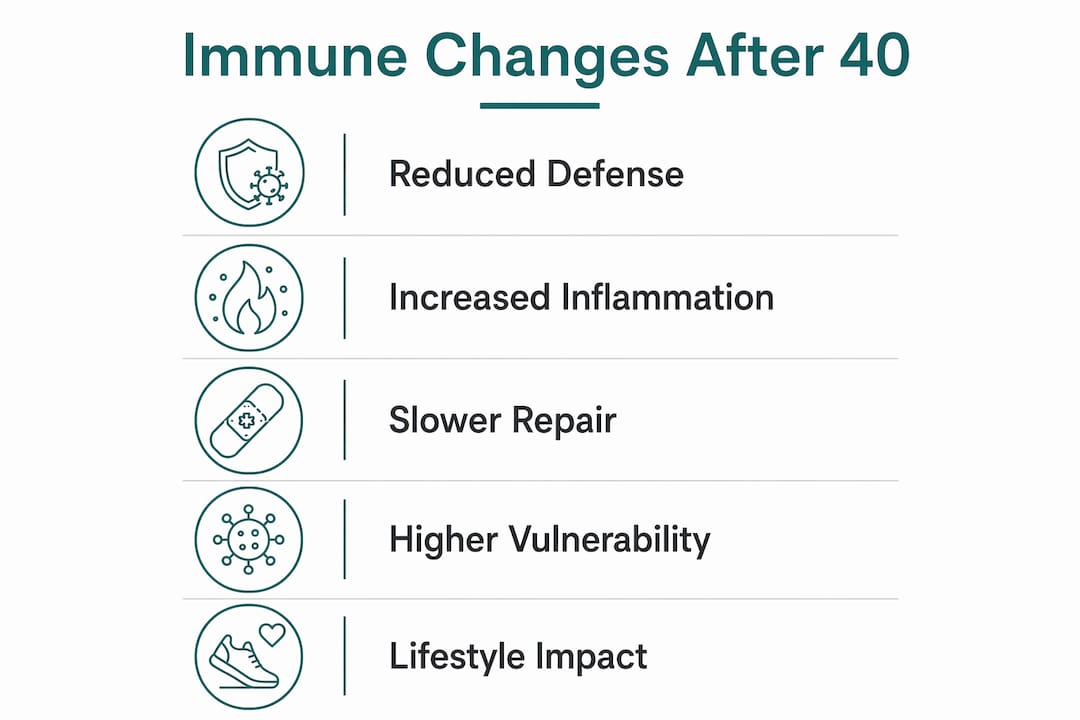
Macrophages clear bacteria and foreign cells more slowly. T-cells respond less quickly to antigens they have previously encountered, and the pool of naive T-cells capable of recognising new threats shrinks progressively. The immune system also loses precision in distinguishing self from non-self, which raises the risk of autoimmune conditions. These are not minor adjustments; they represent a measurable reduction in the body’s core defence capacity.
Inflammaging compounds the problem. Activated innate immune cells that can no longer fully eliminate pathogens, combined with highly differentiated adaptive immune cells, release pro-inflammatory cytokines that drive chronic low-grade inflammation. Senescent cells, mitochondrial dysfunction, and gut microbiome changes all feed this state. The result is a higher risk of cardiovascular disease, type 2 diabetes, and neurodegenerative conditions.
Statistic to note: A meta-analysis cited in PMC research found that influenza vaccination can reduce the risk of myocardial infarction in older adults, yet vaccination rates in this group remain well below national targets across Central Europe.
The gut connection matters here too. Around 70% of immune cells are functionally associated with the gut mucosa. Age-related microbiome changes, particularly a reduction in anti-inflammatory short-chain fatty acid-producing bacteria, weaken systemic immune balance and worsen inflammaging.
Key clinical outcomes of immune ageing:
- Reduced vaccine efficacy and immunological memory
- Slower wound healing and tissue repair
- Higher susceptibility to bacterial and viral infections
- Increased autoimmunity risk
- Impaired tumour surveillance
What lifestyle measures genuinely support immune health?
Balanced diet, regular physical activity, consistent sleep, vaccination, and chronic disease control together form the most evidence-backed package for maintaining immune function after 40. Public health guidance across Central Europe lists these as the core measures, and no supplement replaces them.
Practical priorities:
- Diet: Prioritise protein (1.0–1.2 g per kg body weight daily), dietary fibre (25–30 g), omega-3 fatty acids from oily fish or algae, and polyphenol-rich foods such as berries, dark leafy greens, and legumes. Mediterranean and DASH dietary patterns show the strongest evidence for reducing inflammaging.
- Sleep: 7–9 hours per night. Chronic sleep restriction directly suppresses T-cell function and raises inflammatory markers.
- Exercise: 150 minutes of moderate aerobic activity per week, plus two sessions of resistance training. Both reduce systemic inflammation and support immune cell circulation.
- Vaccination: Seasonal influenza, pneumococcal, and herpes zoster vaccines are recommended for adults over 60 in most Central European national immunisation programmes. Check your national schedule.
- Chronic disease control: Unmanaged diabetes, obesity, and cardiovascular disease each accelerate immunosenescence independently.
Pro Tip: Small, consistent daily routines outperform periodic intensive efforts. A 20-minute walk every day does more for immune function over six months than a two-week exercise burst followed by inactivity.

What does the science say about supplements for people 40+?
Supplements fill gaps; they rarely push immune function beyond its normal ceiling. Correcting a documented deficit, however, can meaningfully support immune regeneration. Restoring deficient vitamin D, zinc, and selenium improves immune responses and vaccine efficacy in older adults. The key word is deficient: supplementing nutrients you already have in adequate supply produces little benefit and carries risk at high doses.
| Nutrient | Why it matters for immunity | Evidence level (40+) | Typical safe range | Key safety note |
|---|---|---|---|---|
| Vitamin D | Regulates T-cell activation and antimicrobial peptides | Strong | — | Toxicity possible with high-dose unmonitored use |
| Zinc | Supports macrophage function and T-cell development | Moderate–strong | 8–15 mg/day from diet + supplement | Excess zinc impairs copper absorption |
| Selenium | Antioxidant defence; supports NK cell activity | Moderate | — | Narrow therapeutic window; toxicity above 400 mcg/day |
| Omega-3 (EPA/DHA) | Reduces pro-inflammatory cytokines | Moderate | 1–2 g/day combined EPA+DHA | Anticoagulant interaction at high doses |
| Probiotics | Supports gut-immune axis; some evidence for vaccine response | Emerging | Lactobacillus strains studied most | Generally well tolerated |
| Protein/amino acids | Maintains immune cell production; prevents sarcopenia | Strong | 1.0–1.2 g/kg/day from food | Prioritise dietary sources first |
Additional points on supplement safety:
- Megadosing is not advised. Harvard Health recommends correcting gaps through consistent daily intake rather than aggressive short-term regimens.
- Fat-soluble vitamins (A, D, E, K) accumulate; toxicity is a real risk with unmonitored high-dose use.
- Multi-ingredient bundles combining clinically studied nutrients at evidence-based doses are generally preferable to stacking multiple single-nutrient products without guidance.
- Common medications in the 40+ group, including statins, metformin, and proton pump inhibitors, can deplete B12, magnesium, and CoQ10; discuss interactions with a pharmacist.
How do you choose supplements safely in Central Europe?
Prioritise products with third-party testing and transparent labelling. Avoid products with proprietary blends that obscure individual doses, and steer clear of any product making unqualified curative claims.
Quality checklist:
- GMP certification: Good Manufacturing Practice certification confirms consistent production standards.
- Independent lab analysis: Look for a certificate of analysis (CoA) from an accredited third-party laboratory confirming ingredient identity, potency, and absence of contaminants.
- Ingredient transparency: Every ingredient and its dose should be listed clearly on the label, in the language of the country of sale.
- Batch testing: Reputable brands test each production batch, not just the formula.
- Declared tolerability data: Products with published safety or tolerability data carry lower risk.
- Clinician or pharmacist review: Before starting any new supplement, discuss it with your GP or pharmacist, particularly if you take prescription medication.
Pro Tip: When reading a supplement label, check that the dose per serving matches the amounts used in clinical studies for that nutrient. A product listing “vitamin D” without specifying IU or mcg per capsule is not giving you the information you need.
The Vivetus Energy & Vitality bundel is a tested, multi-ingredient option designed specifically for adults 40+, combining nutrients at evidence-informed doses, with batch testing and purity certification.
What timeline and costs should you expect?
Most corrective changes appear over weeks to months, not days. Setting realistic expectations prevents early abandonment of a protocol that is actually working.
Approximate timeline:
- 2–8 weeks: Vitamin D repletion signals (improved energy, mood stabilisation in deficient individuals); zinc and selenium levels begin to normalise with consistent intake
- 3–6 months: Functional changes become measurable, including improved vaccine response, reduced infection frequency, and better wound healing
- 6–12 months and beyond: Meaningful shifts in inflammaging markers (CRP, inflammatory cytokines) and sustained immune resilience
Cost reference: In Central Europe, a private blood test panel covering 25-OH vitamin D, serum zinc, and selenium typically costs €60–€120 depending on the laboratory and country. A quality multi-nutrient supplement bundle runs approximately €30–€60 per month. Subscription purchasing often reduces this by 10–15%.
Budgeting for an initial test, a three-month supplement trial, and a follow-up test gives you the most useful data on whether your protocol is working. One-off purchases are sensible for a first trial; a subscription makes sense once you have confirmed tolerability and benefit.
When should you see a clinician?
See a clinician promptly for recurrent infections, unexplained weight loss, persistent fevers, or new symptoms that suggest autoimmune activity. These are not situations to manage with supplements alone.
Red flags that warrant medical review:
- More than three or four respiratory infections per year
- Infections that are unusually severe or slow to resolve
- Unexplained weight loss of more than 5% over three months
- Persistent low-grade fever without clear cause
- New joint pain, skin rashes, or fatigue consistent with autoimmune patterns
- Any sign of immunodeficiency (e.g., opportunistic infections)
Baseline tests worth discussing with your clinician:
- 25-OH vitamin D (the standard test for vitamin D status)
- Serum zinc
- Serum selenium
- Full blood count (FBC) with differential
- C-reactive protein (CRP) as an inflammaging marker
- HbA1c if metabolic risk factors are present
- Targeted serology when specific infections or autoimmune conditions are suspected
This article provides general information, not medical advice. Confirm your own situation with a qualified clinician or pharmacist.
Key takeaways
Correcting vitamin D, zinc, and selenium deficits through testing and targeted supplementation is the highest-value single step for immune regeneration in adults over 40.
| Point | Details |
|---|---|
| Immune health defined | Resistance to infection, efficient tissue repair, and balanced inflammation — all decline measurably after 40. |
| Test before you supplement | Check 25-OH vitamin D, serum zinc, and selenium before starting long-term supplementation to target real deficits. |
| Lifestyle comes first | Diet, sleep (7–9 hours), 150 minutes of weekly exercise, and vaccination form the evidence-backed foundation. |
| Timeline is months, not days | Expect 2–8 weeks for nutrient normalisation and 3–6 months for functional immune improvements. |
| Vivetus Energy & Vitality bundel | A tested, multi-ingredient option for adults 40+, combining evidence-informed doses with batch testing and purity certification. |
Why testing first is the step most people skip
The conventional advice on immune health tends to jump straight to supplement lists. The more useful starting point is a blood test. Supplementing vitamin D when you are already replete does little; supplementing when you are deficient at 25 nmol/L can meaningfully shift immune function within weeks. The same logic applies to zinc and selenium, both of which have narrow therapeutic windows where excess is genuinely harmful.
The emerging concept of immune rejuvenation, framed in recent research as a strategy to extend healthspan by restoring nutrient sufficiency and tissue niche health, is built on this principle: precision over volume. A high-dose, broad-spectrum approach without baseline data is not precision. It is guesswork dressed up as science.
For people 40+, the practical implication is straightforward. Get tested, correct what is actually deficient, stabilise the lifestyle foundations, and choose supplements with verified quality marks. That sequence produces better outcomes than any single product taken without context. The practical guide to boosting elder immunity on the Vivetus blog walks through this sequence in detail for anyone who wants a step-by-step framework.
The Vivetus Energy & Vitality bundel for adults 40+
For adults who have confirmed micronutrient gaps and want a tested, convenient option, the Vivetus Energy & Vitality bundel addresses the key deficits associated with immune ageing in a single, clearly dosed package.
The bundle combines nutrients at evidence-informed doses, with each batch independently tested for purity and potency. Ingredient quantities are fully declared on the label, and the formulation is vegan, in line with Vivetus’s product standards. A subscription option is available, reducing the monthly cost compared to one-off purchases. Free shipping applies to orders over €50.
Before starting, discuss the bundle with your GP or pharmacist, particularly if you take prescription medication. View the full product details and order at vivetus.nl/products/energy-vitality-bundel.
Useful sources and further reading
- Immune responses in aging adults, JCI
- Age-associated changes of the immune system: immunosenescence and vaccinations, PMC
- Nature Reviews Immunology: immune ageing review
- Mikronährstoffe, Immunüberwachung und Immunseneszenz, Thieme
- Altersbedingte Störung der Immunfunktion, Rosenfluh
- Stärkung der Abwehrkräfte, gesund.bund.de
- How to boost your immune system, Harvard Health
- Mikronährstoffe im Alter, Springer
- How to boost elder immunity: a practical guide, Vivetus
- What is immune support: your practical guide for 2026, Vivetus