

Cos'è la nutrizione personalizzata? Una guida chiara per il 2026
In sintesi:
- La nutrizione personalizzata adatta i consigli dietetici alla genetica, al microbioma e ai dati metabolici di un individuo invece di usare linee guida generiche. Mostra benefici come una modesta perdita di peso e miglioramenti nei marcatori ematici, specialmente con l'analisi multi-omica e l'adesione a lungo termine. Tuttavia, trasparenza e privacy dei dati sono considerazioni essenziali nella scelta di tali servizi.
La nutrizione personalizzata è la pratica di progettare raccomandazioni dietetiche basate sulla tua biologia unica, invece di applicare lo stesso consiglio generico a tutti. Nota anche come nutrizione di precisione, si basa su dati individuali tra cui genetica, biomarcatori del sangue, composizione del microbioma intestinale e risposte metaboliche al cibo. I modelli multi-omici che combinano questi input biologici hanno dimostrato un AUC di circa 0,90 nel prevedere come una persona risponderà a un intervento dietetico. Questo livello di accuratezza predittiva è molto superiore a quello che qualsiasi linea guida dietetica standard può offrire. Capire cosa significa nutrizione personalizzata vuol dire riconoscere che due persone che mangiano lo stesso pasto possono avere risultati metabolici completamente diversi.
Cos'è la nutrizione personalizzata e in cosa differisce dai consigli standard?
Le linee guida dietetiche standard applicano medie a livello di popolazione agli individui. La nutrizione personalizzata rifiuta questo modello. Tratta il tuo corpo come un sistema unico e costruisce raccomandazioni basate sui tuoi dati biologici, non su medie tratte da migliaia di persone che potrebbero condividere poco con te biologicamente.

Il campo si trova all'incrocio tra nutrigenomica, scienza del microbioma e medicina metabolica. La nutrigenomica studia come i tuoi geni influenzano la risposta ai nutrienti. La scienza del microbioma esamina i trilioni di batteri nel tuo intestino che influenzano la digestione, l'infiammazione e il metabolismo energetico. Insieme, queste discipline formano la base scientifica della nutrizione individualizzata.
La differenza pratica è significativa. Una linea guida standard potrebbe raccomandare di ridurre i grassi saturi per tutti. Un approccio personalizzato valuterebbe prima se le tue specifiche varianti genetiche e i marcatori metabolici ti pongono effettivamente a rischio elevato dai grassi saturi. Per alcune persone, questo rischio è reale. Per altre, non lo è.
Come funziona la nutrizione personalizzata nella pratica?
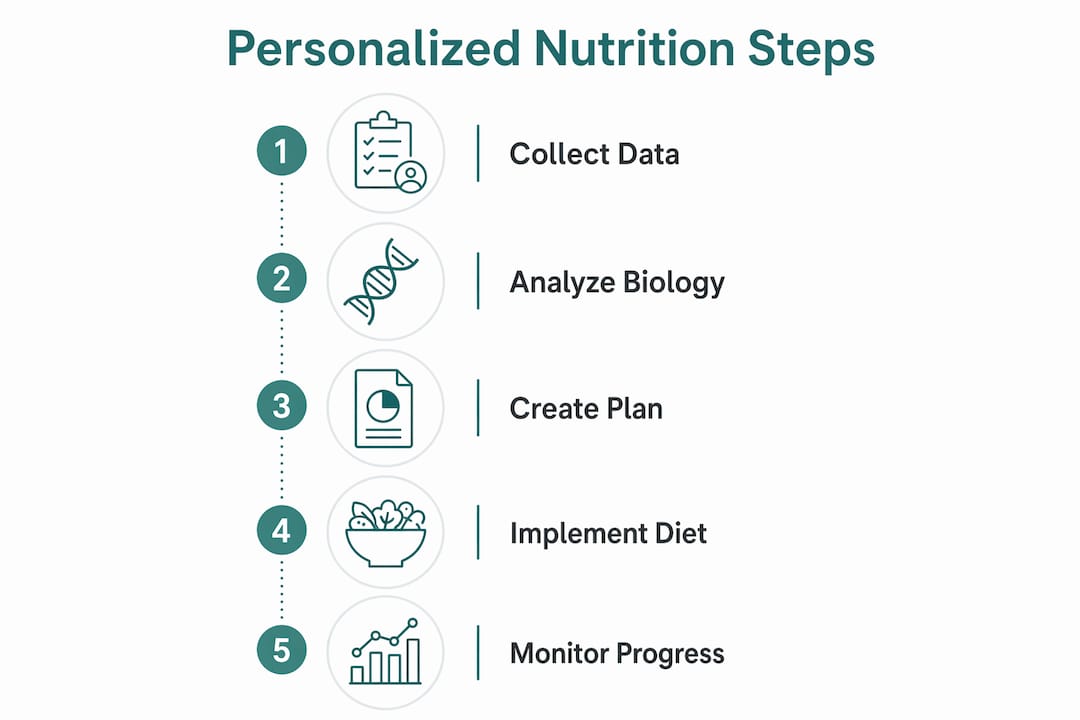
Il processo segue una sequenza chiara, dalla raccolta dei dati fino all'adattamento dietetico continuo.
-
Raccolta di dati biologici. Fornisci campioni tramite test domiciliari o clinici. Questi includono tipicamente un tampone salivare per l’analisi del DNA, un campione di feci per il profilo del microbioma e un esame del sangue per marcatori metabolici come glucosio, HbA1c e trigliceridi. Studi su larga scala con oltre 15.000 partecipanti hanno mostrato variazioni significative nelle risposte metaboliche tra individui, anche tra gemelli identici. Questo solo risultato smonta l’idea che la genetica determini completamente le tue esigenze nutrizionali.
-
Registrazione dei dati di stile di vita e alimentari. Diari alimentari digitali e dispositivi indossabili catturano cosa mangi, come dormi, quanto sei attivo e come il tuo corpo risponde in tempo reale. Questo livello comportamentale è importante quanto quello biologico.
-
Analisi algoritmica. Il software combina i tuoi dati biologici e di stile di vita per generare raccomandazioni dietetiche personalizzate. Il risultato può specificare rapporti ottimali di macronutrienti, alimenti da privilegiare o limitare, o micronutrienti di cui potresti essere carente.
-
Regolazione iterativa. La nutrizione personalizzata non è un rapporto una tantum. Si adatta la dieta, si monitorano i risultati e si affinano le raccomandazioni nel tempo in base a come il corpo risponde.
-
Sostegno al cambiamento comportamentale. I programmi più efficaci integrano i consigli dietetici in un quadro più ampio di cambiamento comportamentale sostenibile. I dati da soli non cambiano le abitudini. L’applicazione costante sì.
Consiglio professionale: Quando si inizia un programma di nutrizione personalizzata, privilegiare servizi che combinano almeno due tipi di dati, come microbioma e biomarcatori ematici, piuttosto che affidarsi solo alla genetica. Gli approcci basati su un singolo dato sono meno completi e meno efficaci.
Quali sono i benefici della nutrizione personalizzata supportati dalla ricerca?
La base di evidenze per la nutrizione personalizzata è in crescita, anche se rimane un campo emergente. I benefici più chiari si riscontrano nella gestione del peso e nella salute metabolica.
Meta-analisi di interventi di nutrizione personalizzata in adulti con sovrappeso o obesità mostrano riduzioni medie di peso di circa 1,19 kg rispetto ai consigli dietetici standard. Questa cifra può sembrare modesta, ma rappresenta un effetto direzionale coerente in diversi studi. I miglioramenti metabolici sono più vari e spesso più clinicamente significativi della sola perdita di peso.
I miglioramenti documentati includono:
- Riduzioni di HbA1c, un indicatore chiave del controllo a lungo termine della glicemia
- Livelli più bassi di trigliceridi, associati al rischio cardiovascolare
- Migliorata sensibilità all’insulina, rilevante per la sindrome metabolica e il rischio di diabete di tipo 2
- Migliori punteggi complessivi di qualità della dieta rispetto ai gruppi di controllo
Durate di intervento più lunghe producono effetti più forti. Programmi brevi da quattro a otto settimane mostrano benefici minori rispetto a quelli di tre mesi o più. Questo schema conferma che l’aderenza sostenibile è centrale per i risultati, non solo la qualità delle raccomandazioni iniziali.
| Area di risultato | Consigli dietetici standard | Approccio di nutrizione personalizzata |
|---|---|---|
| Gestione del peso | Obiettivi medi della popolazione | Obiettivi calorici e macronutrienti personalizzati |
| Controllo della glicemia | Indicazioni generali sui carboidrati | Modellazione della risposta glicemica per individuo |
| Salute intestinale | Raccomandazioni generiche sulle fibre | Adattamenti dietetici specifici per il microbioma |
| Stato dei micronutrienti | Valori di riferimento standard | Indicazioni per l’integrazione basate su biomarcatori |
La variabilità individuale rimane una vera limitazione. Non tutti rispondono allo stesso modo, e alcune persone mostrano cambiamenti minimi misurabili. La scienza è abbastanza solida da giustificare l’approccio, ma non abbastanza da garantire risultati specifici per ogni persona.
Quali metodi vengono utilizzati nella nutrizione personalizzata?
I servizi di nutrizione personalizzata variano notevolmente nella loro profondità e rigore scientifico. Capire la differenza ti aiuta a valutare cosa stai effettivamente ottenendo.
Gli approcci mono-omici si concentrano su un solo tipo di dato, più comunemente la genetica. Un kit del DNA analizza specifiche varianti geniche legate al metabolismo dei nutrienti, alle intolleranze alimentari o alla regolazione del peso. Questi kit sono accessibili e relativamente economici, ma offrono una visione limitata. La genetica spiega solo una parte della tua risposta nutrizionale.
Gli approcci multi-omici integrano dati da genomica, microbioma, metabolomica e talvolta proteomica. L’integrazione multi-omica produce raccomandazioni dietetiche più profonde e accurate rispetto a qualsiasi singola fonte di dati. Questa è la direzione verso cui si sta muovendo il campo, anche se questi servizi sono più costosi e meno diffusi.
La trasparenza degli algoritmi è una preoccupazione reale. Molte piattaforme di nutrizione personalizzata utilizzano algoritmi proprietari per generare raccomandazioni. I consumatori spesso non possono verificare la base scientifica dietro queste raccomandazioni a causa della limitata trasparenza. Questo è talvolta chiamato il problema della “scatola nera”. Se un servizio non può spiegare come arriva alle sue conclusioni, tratta i suoi risultati con la dovuta cautela.
La fusione dei dati rappresenta il modello più completo. Combina dati biologici con contesto comportamentale, sociale e ambientale. Ignorare le tue preferenze alimentari, il budget o la routine quotidiana riduce il valore pratico anche dell'analisi biologica più sofisticata. Una nutrizione personalizzata efficace considera la persona nella sua interezza, non solo i suoi biomarcatori.
Consiglio professionale: Prima di impegnarti in un servizio di nutrizione personalizzata, chiedi specificamente quali tipi di dati analizza e se la sua metodologia è stata pubblicata in ricerche peer-reviewed. La trasparenza in questo ambito è un segnale affidabile di qualità.
Come puoi applicare i principi della nutrizione personalizzata alla tua dieta?
Non è necessario un completo studio multi-omico per iniziare ad applicare i principi della nutrizione personalizzata. Un approccio strutturato e graduale funziona bene per la maggior parte delle persone.
-
Inizia con la raccolta di dati di base. Un pannello ematico standard dal tuo medico di base che copra glucosio, HbA1c, frazioni di colesterolo e micronutrienti chiave come vitamina D e B12 ti fornisce una base utile. Costa poco e fornisce informazioni immediatamente utilizzabili.
-
Tieni un diario alimentare dettagliato per due-quattro settimane. Registra non solo ciò che mangi, ma anche come ti senti dopo. Livelli di energia, digestione, qualità del sonno e umore sono tutti segnali rilevanti. App come Cronometer rendono questo semplice.
-
Individua i modelli e adatta gradualmente. Cerca correlazioni costanti tra cibi specifici e la tua energia o digestione. Apporta una modifica dietetica alla volta e osserva l'effetto per due o tre settimane prima di fare un'altra modifica.
-
Considera il tuo stile di vita e le tue preferenze. Una raccomandazione dietetica che non puoi realisticamente seguire non ha valore. Combinare i dati biologici con le tue reali preferenze alimentari e la routine quotidiana produce un'adesione a lungo termine molto migliore rispetto a un piano teoricamente perfetto che abbandoni dopo due settimane.
-
Considera l'integrazione mirata. Quando gli esami del sangue rivelano carenze o insufficienze specifiche, gli integratori mirati possono colmare le lacune che la dieta da sola potrebbe non affrontare efficacemente. Questo è particolarmente rilevante per nutrienti come la vitamina D, il magnesio e gli acidi grassi omega-3, che sono comunemente subottimali negli adulti. Le indicazioni su integratori per un invecchiamento sano possono aiutarti a identificare dove l'integrazione aggiunge un reale valore.
L’obiettivo è un modello alimentare che si possa mantenere per anni, non un protocollo a breve termine. Regolazioni graduali e basate su evidenze si sommano nel tempo in miglioramenti significativi della salute.
Punti chiave
La nutrizione personalizzata produce miglioramenti misurabili nella salute metabolica e nella qualità della dieta quando combina più fonti di dati con un cambiamento comportamentale sostenuto.
| Punto | Dettagli |
|---|---|
| Definizione e basi | La nutrizione personalizzata adatta i consigli dietetici a genetica individuale, biomarcatori, microbioma e dati sullo stile di vita. |
| Accuratezza scientifica | I modelli multi-omici raggiungono un AUC di circa 0,90 nella previsione delle risposte dietetiche individuali. |
| Benefici comprovati | La ricerca mostra miglioramenti costanti in peso, HbA1c, trigliceridi e sensibilità all’insulina. |
| La qualità del metodo conta | Gli approcci multi-omici superano i kit mono-omici; la trasparenza degli algoritmi è un indicatore chiave di qualità. |
| Il cambiamento comportamentale è centrale | L’adesione sostenuta, non la sofisticatezza dell’analisi iniziale, determina i risultati a lungo termine. |
Nutrizione personalizzata: lo stato della scienza e cosa aspettarsi
La scienza dietro la nutrizione di precisione è davvero entusiasmante. Ho seguito da vicino questo campo per anni, e il passaggio dalle linee guida dietetiche a livello di popolazione ai dati biologici individuali è uno degli sviluppi più significativi nella scienza della salute applicata. Ma penso che molte persone si avvicinino alla nutrizione personalizzata con aspettative irrealistiche, il che le porta a delusioni.
La crescita della nutrizione di precisione rappresenta un cambiamento fondamentale nel modo in cui pensiamo a dieta e salute. Ciò che non rappresenta è una scorciatoia. La ricerca è chiara: la nutrizione personalizzata non è una soluzione rapida. Catalizza il cambiamento comportamentale. Non lo sostituisce.
Sono anche cauto riguardo al problema della trasparenza. Un numero significativo di servizi commerciali genera raccomandazioni tramite algoritmi che né il consumatore né i ricercatori indipendenti possono esaminare. Questo è un problema. Il valore della nutrizione personalizzata deriva dal suo rigore scientifico. Rimuovendo la trasparenza si perde gran parte del valore.
La privacy dei dati merita più attenzione di quanta ne riceva solitamente. I dati biologici sono tra le informazioni personali più sensibili che si possano condividere. Prima di iscriversi a qualsiasi servizio, conferma esattamente come verranno archiviati, utilizzati e condivisi i tuoi dati di DNA, microbioma e metabolismo. A differenza degli ambienti clinici, le piattaforme commerciali possono operare sotto diversi quadri di privacy.
La mia opinione sincera è questa: la nutrizione personalizzata è uno strumento potente se usato correttamente. Funziona meglio come un quadro a lungo termine per un miglioramento graduale della dieta, non come una diagnosi una tantum. Affrontala con aspettative realistiche, richiedi trasparenza da qualsiasi servizio utilizzi e considera il cambiamento comportamentale come il vero lavoro.
— Jord
Vivetus e i tuoi obiettivi di nutrizione personalizzata
I piani di nutrizione personalizzata spesso rivelano specifiche carenze nutrizionali che la dieta da sola non può facilmente colmare. L’integrazione mirata diventa un passo pratico una volta che hai un quadro più chiaro delle tue esigenze individuali.
Vivetus offre il pacchetto Energy & Vitality, una selezione curata di integratori progettati per supportare energia sostenuta e vitalità generale. Il pacchetto integra gli approcci di nutrizione personalizzata affrontando le esigenze di supporto micronutrizionale ed energetico che spesso emergono quando le persone iniziano a monitorare seriamente i propri dati di salute. La spedizione è gratuita per ordini superiori a 50 €, rendendo semplice iniziare. Visita Vivetus per vedere l’intera gamma di prodotti nutrizionali supportati scientificamente.
Domande frequenti
Cos’è la nutrizione personalizzata in termini semplici?
La nutrizione personalizzata è la pratica di adattare i consigli dietetici alla tua biologia individuale, inclusi i tuoi geni, il microbioma intestinale e i biomarcatori nel sangue, invece di seguire linee guida generiche per la popolazione.
In cosa differisce la nutrizione personalizzata da un piano dietetico standard?
Un piano dietetico standard applica le stesse regole a tutti. La nutrizione personalizzata utilizza i tuoi dati biologici e di stile di vita specifici per generare raccomandazioni che riflettono come il tuo corpo risponde effettivamente al cibo.
Quali dati utilizza la nutrizione personalizzata?
La maggior parte dei programmi di nutrizione personalizzata utilizza una combinazione di analisi del DNA, profilazione del microbioma da un campione di feci, biomarcatori nel sangue e registri digitali di alimentazione e stile di vita.
La nutrizione personalizzata è efficace per la perdita di peso?
Le ricerche mostrano riduzioni di peso modeste ma costanti, in media intorno a 1,19 kg rispetto ai consigli dietetici standard, con risultati più forti nei programmi della durata di tre mesi o più.
I servizi di nutrizione personalizzata sono sicuri da usare?
Le raccomandazioni dietetiche in sé sono generalmente sicure, ma dovresti verificare come qualsiasi servizio conserva e utilizza i tuoi dati biologici prima di iscriverti, poiché le piattaforme commerciali potrebbero non seguire gli stessi standard di privacy degli ambienti clinici.