

Perché il declino della salute legato all’età: cause e soluzioni
Sintesi:
- Il declino della salute legato all’età deriva da danni cellulari e molecolari, inclusi la disfunzione mitocondriale e i cambiamenti epigenetici, che compromettono la capacità di riparazione del corpo. Fattori dello stile di vita come esercizio fisico, dieta, sonno e gestione dello stress possono rallentare significativamente questo declino e possono ritardare l’invecchiamento biologico di un decennio o più. La multimorbilità è comune dopo i 65 anni, causata da infiammazione e disfunzione metabolica, ma comprendere e affrontare i meccanismi epigenetici e cellulari offre potenzialità per un invecchiamento più sano.
Il declino della salute legato all’età è definito come il progressivo deterioramento fisiologico causato dal danno molecolare e cellulare accumulato che compromette la capacità del corpo di mantenere l’omeostasi e di ripararsi. Questo processo, studiato formalmente nella geroscienza, accelera a partire dai quarant’anni ed è guidato da meccanismi biologici identificabili, tra cui la senescenza cellulare, la disfunzione mitocondriale e il rimodellamento epigenetico. Comprendere perché il declino della salute legato all’età sia importante non è solo accademico. Fornisce un quadro preciso per prendere decisioni che possono davvero estendere la tua salute attiva, non solo la durata della vita.
Quali sono i principali meccanismi biologici alla base del declino della salute legato all’età?
Il corpo non si “consuma” semplicemente. Subisce una serie di fallimenti molecolari interconnessi che si accumulano nel tempo. I ricercatori hanno identificato un insieme di processi fondamentali, chiamati collettivamente i segni distintivi dell’invecchiamento, che spiegano perché la salute declina a livello cellulare con l’età.
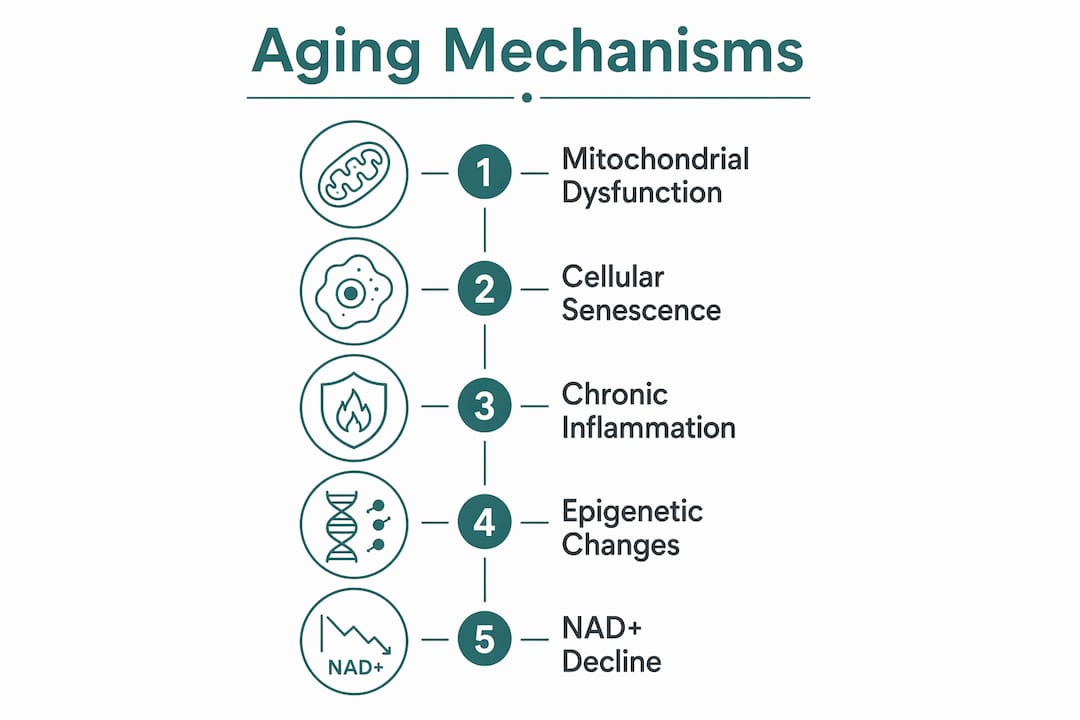
La disfunzione mitocondriale è al centro di questo processo. I mitocondri producono l’energia sotto forma di ATP che alimenta ogni cellula, ma la loro efficienza diminuisce con l’età a causa delle mutazioni del DNA accumulate e dei danni ossidativi. Il calo dei livelli di NAD+ aggrava direttamente questo problema: il NAD+ è necessario sia per il metabolismo energetico sia per la riparazione del DNA, e la sua carenza è particolarmente dannosa nel tessuto cerebrale e muscolare. Per questo la stanchezza e il rallentamento cognitivo sono tra i primi segnali dell’invecchiamento biologico.
La senescenza cellulare è un secondo importante fattore. Le cellule senescenti sono cellule danneggiate che smettono di dividersi ma si rifiutano di morire. Si accumulano nei tessuti e secernono molecole infiammatorie che danneggiano le cellule sane vicine. Parallelamente, l’esaurimento delle cellule staminali riduce la capacità del corpo di rigenerare i tessuti. Il risultato è una guarigione delle ferite più lenta, perdita muscolare e declino della funzione degli organi.
L'autofagia, il processo cellulare che elimina proteine e organelli danneggiati, diminuisce anch'essa con l'età. Quando i rifiuti cellulari si accumulano senza controllo, accelerano il circolo vizioso della disfunzione mitocondriale, della senescenza e di ciò che i ricercatori chiamano inflammaging: uno stato di infiammazione cronica di basso grado che guida il deterioramento sistemico dei tessuti.
- Disfunzione mitocondriale: La ridotta produzione di ATP e la compromissione della riparazione del DNA accelerano l'invecchiamento cellulare.
- Senescenza cellulare: L'accumulo di cellule non-dividenti e infiammatorie danneggia i tessuti circostanti.
- Esaurimento delle cellule staminali: La ridotta capacità rigenerativa porta a un recupero più lento e al declino degli organi.
- Declino dell'autofagia: L'accumulo di rifiuti cellulari peggiora l'infiammazione e il malfunzionamento metabolico.
- Deficienza di NAD+: Compromette il metabolismo energetico e la riparazione nei tessuti ad alta richiesta come cervello e muscoli.
Consiglio professionale: Se vuoi comprendere la base cellulare dell'invecchiamento in modo più dettagliato, Vivetus offre una risorsa dedicata che spiega questi processi senza gergo tecnico.
Come fanno i fattori legati allo stile di vita e all'ambiente ad accelerare o rallentare il declino della salute?
L'invecchiamento biologico è determinato per circa il 50% dalla genetica e per il 50% dallo stile di vita. Questa proporzione significa che le tue scelte quotidiane hanno un peso biologico significativo, soprattutto dopo i 40 anni, quando i sistemi di riparazione del corpo iniziano a perdere efficacia.

La ricerca di Harvard Health identifica due modalità distinte attraverso cui lo stile di vita accelera l'invecchiamento. La prima è la "modalità abbondanza", causata da un eccesso di assunzione calorica e inattività fisica, che inonda le cellule di segnali energetici che sopprimono i percorsi di riparazione. La seconda è la "modalità danno", scatenata da stress cronici come il sonno insufficiente, il fumo e lo stress psicologico, che sovraccaricano la capacità del corpo di riparare i danni cellulari. Entrambe le modalità producono lo stesso risultato: un invecchiamento biologico accelerato.
L'obesità è un acceleratore particolarmente potente. Un BMI superiore a 28 kg/m² è direttamente collegato a infiammazione cronica e resistenza all'insulina, due condizioni che aumentano il rischio di multimorbidità e spingono l'età biologica ben oltre quella cronologica. Ormoni dello stress cronico come il cortisolo aggravano questo effetto accelerando la perdita ossea e la perdita muscolare, due delle conseguenze più limitanti dal punto di vista funzionale dell'invecchiamento.
I fattori protettivi sono altrettanto ben documentati. I seguenti passaggi sono supportati dalla ricerca come gli interventi di stile di vita più efficaci per rallentare l'invecchiamento biologico:
- Attività fisica regolare: Esercizi aerobici e di resistenza preservano la funzione mitocondriale, riducono l'inflammaging e mantengono la massa muscolare.
- Alimentazione a base vegetale: Diete ricche di verdure, legumi e cereali integrali riducono lo stress ossidativo e supportano la diversità del microbioma intestinale.
- Sonno costante e di qualità: Il sonno è la finestra principale per la riparazione cellulare e l'autofagia. Sette-nove ore sono l'obiettivo basato sulle evidenze per gli adulti oltre i 40 anni.
- Connessione sociale: L'isolamento sociale cronico aumenta il cortisolo e i marcatori infiammatori. Un coinvolgimento sociale regolare ha effetti protettivi misurabili sull'età biologica.
- Gestione dello stress: Pratiche come la mindfulness, la respirazione strutturata e le tecniche di terapia cognitivo-comportamentale riducono il carico ormonale che accelera il danno cellulare.
La ricerca conferma che i comportamenti di vita che combinano questi cinque elementi possono ritardare l'invecchiamento biologico di un decennio o più. Non si tratta di un beneficio marginale. È la differenza tra un sesto decennio di vita sano e funzionale e uno definito dalla gestione delle malattie croniche.
Consiglio professionale: Vivetus ha pubblicato una guida pratica su i cambiamenti dello stile di vita dopo i 40 anni che associa questi interventi a specifici obiettivi biologici, ed è consigliabile leggerla insieme a questo articolo.
Quale ruolo giocano le malattie croniche e la multimorbidità nell'invecchiamento?
La multimorbidità, definita come la presenza simultanea di due o più condizioni croniche, non è un'eccezione negli anziani. È la norma. La prevalenza della multimorbidità supera il 70% negli adulti di età pari o superiore a 65 anni nei paesi ad alto reddito, con una prevalenza globale aggregata del 46% in tutte le popolazioni di anziani. I costi sanitari per gli individui con multimorbidità sono da due a cinque volte superiori rispetto a quelli con una singola condizione. Questa statistica riflette la natura cumulativa delle malattie croniche: ogni condizione peggiora le altre.
I problemi di salute più comuni nelle popolazioni anziane seguono un modello prevedibile guidato dai meccanismi biologici descritti sopra. L'inflammaging e la disfunzione metabolica sono la radice comune delle malattie cardiovascolari, del diabete di tipo 2, dell'osteoartrite e delle condizioni neurodegenerative. Quasi la metà degli adulti di età pari o superiore a 65 anni è stata diagnosticata con artrite, e il 24,3% riferisce uno stato di salute complessivo da discreto a scarso. Questi non sono risultati casuali. Sono le conseguenze a valle di decenni di danni cellulari accumulati.
| Condizione cronica | Fattore biologico primario |
|---|---|
| Diabete di tipo 2 | Resistenza all'insulina e disfunzione metabolica |
| Malattie cardiovascolari | Inflammaging e senescenza delle cellule endoteliali |
| Osteoartrite | Esaurimento delle cellule staminali della cartilagine e infiammazione locale |
| Declino cognitivo | Deficienza di NAD+ e fallimento mitocondriale nei neuroni |
I fattori socioeconomici influenzano significativamente questo quadro. Un livello di istruzione e un reddito più bassi sono associati a tassi più elevati di multimorbilità, in parte perché correlano con una maggiore esposizione agli acceleratori dello stile di vita descritti sopra e con un accesso ridotto all'intervento precoce. I fattori di malattia legati all'età non sono quindi puramente biologici. Sono modellati dalle condizioni in cui le persone vivono e lavorano nel corso della loro vita.
Come influenzano i fattori genetici ed epigenetici le traiettorie individuali dell'invecchiamento?
Due persone della stessa età cronologica possono avere età biologiche che differiscono di quindici anni o più. L'epigenetica spiega gran parte di questa variazione. Le modifiche epigenetiche sono cambiamenti chimici al DNA e alle proteine associate che alterano l'espressione genica senza modificare il codice genetico sottostante. Si accumulano con l'età e sono misurabili tramite strumenti chiamati orologi epigenetici.
L'orologio di Horvath e GrimAge sono i due orologi epigenetici più studiati. Entrambi derivano da modelli di metilazione del DNA e hanno dimostrato di prevedere l'età biologica, il rischio di malattia e la mortalità con maggiore precisione rispetto alla sola età cronologica. GrimAge in particolare è fortemente correlato con la durata della vita ed è sensibile agli input dello stile di vita, il che significa che cambia in risposta ai comportamenti descritti nella sezione precedente.
L'accessibilità della cromatina è un meccanismo correlato. Con l'invecchiamento delle cellule, il rimodellamento della cromatina altera la regolazione dei geni che controllano la senescenza e l'infiammazione. Questo rende alcuni geni inappropriatamente attivi e silenzia altri che dovrebbero funzionare. I ricercatori considerano ora i cambiamenti della cromatina un potenziale bersaglio per interventi terapeutici, anche se le applicazioni pratiche sono ancora in fase iniziale di sviluppo.
Due marcatori emergenti dell'invecchiamento meritano attenzione:
- Disgregazione del ritmo circadiano: La disgregazione dei ritmi circadiani è ora riconosciuta come un segno distintivo dell’invecchiamento. Cicli irregolari di sonno-veglia compromettono la riparazione dei tessuti, la regolazione ormonale e la funzione immunitaria, accelerando l’invecchiamento biologico indipendentemente da altri fattori.
- Memoria fisiologica: Le scelte di vita passate e lo stress cronico lasciano segni epigenetici duraturi che influenzano il tasso di invecchiamento futuro. Questo significa che le abitudini mantenute tra i trent’anni e i quaranta hanno già plasmato la tua età biologica attuale, ma non determinano la tua traiettoria futura.
Il concetto di memoria fisiologica è allo stesso tempo preoccupante e incoraggiante. Conferma che i danni passati hanno reali conseguenze biologiche, ma conferma anche che il tasso di invecchiamento epigenetico risponde al comportamento presente. L’età biologica è dinamica, non fissa.
Quali passi pratici possono compiere gli adulti sopra i 40 anni per rallentare il declino della salute?
Tradurre la comprensione biologica in pratica quotidiana richiede di dare priorità agli interventi con la base di evidenze più solida. I seguenti passaggi affrontano direttamente i meccanismi fondamentali dell’invecchiamento.
- Dai priorità all’allenamento di resistenza: La massa muscolare diminuisce di circa l’1% all’anno dopo i 40 senza interventi. L’allenamento di resistenza due o tre volte a settimana preserva la densità mitocondriale, riduce l’inflammaging e mantiene il metabolismo attivo.
- Adotta una dieta mediterranea o a base di alimenti integrali: Entrambi i modelli alimentari riducono lo stress ossidativo, supportano la diversità del microbioma intestinale e abbassano i marcatori infiammatori. Vivetus offre una risorsa dettagliata su dieta e invecchiamento sano che spiega i meccanismi nutrizionali specifici coinvolti.
- Proteggi la qualità del sonno: Dai priorità a orari di sonno e risveglio costanti per supportare l’integrità del ritmo circadiano. Evita schermi e alcol nelle due ore prima di dormire, entrambi compromettono in modo misurabile le fasi rigenerative del sonno.
- Monitora la salute metabolica: La glicemia a digiuno, l’HbA1c e la circonferenza vita sono i tre marcatori più informativi per monitorare la disfunzione metabolica. Un monitoraggio regolare consente un intervento precoce prima che si stabilisca la resistenza all’insulina.
- Gestisci lo stress consapevolmente: Lo stress cronico non è un fattore di rischio lieve. È un fattore diretto che causa perdita ossea mediata dal cortisolo, atrofia muscolare e disfunzione immunitaria. Una gestione strutturata dello stress, sia attraverso l’esercizio fisico, la mindfulness o l’impegno sociale, riduce questo carico biologico.
Consiglio professionale: La guida allo stile di vita 2026 di Vivetus consolida queste raccomandazioni con quadri pratici di implementazione per adulti sopra i 40 anni.
Punti chiave
Il declino della salute legato all'età è guidato da meccanismi biologici identificabili, tra cui disfunzione mitocondriale, inflammaging e rimodellamento epigenetico, tutti significativamente modificabili attraverso lo stile di vita.
| Punto | Dettagli |
|---|---|
| I meccanismi biologici sono specifici | La disfunzione mitocondriale, la senescenza e il declino di NAD+ sono i principali fattori che guidano l'invecchiamento fisiologico. |
| Lo stile di vita ha un peso pari alla genetica | Circa il 50% del tasso di invecchiamento biologico è determinato da comportamenti modificabili, non da fattori ereditari. |
| La multimorbilità è la norma, non l'eccezione | Oltre il 70% degli adulti di età superiore ai 65 anni nei paesi ad alto reddito presenta due o più condizioni croniche contemporaneamente. |
| L'età epigenetica è misurabile e modificabile | Strumenti come l'orologio di Horvath e GrimAge mostrano che l'età biologica risponde alle scelte di stile di vita attuali. |
| L'azione precoce si accumula nel tempo | Interventi sullo stile di vita iniziati nei quaranta possono ritardare l'invecchiamento biologico di un decennio o più. |
La parte che la maggior parte delle persone sbaglia sull'invecchiamento
Di Jord
La maggior parte delle persone con cui parlo presume che il declino della salute dopo i 40 anni sia in gran parte inevitabile e che il meglio che possano fare sia gestire i sintomi man mano che si presentano. Questa supposizione è comprensibile e, basandosi sulle evidenze attuali, errata.
Ciò che vedo costantemente trascurato è il concetto di memoria fisiologica. Le persone si concentrano su ciò che fanno ora e ignorano l'impronta biologica di ciò che hanno fatto nei loro trent'anni. Stress cronico passato, sonno insufficiente e disfunzioni metaboliche hanno già alterato i modelli epigenetici che influenzano la tua attuale traiettoria di invecchiamento. Riconoscere questo non significa rimpiangere. Significa capire che il corpo conserva un registro, e quel registro può essere parzialmente riscritto.
La seconda cosa che vedo spesso fraintesa è il ruolo dell'infiammazione. La maggior parte degli adulti sopra i 40 anni pensa all'infiammazione come a qualcosa che accade quando si fanno male. L'inflammaging è diverso. È un processo sistemico a basso grado che opera silenziosamente per anni prima di produrre una condizione diagnosticabile. Quando compaiono artrite, malattie cardiovascolari o declino cognitivo, il processo infiammatorio è in corso da un decennio o più. Affrontarlo precocemente, attraverso dieta, esercizio fisico, sonno e gestione dello stress, è molto più efficace che trattarne le conseguenze.
L'implicazione pratica è semplice. Non è necessario invertire la tua età biologica. Devi rallentarne la progressione. Questo è possibile, e la scienza è chiara su come farlo.
— Jord
Come Vivetus supporta un invecchiamento sano dopo i 40 anni

Vivetus è stato creato specificamente per adulti che vogliono adottare un approccio informato e basato su evidenze per invecchiare bene. La piattaforma offre prodotti nutrizionali supportati scientificamente progettati per affrontare i meccanismi biologici trattati in questo articolo, inclusa la salute metabolica, la funzione cellulare e la gestione dell'infiammazione. Ogni prodotto nel catalogo Vivetus è selezionato con l'invecchiamento sano come criterio principale, non le tendenze generali del benessere. Se sei pronto ad allineare le tue scelte di integratori con le realtà biologiche dell'invecchiamento, esplora la gamma Vivetus e trova prodotti adatti alle tue priorità di salute specifiche. La spedizione gratuita è disponibile per ordini superiori a 50 €.
Domande frequenti
Qual è la causa principale del declino della salute legato all'età?
Il declino della salute legato all'età è principalmente causato dall'accumulo di danni molecolari e cellulari nel tempo, inclusi disfunzione mitocondriale, senescenza cellulare e cambiamenti epigenetici che compromettono la capacità del corpo di ripararsi e mantenersi.
I cambiamenti nello stile di vita possono davvero rallentare l'invecchiamento biologico?
Sì. La ricerca dimostra che esercizio regolare, una dieta a base vegetale, sonno di qualità e gestione dello stress possono ritardare l'invecchiamento biologico di un decennio o più, come misurato da orologi epigenetici come GrimAge.
Cos'è l'inflammaging e perché è importante dopo i 40 anni?
L'inflammaging è uno stato di infiammazione cronica di basso grado causata da disfunzione immunitaria e squilibrio del microbioma intestinale. Opera silenziosamente per anni ed è una causa comune di malattie cardiovascolari, diabete di tipo 2, artrite e declino cognitivo.
Quanto è comune la multimorbidità negli anziani?
La multimorbidità colpisce oltre il 70% degli adulti di 65 anni e oltre nei paesi ad alto reddito, con una prevalenza globale combinata del 46%. Aumenta i costi sanitari da due a cinque volte rispetto alla gestione di una singola condizione.
Cosa sono gli orologi epigenetici e cosa misurano?
Gli orologi epigenetici come l'orologio di Horvath e GrimAge misurano i modelli di metilazione del DNA per stimare l'età biologica. Predicono il rischio di malattia e la mortalità con maggiore precisione rispetto all'età cronologica e rispondono ai cambiamenti dello stile di vita, rendendoli strumenti utili per monitorare gli interventi sull'invecchiamento.
Consigliati
- Perché invecchiamo? La scienza dell'invecchiamento biologico – Vivetus®
- Come invecchiare in salute: la tua guida pratica per il 2026 – Vivetus®
- Benefici dell'invecchiamento sano: i 10 principali vantaggi supportati da evidenze – Vivetus®
- Consigli di stile di vita per un invecchiamento sano: la tua guida 2026 – Vivetus®