

Perché l’idratazione è importante con l’età: una guida pratica
In sintesi:
- Mantenere una corretta idratazione è fondamentale per un invecchiamento sano e riduce il rischio di malattie croniche. Con la diminuzione delle riserve d’acqua dopo i 50 anni, gli anziani necessitano di un’assunzione regolare di liquidi per prevenire problemi di salute legati alla disidratazione. Bere da 6 a 8 bicchieri al giorno e monitorare il colore dell’urina aiuta a preservare l’indipendenza e le funzioni corporee.
L’idratazione è definita come il processo di mantenimento di un equilibrio ottimale di acqua corporea, ed è una delle influenze più dirette su come invecchi bene. Gli adulti oltre i 50 anni affrontano una serie di cambiamenti fisiologici che rendono più difficile mantenersi idratati e più gravi le conseguenze di una carenza. Ricerche recenti collegano livelli sierici di sodio superiori a 142 mEq/L a un rischio del 40% più alto di malattie croniche e a una probabilità del 50% maggiore che l’età biologica superi quella cronologica. Questa singola scoperta ridefinisce l’idratazione non come un’abitudine di benessere, ma come un fattore misurabile della velocità con cui il corpo invecchia.
Perché l’idratazione è importante con l’invecchiamento: cosa cambia nel corpo dopo i 50 anni
Il rapporto del corpo con l’acqua cambia significativamente con l’età. L’acqua corporea totale scende da circa il 60% a 25 anni a circa il 50% a 70 anni. Questa riduzione significa che hai meno riserva di liquidi su cui contare quando l’assunzione è insufficiente.
Il meccanismo della sete si indebolisce con l’età. Gli anziani spesso non avvertono sete finché non sono già leggermente disidratati. Questo non è un piccolo inconveniente. Elimina il principale sistema di allarme precoce del corpo per la perdita di liquidi.
La funzione renale diminuisce anch’essa. I reni diventano meno efficienti nel concentrare l’urina, quindi il corpo perde più acqua anche quando l’assunzione è bassa. Il declino della filtrazione renale accelera la perdita di nefroni e aumenta il rischio di malattia renale cronica, soprattutto quando la disidratazione è un problema ricorrente.
Diversi fattori comuni aggravano questi cambiamenti:
- I farmaci come diuretici, lassativi e alcuni farmaci per la pressione sanguigna aumentano la perdita di liquidi.
- La mobilità ridotta può rendere scomodo bere regolarmente o accedere ai liquidi.
- Le condizioni croniche come il diabete e l'insufficienza cardiaca alterano direttamente l'equilibrio dei fluidi.
- I cambiamenti cognitivi possono ridurre la consapevolezza della sete o la capacità di agire di conseguenza.
Consiglio pratico: Imposta un promemoria sul telefono o tieni una bottiglia d’acqua segnata sul tavolo della cucina. Bere a orari prestabiliti funziona meglio che aspettare di avere sete.
La scarsa idratazione accelera l’invecchiamento biologico?
La risposta breve è sì, e il meccanismo è ben compreso. La lieve disidratazione cronica mantiene elevati i livelli dell’ormone vasopressina. La vasopressina viene rilasciata quando il corpo percepisce bassi livelli di liquidi, e la sua presenza costante provoca infiammazione e stress metabolico. Nel tempo, questo rispecchia il danno cellulare osservato nell’invecchiamento biologico accelerato.
Il sodio sierico è il biomarcatore chiave. Il range ideale è tra 138 e 142 mmol/L. Quando il sodio supera questa fascia, segnala che il corpo ha poca acqua rispetto ai soluti. Gli adulti con sodio sierico tra 144,5 e 146 mEq/L hanno un rischio aumentato del 20% di morte prematura. È un dato misurabile e verificabile che il medico può controllare con un esame del sangue di routine.
“L’idratazione è un intervento semplice e gratuito spesso trascurato rispetto a farmaci complessi, ma è fondamentale per mantenere l’indipendenza negli anziani.”
Gli effetti a valle coinvolgono più sistemi organici. Lo sforzo cardiovascolare aumenta quando il volume sanguigno diminuisce. La funzione metabolica rallenta. Le prestazioni cognitive peggiorano anche a livelli lievi di disidratazione. La tabella sottostante riassume i rischi chiave.
| Sistema interessato | Effetto della scarsa idratazione |
|---|---|
| Cardiovascolare | Volume sanguigno ridotto, aumento dello sforzo cardiaco |
| Metabolico | Vasopressina elevata, infiammazione, stress metabolico |
| Cognitivo | Concentrazione, memoria e velocità di elaborazione compromesse |
| Renale | Perdita accelerata di nefroni, aumento del rischio di malattia renale cronica |
| Cellulare | Stress ossidativo, marcatori di invecchiamento biologico accelerato |
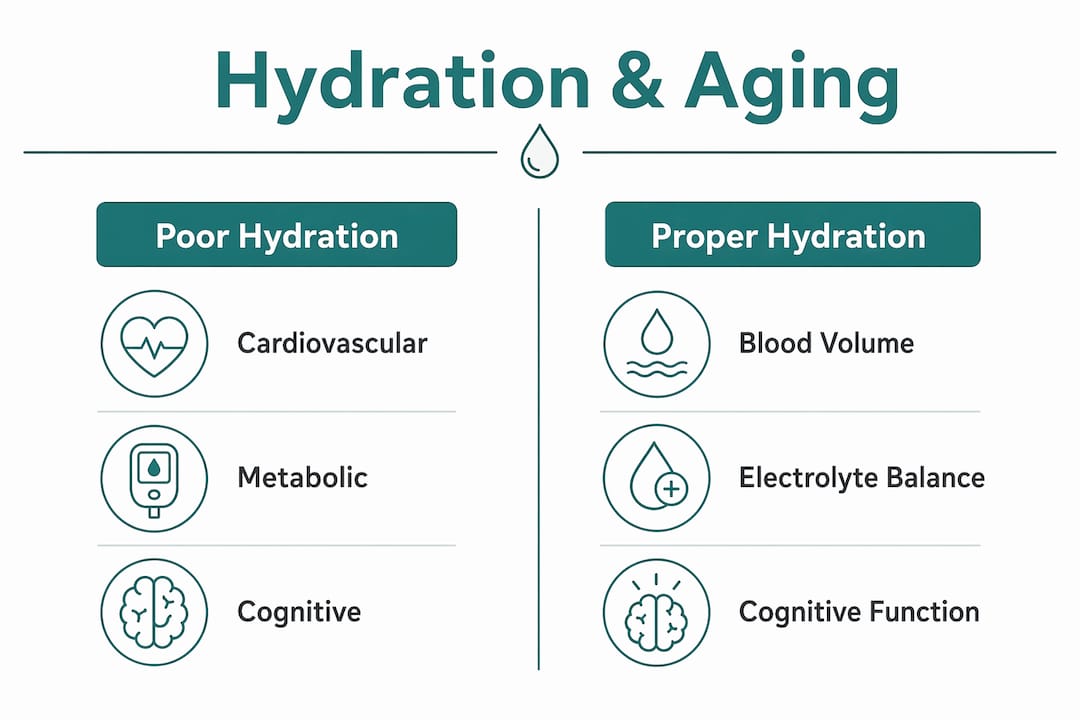
Comprendere questi processi di invecchiamento biologico chiarisce che l'assunzione di liquidi non è una questione marginale. È al centro del funzionamento quotidiano del corpo.
Quali sono gli obiettivi quotidiani di idratazione per gli anziani?
Gli anziani hanno bisogno di 6-8 bicchieri di liquidi al giorno, equivalenti a 1,5-2,0 litri. Questo obiettivo comprende acqua, tisane, zuppe e alimenti ricchi di acqua come cetriolo, melone e zucchina. L'acqua semplice rimane la fonte più efficiente, ma la varietà aiuta se l'acqua semplice non è di vostro gradimento.
L'errore più comune è aspettare di avere sete. Poiché il segnale della sete si indebolisce con l'età, quando si avverte la sete, spesso è già iniziata una lieve disidratazione. Bere a intervalli regolari durante la giornata è più affidabile che rispondere solo alla sete.
Monitorare il colore delle urine è un metodo pratico e gratuito per controllare lo stato di idratazione. Un colore giallo paglierino chiaro indica una buona idratazione. Un giallo scuro o ambrato segnala la necessità di assumere più liquidi. Urine trasparenti possono indicare un’eccessiva idratazione, che comporta rischi propri.
Abitudini pratiche che favoriscono un’assunzione costante:
- Bere un bicchiere d’acqua appena svegli, prima di tè o caffè.
- Includere una bevanda ad ogni pasto e spuntino.
- Scegliere alimenti ricchi di acqua come pomodori, arance e verdure a foglia verde.
- Tenere un bicchiere d’acqua visibile sulla scrivania o accanto alla sedia.
- Limitare alcol e bevande ad alto contenuto di caffeina, che aumentano la perdita di liquidi.
Una precauzione importante: l’eccesso di idratazione è un rischio reale, soprattutto per gli anziani con problemi renali o cardiaci. Bere quantità eccessive può diluire il sodio nel sangue a livelli pericolosi, una condizione chiamata iponatriemia. Rispettare la linea guida di 1,5-2,0 litri al giorno e consultare il medico se si ha una condizione di salute rilevante è l’approccio più sensato.
Consiglio pratico: Tisane e succhi di frutta diluiti contribuiscono al totale giornaliero di liquidi. Se l’acqua semplice risulta monotona, alternare due o tre bevande calde può rendere più facile un’assunzione costante.
Una dieta equilibrata per gli anziani che includa alimenti idratanti insieme a un adeguato apporto di liquidi supporta l’equilibrio elettrolitico e riduce il rischio sia di disidratazione che di iponatriemia.
Come previene l’idratazione le cadute, le infezioni e il declino cognitivo?
Le cadute sono la conseguenza acuta più grave della scarsa idratazione negli anziani. Circa il 24% degli anziani è cronicamente disidratato, e la disidratazione contribuisce direttamente all'ipotensione ortostatica, la caduta della pressione sanguigna che si verifica quando ci si alza in piedi. Quella sensazione di vertigine alzandosi è una delle principali cause di cadute. Una migliore idratazione è un intervento riconosciuto per ridurre l'ipotensione ortostatica e il rischio di cadute negli anziani.
Le infezioni del tratto urinario rappresentano un rischio meno evidente ma altrettanto importante. Un'abitudine comune ma controproducente è limitare i liquidi per gestire l'incontinenza. Limitare i liquidi per questo motivo aumenta in realtà il rischio di infezioni urinarie e può peggiorare i sintomi dell'incontinenza nel tempo. Una corretta idratazione mantiene il tratto urinario pulito e riduce la colonizzazione batterica.
La confusione cognitiva legata alla disidratazione è spesso identificata erroneamente. La disidratazione causa confusione acuta negli anziani che può somigliare molto ai sintomi della demenza. Fondamentalmente, questa confusione è spesso reversibile con la reidratazione. Assistenti e familiari che notano cambiamenti improvvisi nell'attenzione o nell'orientamento dovrebbero considerare la disidratazione come prima spiegazione prima di presumere un declino cognitivo.
Passi pratici per assistenti e anziani per mantenere un'idratazione stabile:
- Offri liquidi proattivamente invece di aspettare una richiesta.
- Tieni traccia dell'assunzione giornaliera con un semplice registro o una bottiglia graduata.
- Aumenta l'assunzione di liquidi durante il caldo, la malattia o dopo l'attività fisica.
- Controlla regolarmente il colore delle urine come indicatore rapido quotidiano.
- Segnala al medico di base eventuali preoccupazioni riguardo confusione o vertigini, menzionando l'assunzione recente di liquidi.
La consapevolezza dei caregiver sul ruolo dell'idratazione può ridurre significativamente il rischio di cadute e ospedalizzazioni. È uno degli ambiti più pratici in cui un supporto attento si traduce direttamente in una vita quotidiana più sicura.
Punti chiave
Un'assunzione adeguata di liquidi giornalieri è l'intervento più accessibile per rallentare l'invecchiamento biologico, ridurre il rischio di malattie croniche e preservare l'indipendenza negli adulti oltre i 50 anni.
| Punto | Dettagli |
|---|---|
| L'acqua corporea diminuisce con l'età | L'acqua corporea totale scende dal 60% a 25 anni al 50% a 70 anni, riducendo la riserva di liquidi. |
| La sete è una guida inaffidabile | Il segnale della sete si indebolisce dopo i 50 anni; bevi secondo un programma invece di aspettare di sentire sete. |
| Il sodio sierico segnala il rischio di invecchiamento | Sodio sopra 142 mEq/L è collegato a un rischio maggiore di malattie croniche e morte prematura. |
| Obiettivo giornaliero: 1,5–2,0 litri | Sei-otto tazze di liquidi al giorno da acqua, tisane, zuppe e alimenti ricchi di acqua. |
| L'idratazione previene cadute e confusione | La disidratazione causa vertigini, infezioni urinarie e confusione cognitiva reversibile negli anziani. |
L'idratazione è più semplice di quanto la maggior parte delle persone pensi
Ho letto molte ricerche sull'invecchiamento sano, e la scoperta che sorprende costantemente le persone è quanto di ciò che viene attribuito al “semplice invecchiare” sia in realtà disidratazione mascherata. Confusione, affaticamento, vertigini alzandosi, infezioni urinarie ricorrenti: queste non sono caratteristiche inevitabili dell'invecchiamento. Spesso sono correggibili con qualcosa di semplice come bere più acqua in modo costante.
L'errore che vedo più spesso è considerare l'idratazione come una preoccupazione passiva di sfondo piuttosto che un'abitudine quotidiana attiva. Le persone si concentrano su integratori, programmi di esercizio e cambiamenti dietetici, che hanno tutti un valore reale, ma trascurano il fatto che nessuno di questi interventi funziona altrettanto bene in un corpo disidratato. La riparazione cellulare, l'assorbimento dei nutrienti e la funzione cognitiva dipendono tutti da livelli adeguati di liquidi. Comprendere la salute cellulare e l'invecchiamento rende questa connessione concreta anziché astratta.
Un altro fraintendimento da chiarire è che bere di più significhi bere eccessivamente. La linea guida di 1,5-2,0 litri al giorno non è un traguardo alto. È raggiungibile con modesti cambiamenti di abitudine. L’obiettivo è la costanza durante la giornata, non grandi quantità tutte insieme.
L’idratazione è gratuita, non richiede prescrizione e produce risultati misurabili. Per chiunque abbia più di 50 anni e voglia proteggere la propria indipendenza e qualità della vita, è lo strumento meno utilizzato disponibile.
— Jord
Vivetus e invecchiamento sano: cosa leggere dopo
L’idratazione è un pezzo di un quadro più ampio di invecchiamento sano, e conoscere l’intero quadro è importante.
Vivetus riunisce indicazioni basate su evidenze su nutrizione, integrazione e stile di vita per adulti che vogliono invecchiare bene a modo loro. Che tu stia cercando minerali per un invecchiamento sano o strategie più ampie per mantenere la vitalità, il blog Vivetus tratta i temi più importanti dopo i 50 anni. Visita vivetus.eu per risorse pratiche e scientificamente fondate pensate per supportare la tua salute in ogni fase.
Domande frequenti
Quanta acqua dovrebbe bere un anziano ogni giorno?
Gli anziani hanno bisogno di 6-8 tazze di liquidi al giorno, equivalenti a 1,5-2,0 litri. Questo include acqua, tisane, zuppe e alimenti ricchi di acqua.
Perché gli anziani si disidratano più facilmente?
L'acqua corporea totale diminuisce con l'età, il meccanismo della sete si indebolisce e la funzione renale declina. Questi cambiamenti fanno sì che gli anziani perdano liquidi più facilmente e sentano meno la sete.
La disidratazione può causare confusione negli anziani?
Sì. La disidratazione causa frequentemente confusione acuta negli anziani che può somigliare alla demenza. Questa confusione è spesso reversibile una volta ripristinata l'assunzione di liquidi.
Cos'è il sodio sierico e perché è importante per l'invecchiamento?
Il sodio sierico è un marcatore ematico che riflette lo stato di idratazione. Livelli superiori a 142 mEq/L sono associati a un rischio maggiore del 40% di malattie croniche e invecchiamento biologico accelerato.
Bere più acqua riduce il rischio di cadute?
Una corretta idratazione riduce l'ipotensione ortostatica, il calo di pressione sanguigna quando ci si alza che causa vertigini e cadute. È una misura preventiva riconosciuta per il rischio di cadute negli anziani.