

Perché gli anziani hanno bisogno di vitamina D: una guida completa
In sintesi:
- La vitamina D è essenziale per gli anziani perché supporta l’assorbimento del calcio, la forza ossea e la funzione muscolare. Una carenza aumenta i rischi di cadute e fratture, soprattutto perché la sintesi cutanea diminuisce con l’età. La supplementazione, guidata da esami del sangue, migliora la mobilità e riduce il rischio di cadute tra gli anziani.
La vitamina D è definita come il nutriente più direttamente responsabile dell’assorbimento del calcio, della mineralizzazione ossea e della funzione neuromuscolare negli anziani. Per gli anziani, assumerne una quantità sufficiente non è opzionale. L’invecchiamento riduce la capacità della pelle di sintetizzare la vitamina D dalla luce solare, le fonti alimentari raramente colmano il deficit e le conseguenze della carenza includono fragilità ossea, debolezza muscolare e un rischio nettamente più alto di cadute. Capire perché gli anziani hanno bisogno di vitamina D significa comprendere come il corpo cambia con l’età e quali sono i costi di questi cambiamenti in termini di mobilità e indipendenza.
In che modo la vitamina D beneficia ossa e muscoli degli anziani?
La vitamina D supporta il metabolismo minerale osseo e migliora la funzione neuromuscolare, rendendola centrale nella prevenzione di cadute e fratture negli anziani. Senza un adeguato apporto di vitamina D, l’intestino assorbe meno calcio. Meno calcio significa che il corpo attinge alle riserve ossee, indebolendo lo scheletro nel tempo.
I benefici neuromuscolari sono altrettanto significativi. I recettori della vitamina D sono presenti nel tessuto muscolare e, quando i livelli sono sufficienti, le fibre muscolari si contraggono in modo più efficiente. Questo si traduce direttamente in un migliore equilibrio e coordinazione, due fattori che determinano se una caduta è solo un inciampo o un vero e proprio incidente.
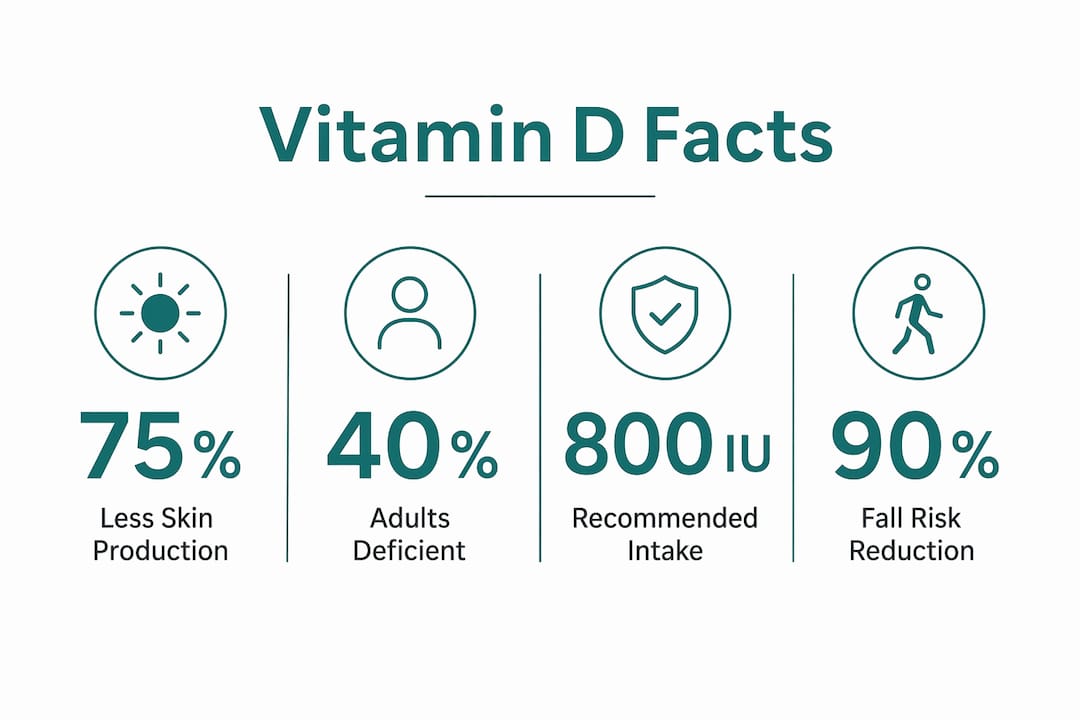
Le evidenze cliniche confermano che questi miglioramenti sono misurabili. Uno studio controllato su 60 partecipanti di età compresa tra 60 e 75 anni ha rilevato un miglioramento del 90% nella performance di alzarsi dalla sedia e un miglioramento del 73% nella velocità del passo dopo 12 settimane di supplementazione di vitamina D. Non si tratta di margini piccoli. Rappresentano la differenza tra un anziano che si muove con sicurezza e uno che evita le scale.
I ricercatori utilizzano anche il Short Physical Performance Battery (SPPB) per misurare i miglioramenti funzionali. Gli studi clinici che impiegano l'SPPB mostrano costantemente miglioramenti negli anziani con insufficienza di vitamina D dopo la supplementazione. L'SPPB valuta equilibrio, velocità del passo e capacità di alzarsi dalla sedia, rendendolo un indicatore affidabile della mobilità nella vita reale.
I principali benefici di un adeguato apporto di vitamina D per gli anziani includono:
- Ossa più forti: L’assorbimento del calcio dipende dalla vitamina D. Senza di essa, le ossa perdono densità e il rischio di fratture aumenta.
- Migliore funzione muscolare: Una quantità sufficiente di vitamina D migliora l’attivazione e la coordinazione delle fibre muscolari.
- Riduzione del rischio di cadute: I miglioramenti neuromuscolari dovuti alla vitamina D riducono direttamente la probabilità di cadute.
- Miglioramento della deambulazione e dell’equilibrio: Gli studi clinici mostrano miglioramenti misurabili nella velocità di camminata e nella stabilità.
Consiglio professionale: Se un anziano nella tua famiglia ha avuto una caduta recente o riferisce di sentirsi instabile, chiedi al medico di controllare i livelli di vitamina D come parte della valutazione. I livelli bassi sono trattabili e i miglioramenti funzionali derivanti dalla correzione possono essere significativi.
Perché gli anziani sono a maggior rischio di carenza di vitamina D?
La carenza di vitamina D negli anziani è molto più comune di quanto la maggior parte delle persone pensi. Circa il 40% degli adulti presenta livelli insufficienti di vitamina D, e la percentuale è ancora più alta tra le popolazioni anziane. Diversi fattori biologici e di stile di vita si combinano per rendere gli anziani particolarmente vulnerabili.
Il fattore più significativo è la ridotta sintesi cutanea. La sintesi di vitamina D nella pelle diminuisce fino al 75% negli anziani rispetto ai giovani adulti. La pelle diventa semplicemente meno efficiente nel convertire la radiazione UVB in vitamina D3, indipendentemente dal tempo trascorso all’aperto.
A complicare la situazione, la luce solare che passa attraverso le finestre non stimola la produzione di vitamina D. I raggi UVB non penetrano il vetro. Un anziano che si siede vicino a una finestra soleggiata ogni mattina non produce vitamina D da quell’esposizione. Questo è un punto ampiamente frainteso che riguarda molti anziani che trascorrono la maggior parte del tempo al chiuso.
I quattro principali fattori di rischio per la carenza negli anziani sono:
- Sintesi cutanea ridotta: La pelle invecchiata produce significativamente meno vitamina D dalla stessa esposizione solare rispetto alla pelle più giovane.
- Attività all’aperto limitata: Mobilità ridotta, residenza in case di riposo o climi freddi limitano il tempo che gli anziani trascorrono alla luce diretta del sole.
- Assunzione dietetica insufficiente: Pochi alimenti sono naturalmente ricchi di vitamina D e gli anziani spesso consumano pasti più piccoli e meno vari.
- Malassorbimento: Condizioni che interessano l’intestino, come la celiachia e il morbo di Crohn, riducono la quantità di vitamina D che il corpo assorbe da cibo e integratori.
| Fattore di rischio | Effetto sullo stato della vitamina D |
|---|---|
| Sintesi cutanea ridotta | Produzione ridotta fino al 75% rispetto agli adulti più giovani |
| Stile di vita prevalentemente al chiuso | Nessuna esposizione UVB attraverso il vetro; sintesi naturale minima |
| Basso apporto dietetico | Poche fonti alimentari naturali; gli anziani spesso mangiano meno in generale |
| Malassorbimento intestinale | Assorbimento ridotto sia da cibo che da integratori orali |
Le conseguenze di una carenza prolungata sono gravi. La fragilità ossea porta a fratture anche per cadute lievi. La debolezza muscolare riduce la sicurezza nei movimenti. Questi effetti insieme accelerano la perdita di indipendenza, motivo per cui è così importante intervenire precocemente sullo stato della vitamina D.
Quali sono le raccomandazioni degli esperti per l’assunzione di vitamina D?
Il NIH raccomanda 600 UI al giorno per gli adulti fino a 70 anni e 800 UI per chi ha più di 70 anni. Questi valori rappresentano l’assunzione necessaria per mantenere livelli sierici adeguati per la salute delle ossa. Il livello sierico target è almeno 30 ng/mL di 25(OH)D, la forma misurata negli esami del sangue, associata alla prevenzione delle fratture.
Molti anziani non raggiungono questi livelli solo con la dieta e l’esposizione al sole. Pesci grassi come salmone e sgombro, tuorli d’uovo e alimenti fortificati come alcuni latticini e cereali contengono vitamina D, ma raramente in quantità sufficienti a soddisfare il fabbisogno giornaliero senza integrazione. La guida agli integratori nutrizionali per un invecchiamento sano pubblicata da Vivetus spiega come valutare le carenze dietetiche prima di scegliere un integratore.
L’integrazione non è priva di rischi. I rischi di tossicità da vitamina D aumentano con concentrazioni sieriche superiori a 50 ng/mL, dove possono emergere rischi aumentati di fratture e tumori. Di più non significa meglio. Un’assunzione eccessiva può causare ipercalcemia, una condizione in cui i livelli di calcio nel sangue diventano troppo alti, portando a calcoli renali e altre complicazioni. Il limite massimo giornaliero di 4.000 UI è la soglia che la maggior parte degli enti professionali indica come limite sicuro per gli adulti.
Le interazioni farmacologiche richiedono anch’esse attenzione. Gli integratori di vitamina D interagiscono con alcuni farmaci, tra cui statine e orlistat, influenzando l’efficacia del farmaco o l’assorbimento della vitamina. Gli anziani che assumono più farmaci dovrebbero sempre consultare il proprio medico prima di iniziare l’integrazione.
Consiglio professionale: Chiedi al tuo medico un esame del sangue 25(OH)D prima di iniziare qualsiasi integratore di vitamina D. Il risultato ti dirà esattamente a che livello sei e se hai bisogno di un integratore a basso dosaggio per mantenimento o di una dose correttiva più alta.
Le evidenze sono chiare: l’integrazione dovrebbe seguire una carenza confermata tramite esami del sangue, piuttosto che essere assunta universalmente senza valutazione. L’integrazione mirata basata sui livelli effettivi è sia più sicura che più efficace.
Come possono gli anziani mantenere in sicurezza livelli adeguati di vitamina D?
Mantenere uno stato sano di vitamina D comporta la combinazione di tre approcci: un’esposizione solare sensata, una dieta che includa alimenti ricchi di vitamina D e un’integrazione mirata quando gli esami del sangue confermano la necessità. Nessun singolo approccio è sufficiente da solo per la maggior parte degli anziani.
L’esposizione solare sicura significa trascorrere brevi periodi all’aperto con braccia e gambe scoperte, idealmente tra le 11:00 e le 15:00, quando l’intensità degli UVB è massima. Nel Regno Unito, un’esposizione significativa agli UVB è disponibile solo da aprile a settembre circa. Nei mesi invernali, l’esposizione solare da sola non può mantenere i livelli di vitamina D a nessuna età, figuriamoci negli anziani la cui sintesi cutanea è già ridotta.
Fonti alimentari da includere regolarmente sono:
- Pesce grasso: Salmone, sgombro, sardine e aringa sono tra le fonti naturali più ricche di vitamina D3.
- Tuorli d’uovo: Un contributo utile, anche se non sufficiente come unica fonte.
- Alimenti fortificati: Alcuni tipi di latte, latte vegetale, cereali per la colazione e creme spalmabili sono fortificati con vitamina D. Controlla le etichette, poiché i livelli di fortificazione variano.
- Fegato: Ricco di vitamina D ma anche di vitamina A, quindi non raccomandato in grandi quantità per gli anziani.
Quando assumi integratori, scegli la vitamina D3 (colecalciferolo) invece della D2 (ergocalciferolo). La D3 aumenta più efficacemente i livelli sierici nel sangue ed è la forma che il corpo produce naturalmente dalla luce solare. Assumere l’integratore con un pasto contenente grassi migliora l’assorbimento, poiché la vitamina D è liposolubile.
Monitora i livelli ematici annualmente se assumi integratori regolarmente. Questo previene sia la sotto-correzione sia il rischio di accumulo nel tempo. Anche il ruolo del magnesio per gli anziani è rilevante qui, poiché il magnesio supporta il metabolismo della vitamina D e i due nutrienti lavorano insieme per la salute delle ossa.
Evita di assumere più integratori contenenti vitamina D senza controllare il totale combinato. Multivitaminici, integratori di calcio e compresse di vitamina D singole possono sovrapporsi, portando l'assunzione giornaliera oltre il limite massimo sicuro senza che la persona se ne accorga.
Punti chiave
La vitamina D è il nutriente singolo più importante per mantenere la densità ossea, la funzione muscolare e prevenire le cadute negli adulti oltre i 70 anni, e la carenza è sia comune che correggibile con una supplementazione mirata.
| Punto | Dettagli |
|---|---|
| Protezione di ossa e muscoli | La vitamina D favorisce l'assorbimento del calcio e migliora l'attivazione muscolare, riducendo il rischio di fratture e cadute. |
| Alto rischio di carenza negli anziani | La sintesi cutanea diminuisce fino al 75% con l'età, e la vita al chiuso limita ulteriormente l'esposizione ai raggi UVB. |
| Miglioramenti funzionali supportati da evidenze | Gli studi clinici mostrano un miglioramento del 90% nella performance al test della sedia dopo 12 settimane di supplementazione. |
| Testare prima di integrare | Il test del sangue per i livelli di 25(OH)D guida una supplementazione sicura e mirata ed evita la tossicità. |
| Limite superiore sicuro | Livelli sierici superiori a 50 ng/mL comportano un rischio aumentato; il limite massimo giornaliero è di 4.000 UI per gli adulti. |
Vitamina D e invecchiamento: cosa ci dicono realmente le evidenze
La conversazione sulla vitamina D e gli anziani oscilla spesso tra due estremi poco utili. Un campo la considera una panacea. L'altro ne respinge completamente la supplementazione. Nessuna delle due posizioni riflette ciò che le evidenze cliniche mostrano realmente.
Ciò che la ricerca conferma è che i benefici sulla mortalità della vitamina D appaiono più chiaramente negli adulti di 75 anni e oltre, e in chi è realmente carente. Integrare persone che hanno già livelli adeguati non produce benefici significativi. Questa distinzione è enormemente importante, perché significa che la supplementazione generalizzata senza test non è solo inutile per alcuni anziani, ma comporta rischi reali.
Ho visto troppi anziani assumere integratori di vitamina D ad alte dosi acquistati senza alcun esame del sangue, sulla base del fatto che “più è più sicuro”. Le evidenze dicono il contrario. Livelli sierici superiori a 50 ng/mL sono associati a un aumento del rischio di fratture, che è proprio l'esito che tutti cercano di prevenire.
L'approccio basato prima sul cibo rimane il punto di partenza giusto. Pesce grasso due volte a settimana, alimenti fortificati dove disponibili e un tempo sensato all'aperto durante primavera ed estate. La supplementazione colma il divario che la dieta e la luce solare non possono coprire, soprattutto durante l'inverno e per chi ha una carenza confermata. Questo è un approccio mirato e basato su evidenze, non precauzionale.
La cosa più utile che una famiglia può fare per un parente anziano è organizzare un semplice esame del sangue. Ci vogliono pochi minuti e elimina ogni incertezza. Da lì, un medico di base o un dietista registrato possono raccomandare la dose giusta, controllare le interazioni con i farmaci e monitorare i livelli nel tempo. Questo è ciò che significa una supplementazione responsabile.
— Jord
Integratori di vitamina D da Vivetus
Vivetus offre una gamma di integratori di vitamina D progettati per gli anziani, selezionati per qualità e dosaggio appropriato. Ogni prodotto è conforme alle attuali linee guida professionali sull’assunzione giornaliera sicura, offrendo agli anziani e alle loro famiglie un modo semplice per affrontare una carenza confermata senza il rischio di superare i livelli sierici sicuri. La spedizione gratuita è disponibile per ordini superiori a 50 €, e l’intera gamma di integratori di vitamina D è accessibile a una clientela internazionale. Per chi desidera un supporto nutrizionale più ampio, il catalogo Vivetus copre anche nutrienti complementari come il magnesio, che lavora insieme alla vitamina D per la salute di ossa e muscoli. Visita Vivetus per trovare l’integratore giusto per le tue esigenze, supportato da indicazioni basate sull’evidenza.
Domande frequenti
Perché gli anziani hanno bisogno di più vitamina D rispetto agli adulti più giovani?
L’invecchiamento riduce la capacità della pelle di sintetizzare vitamina D dalla luce solare fino al 75%, e gli anziani trascorrono meno tempo all’aperto. Il NIH raccomanda 800 UI al giorno per gli adulti sopra i 70 anni, rispetto a 600 UI per gli adulti più giovani.
Quali sono i segni di carenza di vitamina D negli anziani?
I segni comuni includono dolore osseo, debolezza muscolare, affaticamento e aumento della frequenza di cadute o fratture. Un test del sangue che misura i livelli di 25(OH)D è l’unico modo affidabile per confermare la carenza.
Gli anziani possono ottenere abbastanza vitamina D solo dalla luce solare?
Non in modo affidabile. La sintesi cutanea diminuisce significativamente con l’età e nel Regno Unito i livelli di UVB sono insufficienti per la produzione di vitamina D da ottobre a marzo. La maggior parte degli anziani necessita di fonti alimentari o integratori per mantenere livelli adeguati.
È sicuro assumere integratori di vitamina D senza un test del sangue?
Assumere un integratore a basso dosaggio di 400–800 UI al giorno comporta un rischio minimo, ma dosi più elevate dovrebbero essere assunte solo dopo un test del sangue confermato. L’integrazione senza test rischia di portare i livelli sierici oltre i 50 ng/mL, dove sorgono preoccupazioni di tossicità.
La vitamina D riduce davvero il rischio di cadute negli anziani?
Sì. Le evidenze cliniche mostrano miglioramenti significativi nella velocità del passo e nella performance al test della sedia negli anziani che integrano vitamina D in caso di carenza. Questi miglioramenti funzionali riducono direttamente il rischio di cadute e supportano la vita indipendente.